 Français
 English
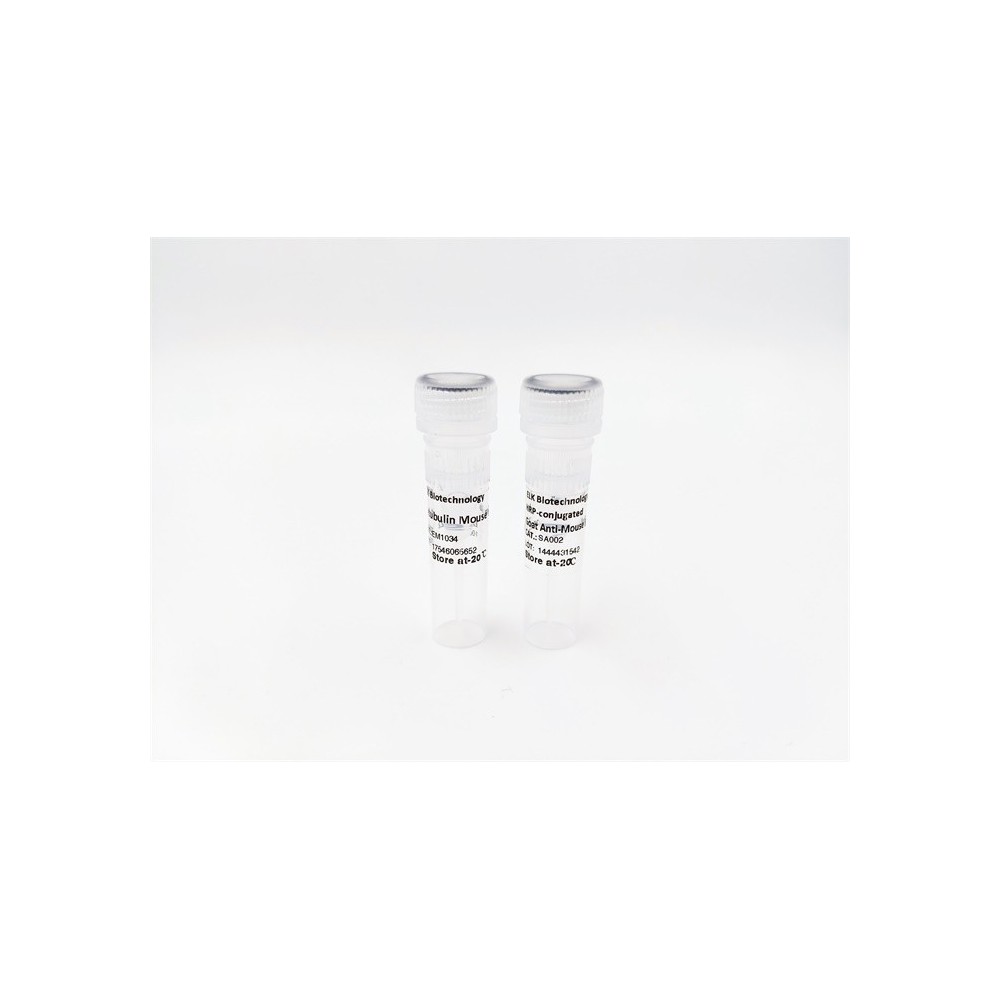

| ELK.No | ES18224 |
| Product name | AT10A rabbit pAb |
| Reactivity | Human; Mouse |
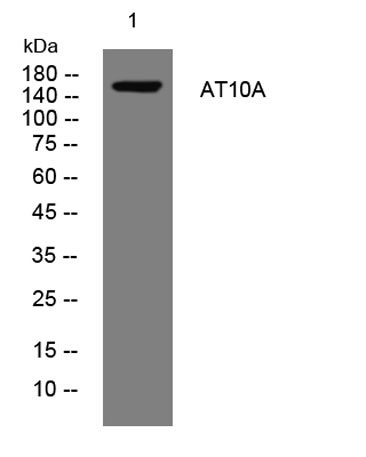
| Applications | WB |
| Other name | |
| Size | 100μL |
| Unit price ($) | 248 |
| Human gene ID | 57194 |
| Human Swiss-Prot | O60312 |
| Source | Rabbit |
| Isotype | IgG |
| Target | AT10A |
| Fields | |
| Gene name | ATP10A ATP10C ATPVA ATPVC KIAA0566 |
| Protein name | AT10A |
| Human gene link | View Human Gene |
| Human Swiss link | View Human Swiss-Prot |
| Mouse gene ID | 11982 |
| Mouse gene link | View Mouse Gene |
| Mouse Swiss-Prot | O54827 |
| Mouse Swiss link | View Mouse Swiss-Prot |
| Rat gene ID | |
| Rat gene link | |
| Rat Swiss-Prot | |
| Rat Swiss link | |
| Immunogen | Synthesized peptide derived from human AT10A AA range: 1129-1179 |
| Specificity | This antibody detects endogenous levels of AT10A at Human/Mouse |
| Formulation | Liquid in PBS containing 50% glycerol, 0.5% BSA and 0.02% sodium azide. |
| Clonality | Polyclonal |
| Dilution | WB 1:500-2000 |
| Purification | The antibody was affinity-purified from rabbit serum by affinity-chromatography using specific immunogen. |
| Concentration | 1 mg/ml |
| Storage stability | -20°C/1 year |
| Molecular Weight (Da) | 165kD |
| Observed band (KD) | |
| Background | The protein encoded by this gene belongs to the family of P-type cation transport ATPases, and to the subfamily of aminophospholipid-transporting ATPases. The aminophospholipid translocases transport phosphatidylserine and phosphatidylethanolamine from one side of a bilayer to another. This gene is maternally expressed. It maps within the most common interval of deletion responsible for Angelman syndrome, also known as 'happy puppet syndrome'. [provided by RefSeq, Jul 2008], |
| Function | catalytic activity:ATP + H(2)O + phospholipid(In) = ADP + phosphate + phospholipid(Out).,disease:Defects in ATP10A are a cause of Angelman syndrome (AS) [MIM:105830]; also known as 'happy puppet syndrome'. AS is characterized by features of severe motor and intellectual retardation, microcephaly, ataxia, frequent jerky limb movements and flapping of the arms and hands, hypotonia, hyperactivity, hypopigmentation, seizures, absence of speech, frequent smiling and episodes of paroxysmal laughter, and an unusual facies characterized by macrostomia, a large mandible and open-mouthed expression, a great propensity for protruding the tongue ('tongue thrusting'), and an occipital groove.,PTM:Phosphorylated upon DNA damage, probably by ATM or ATR.,similarity:Belongs to the cation transport ATPase (P-type) family. Type IV subfamily.,tissue specificity:Widely expressed, with highest levels in kidne |
| Subcellular location | Cell membrane ; Multi-pass membrane protein . Endoplasmic reticulum membrane . Exit from the endoplasmic reticulum requires the presence of TMEM30A, but not that of TMEM30B. |
| Expression | Widely expressed, with highest levels in kidney, followed by lung, brain, prostate, testis, ovary and small intestine. |

Use collapsible tabs for more detailed information that will help customers make a purchasing decision.
Ex: Shipping and return policies, size guides, and other common questions.