 Français
 English

| ELK.No | ES1987 |
| Product name | Claudin-3 rabbit pAb |
| Reactivity | Human;Mouse;Rat |
| Applications | WB;IHC;IF;ELISA |
| Other name | CLDN3; C7orf1; CPETR2; Claudin-3; Clostridium perfringens enterotoxin receptor 2; CPE-R 2; CPE-receptor 2; Rat ventral prostate.1 protein homolog; hRVP1 |
| Size | 50μL |
| Unit price ($) | 148 |
| Human gene ID | 1365 |
| Human Swiss-Prot | O15551 |
| Source | Rabbit |
| Isotype | IgG |
| Target | Claudin 3 |
| Fields | >>Cell adhesion molecules;>>Tight junction;>>Leukocyte transendothelial migration;>>Pathogenic Escherichia coli infection;>>Hepatitis C |
| Gene name | CLDN3 |
| Protein name | Claudin-3 |
| Human gene link | View Human Gene |
| Human Swiss link | View Human Swiss-Prot |
| Mouse gene ID | 12739 |
| Mouse gene link | View Mouse Gene |
| Mouse Swiss-Prot | Q9Z0G9 |
| Mouse Swiss link | View Mouse Swiss-Prot |
| Rat gene ID | 65130 |
| Rat gene link | View Rat Gene |
| Rat Swiss-Prot | Q63400 |
| Rat Swiss link | View Rat Swiss-Prot |
| Immunogen | The antiserum was produced against synthesized peptide derived from human Claudin 3. AA range:171-220 |
| Specificity | Claudin-3 Polyclonal Antibody detects endogenous levels of Claudin-3 protein. |
| Formulation | Liquid in PBS containing 50% glycerol, 0.5% BSA and 0.02% sodium azide. |
| Clonality | Polyclonal |
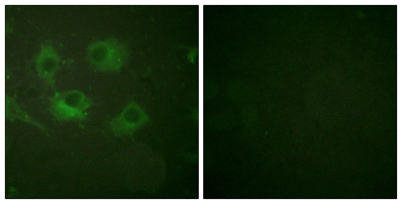
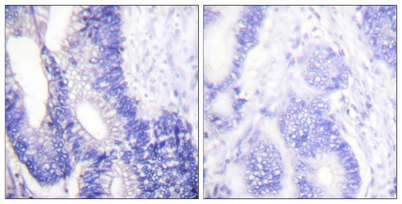
| Dilution | Western Blot: 1/500 - 1/2000. Immunohistochemistry: 1/100 - 1/300. Immunofluorescence: 1/200 - 1/1000. ELISA: 1/40000. Not yet tested in other applications. |
| Purification | The antibody was affinity-purified from rabbit antiserum by affinity-chromatography using epitope-specific immunogen. |
| Concentration | 1 mg/ml |
| Storage stability | -20°C/1 year |
| Molecular Weight (Da) | |
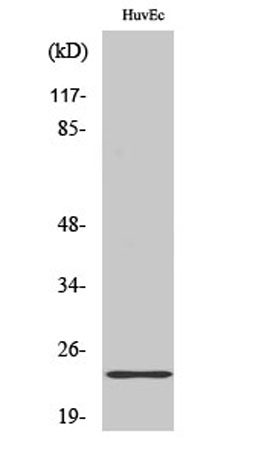
| Observed band (KD) | 25kD |
| Background | Tight junctions represent one mode of cell-to-cell adhesion in epithelial or endothelial cell sheets, forming continuous seals around cells and serving as a physical barrier to prevent solutes and water from passing freely through the paracellular space. These junctions are comprised of sets of continuous networking strands in the outwardly facing cytoplasmic leaflet, with complementary grooves in the inwardly facing extracytoplasmic leaflet. The protein encoded by this intronless gene, a member of the claudin family, is an integral membrane protein and a component of tight junction strands. It is also a low-affinity receptor for Clostridium perfringens enterotoxin, and shares aa sequence similarity with a putative apoptosis-related protein found in rat. [provided by RefSeq, Jul 2008], |
| Function | disease:Haploinsufficiency of CLDN3 may be the cause of certain cardiovascular and musculo-skeletal abnormalities observed in Williams-Beuren syndrome (WBS), a rare developmental disorder. It is a contiguous gene deletion syndrome involving genes from chromosome band 7q11.23.,function:Plays a major role in tight junction-specific obliteration of the intercellular space, through calcium-independent cell-adhesion activity.,similarity:Belongs to the claudin family.,subunit:Can form homo- and heteropolymers with other CLDN. Homopolymers interact with CLDN1 and CLDN2 homopolymers. Directly interacts with TJP1/ZO-1, TJP2/ZO-2 and TJP3/ZO-3., |
| Subcellular location | Cell junction, tight junction . Cell membrane ; Multi-pass membrane protein . |
| Expression | Colon,Salivary gland, |

Use collapsible tabs for more detailed information that will help customers make a purchasing decision.
Ex: Shipping and return policies, size guides, and other common questions.