 Français
 English
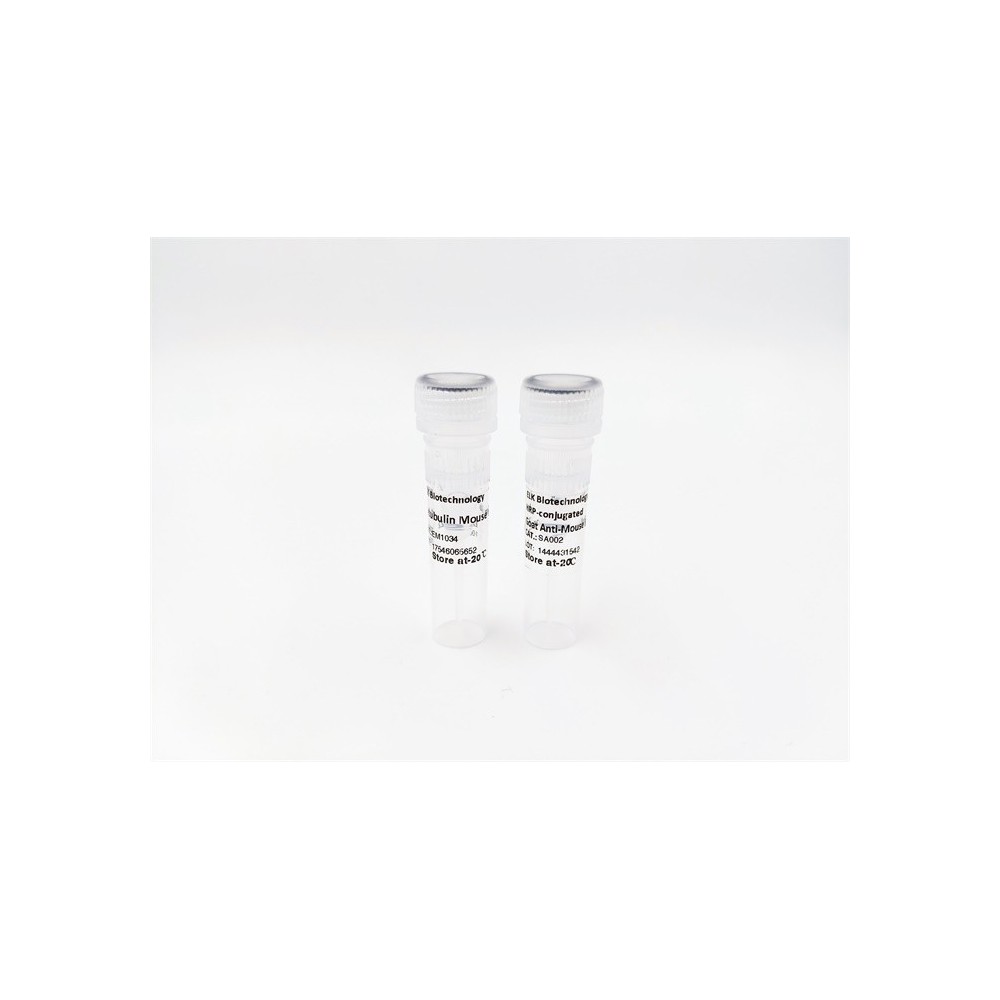

| ELK.No | ES2007 |
| Product name | c-Maf rabbit pAb |
| Reactivity | Human;Mouse;Rat |
| Applications | WB;ELISA |
| Other name | MAF; Transcription factor Maf; Proto-oncogene c-Maf; V-maf musculoaponeurotic fibrosarcoma oncogene homolog |
| Size | 100μL |
| Unit price ($) | 248 |
| Human gene ID | 4094 |
| Human Swiss-Prot | O75444 |
| Source | Rabbit |
| Isotype | IgG |
| Target | c-Maf |
| Fields | >>Th1 and Th2 cell differentiation;>>Transcriptional misregulation in cancer;>>Inflammatory bowel disease |
| Gene name | MAF |
| Protein name | Transcription factor Maf |
| Human gene link | View Human Gene |
| Human Swiss link | View Human Swiss-Prot |
| Mouse gene ID | 17132 |
| Mouse gene link | View Mouse Gene |
| Mouse Swiss-Prot | P54843 |
| Mouse Swiss link | View Mouse Swiss-Prot |
| Rat gene ID | 54267 |
| Rat gene link | View Rat Gene |
| Rat Swiss-Prot | P54844 |
| Rat Swiss link | View Rat Swiss-Prot |
| Immunogen | The antiserum was produced against synthesized peptide derived from human Maf. AA range:301-350 |
| Specificity | c-Maf Polyclonal Antibody detects endogenous levels of c-Maf protein. |
| Formulation | Liquid in PBS containing 50% glycerol, 0.5% BSA and 0.02% sodium azide. |
| Clonality | Polyclonal |
| Dilution | Western Blot: 1/500 - 1/2000. ELISA: 1/10000. Not yet tested in other applications. |
| Purification | The antibody was affinity-purified from rabbit antiserum by affinity-chromatography using epitope-specific immunogen. |
| Concentration | 1 mg/ml |
| Storage stability | -20°C/1 year |
| Molecular Weight (Da) | |
| Observed band (KD) | 41kD |
| Background | The protein encoded by this gene is a DNA-binding, leucine zipper-containing transcription factor that acts as a homodimer or as a heterodimer. Depending on the binding site and binding partner, the encoded protein can be a transcriptional activator or repressor. This protein plays a role in the regulation of several cellular processes, including embryonic lens fiber cell development, increased T-cell susceptibility to apoptosis, and chondrocyte terminal differentiation. Defects in this gene are a cause of juvenile-onset pulverulent cataract as well as congenital cerulean cataract 4 (CCA4). Two transcript variants encoding different isoforms have been found for this gene. [provided by RefSeq, Jan 2010], |
| Function | disease:A chromosomal aberration involving MAF is found in some forms of multiple myeloma (MM). Translocation t(14;16)(q32.3;q23) with an IgH locus.,disease:Defects in MAF are the cause of congenital cerulean cataract 4 (CCA4) [MIM:610202]. CCA4 is a form of autosomal dominant congenital cataract (ADCC). Cerulean cataracts have peripheral bluish and white opacifications in concentric layers with occasional central lesions arranged radially. Although the opacities may be observed during fetal development and childhood, usually visual acuity is only mildly reduced until adulthood, when lens extraction is generally necessary.,disease:Defects in MAF are the cause of juvenile-onset pulverulent cataract [MIM:610202]. Cataract is a partial or complete ocular opacity that affects the crystalline lens or its capsule, leading to impaired vision or blindness.,function:Acts as a transcriptional acti |
| Subcellular location | Nucleus . |
| Expression | Expressed in endothelial cells. |



Use collapsible tabs for more detailed information that will help customers make a purchasing decision.
Ex: Shipping and return policies, size guides, and other common questions.