 Français
 English
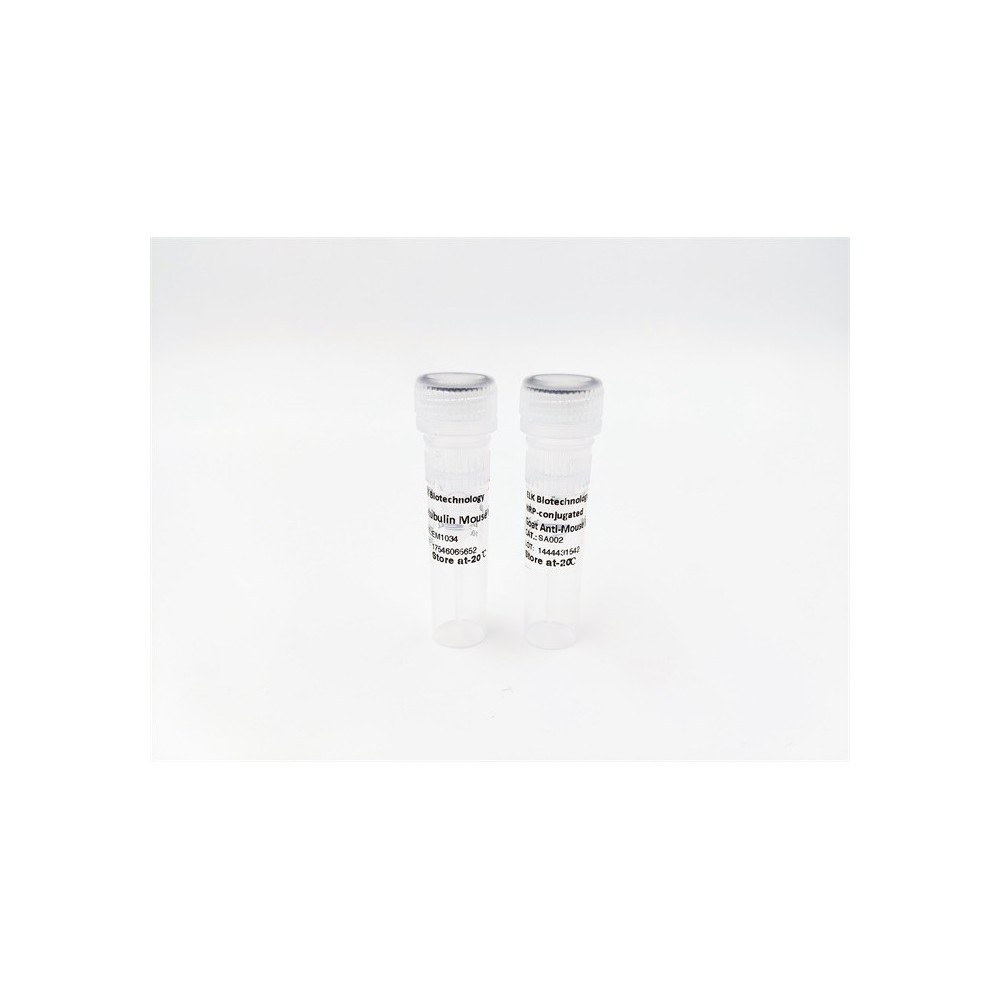

| ELK.No | ES2039 |
| Product name | CPE rabbit pAb |
| Reactivity | Human;Mouse;Rat |
| Applications | WB;ELISA |
| Other name | CPE; Carboxypeptidase E; CPE; Carboxypeptidase H; CPH; Enkephalin convertase; Prohormone-processing carboxypeptidase |
| Size | 100μL |
| Unit price ($) | 248 |
| Human gene ID | 1363 |
| Human Swiss-Prot | P16870 |
| Source | Rabbit |
| Isotype | IgG |
| Target | CPE |
| Fields | >>Type I diabetes mellitus |
| Gene name | CPE |
| Protein name | Carboxypeptidase E |
| Human gene link | View Human Gene |
| Human Swiss link | View Human Swiss-Prot |
| Mouse gene ID | 12876 |
| Mouse gene link | View Mouse Gene |
| Mouse Swiss-Prot | Q00493 |
| Mouse Swiss link | View Mouse Swiss-Prot |
| Rat gene ID | 25669 |
| Rat gene link | View Rat Gene |
| Rat Swiss-Prot | P15087 |
| Rat Swiss link | View Rat Swiss-Prot |
| Immunogen | The antiserum was produced against synthesized peptide derived from human CPE. AA range:271-320 |
| Specificity | CPE Polyclonal Antibody detects endogenous levels of CPE protein. |
| Formulation | Liquid in PBS containing 50% glycerol, 0.5% BSA and 0.02% sodium azide. |
| Clonality | Polyclonal |
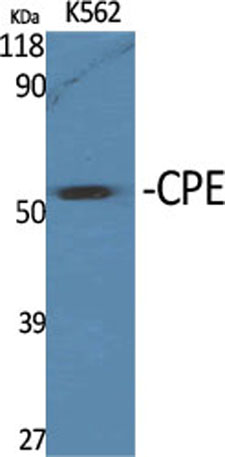
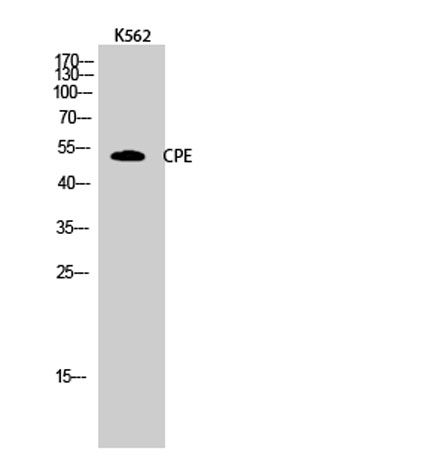
| Dilution | Western Blot: 1/500 - 1/2000. ELISA: 1/10000. Not yet tested in other applications. |
| Purification | The antibody was affinity-purified from rabbit antiserum by affinity-chromatography using epitope-specific immunogen. |
| Concentration | 1 mg/ml |
| Storage stability | -20°C/1 year |
| Molecular Weight (Da) | |
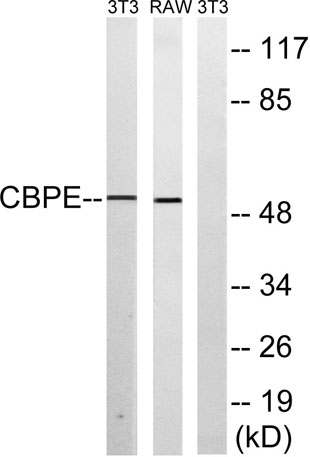
| Observed band (KD) | 53kD |
| Background | carboxypeptidase E(CPE) Homo sapiens This gene encodes a member of the M14 family of metallocarboxypeptidases. The encoded preproprotein is proteolytically processed to generate the mature peptidase. This peripheral membrane protein cleaves C-terminal amino acid residues and is involved in the biosynthesis of peptide hormones and neurotransmitters, including insulin. This protein may also function independently of its peptidase activity, as a neurotrophic factor that promotes neuronal survival, and as a sorting receptor that binds to regulated secretory pathway proteins, including prohormones. Mutations in this gene are implicated in type 2 diabetes. [provided by RefSeq, Nov 2015], |
| Function | catalytic activity:Release of C-terminal arginine or lysine residues from polypeptides.,cofactor:Binds 1 zinc ion per subunit.,function:Removes residual C-terminal Arg or Lys remaining after initial endoprotease cleavage during prohormone processing. Processes proinsulin.,similarity:Belongs to the peptidase M14 family.,subcellular location:Secretory granules of pancreatic islets, adrenal gland, pituitary and brain., |
| Subcellular location | [Isoform 1]: Cytoplasmic vesicle, secretory vesicle . Cytoplasmic vesicle, secretory vesicle membrane ; Peripheral membrane protein . Secreted . Associated with the secretory granule membrane through direct binding to lipid rafts in intragranular conditions. . |
| Expression | Brain,Colon,Eye, |

Use collapsible tabs for more detailed information that will help customers make a purchasing decision.
Ex: Shipping and return policies, size guides, and other common questions.