 Français
 English
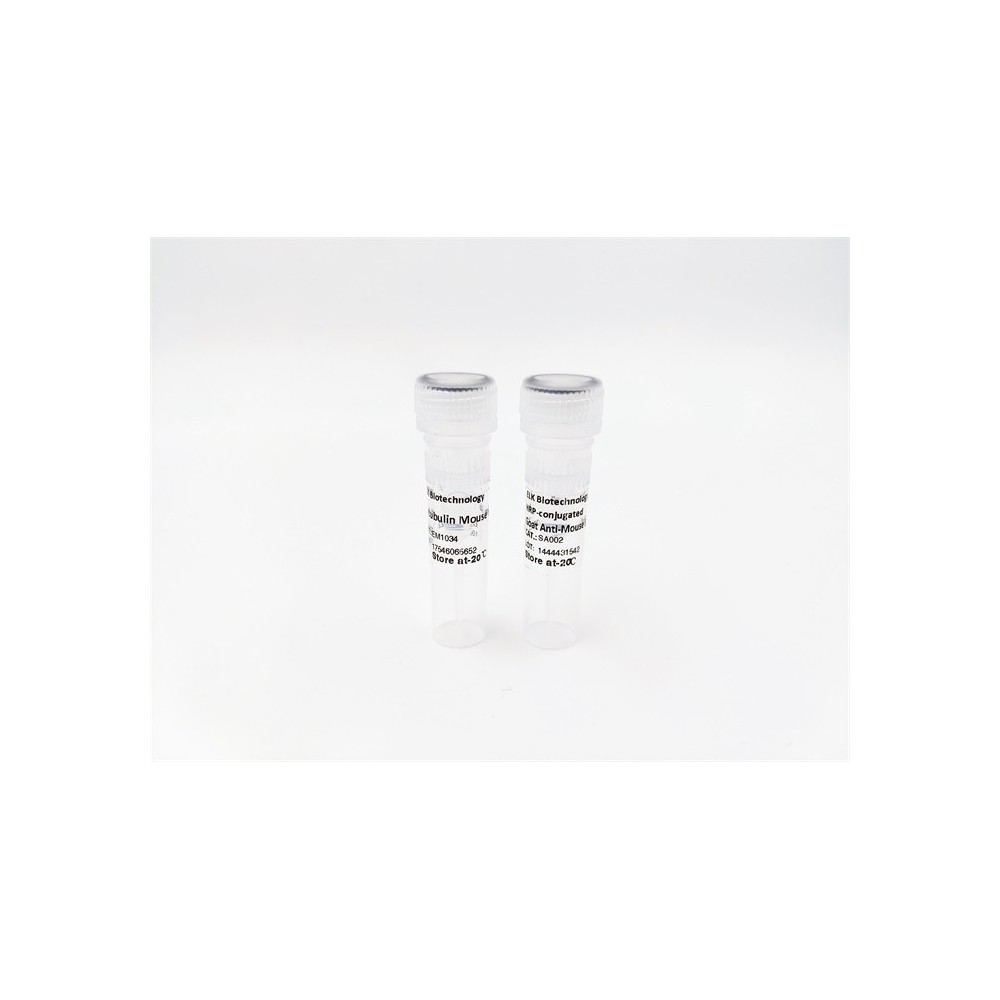

| ELK.No | ES2041 |
| Product name | CPN cat rabbit pAb |
| Reactivity | Human;Rat;Mouse; |
| Applications | WB;ELISA |
| Other name | CPN1; ACBP; Carboxypeptidase N catalytic chain; CPN; Anaphylatoxin inactivator; Arginine carboxypeptidase; Carboxypeptidase N polypeptide 1; Carboxypeptidase N small subunit; Kininase-1; Lysine carboxypeptidase; Plasma carboxypeptidase B; S |
| Size | 100μL |
| Unit price ($) | 248 |
| Human gene ID | 1369 |
| Human Swiss-Prot | P15169 |
| Source | Rabbit |
| Isotype | IgG |
| Target | CPN cat |
| Fields | |
| Gene name | CPN1 |
| Protein name | Carboxypeptidase N catalytic chain |
| Human gene link | View Human Gene |
| Human Swiss link | View Human Swiss-Prot |
| Mouse gene ID | |
| Mouse gene link | |
| Mouse Swiss-Prot | Q9JJN5 |
| Mouse Swiss link | View Mouse Swiss-Prot |
| Rat gene ID | |
| Rat gene link | |
| Rat Swiss-Prot | |
| Rat Swiss link | |
| Immunogen | The antiserum was produced against synthesized peptide derived from human CPN1. AA range:409-458 |
| Specificity | CPN cat Polyclonal Antibody detects endogenous levels of CPN cat protein. |
| Formulation | Liquid in PBS containing 50% glycerol, 0.5% BSA and 0.02% sodium azide. |
| Clonality | Polyclonal |
| Dilution | Western Blot: 1/500 - 1/2000. ELISA: 1/20000. Not yet tested in other applications. |
| Purification | The antibody was affinity-purified from rabbit antiserum by affinity-chromatography using epitope-specific immunogen. |
| Concentration | 1 mg/ml |
| Storage stability | -20°C/1 year |
| Molecular Weight (Da) | |
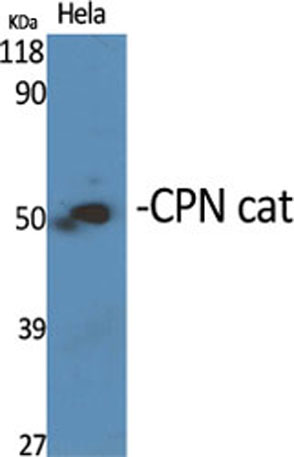
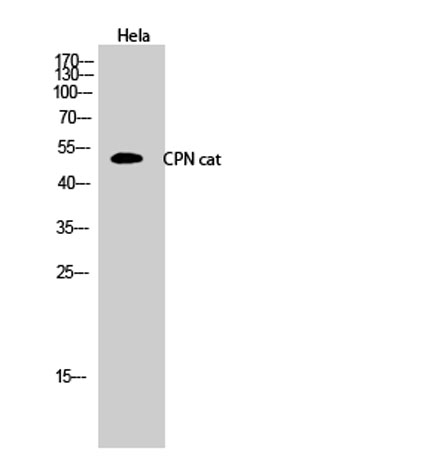
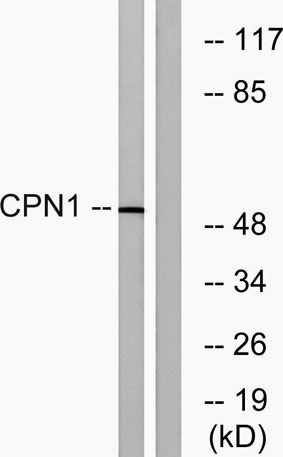
| Observed band (KD) | total 52kD,Cleaved 48kD |
| Background | Carboxypeptidase N is a plasma metallo-protease that cleaves basic amino acids from the C terminal of peptides and proteins. The enzyme is important in the regulation of peptides like kinins and anaphylatoxins, and has also been known as kininase-1 and anaphylatoxin inactivator. This enzyme is a tetramer comprised of two identical regulatory subunits and two identical catalytic subunits; this gene encodes the catalytic subunit. Mutations in this gene can be associated with angioedema or chronic urticaria resulting from carboxypeptidase N deficiency. [provided by RefSeq, Jul 2008], |
| Function | catalytic activity:Release of a C-terminal basic amino acid, preferentially lysine.,cofactor:Binds 1 zinc ion per subunit.,disease:Defects in CPN1 are the cause of carboxypeptidase N deficiency [MIM:212070]. Patients affected present some combination of angioedema or chronic urticaria, as well as hay fever or astma, and have also slightly depressed serum carboxy peptidase N, suggestive of autosomal recessive inheritance of this disorder.,function:Protects the body from potent vasoactive and inflammatory peptides containing C-terminal Arg or Lys (such as kinins or anaphylatoxins) which are released into the circulation.,similarity:Belongs to the peptidase M14 family.,subunit:Tetramer of two catalytic chains and two glycosylated inactive chains.,tissue specificity:Synthesized in the liver and secreted in plasma., |
| Subcellular location | Secreted, extracellular space. |
| Expression | Synthesized in the liver and secreted in plasma. |

Use collapsible tabs for more detailed information that will help customers make a purchasing decision.
Ex: Shipping and return policies, size guides, and other common questions.