 Français
 English
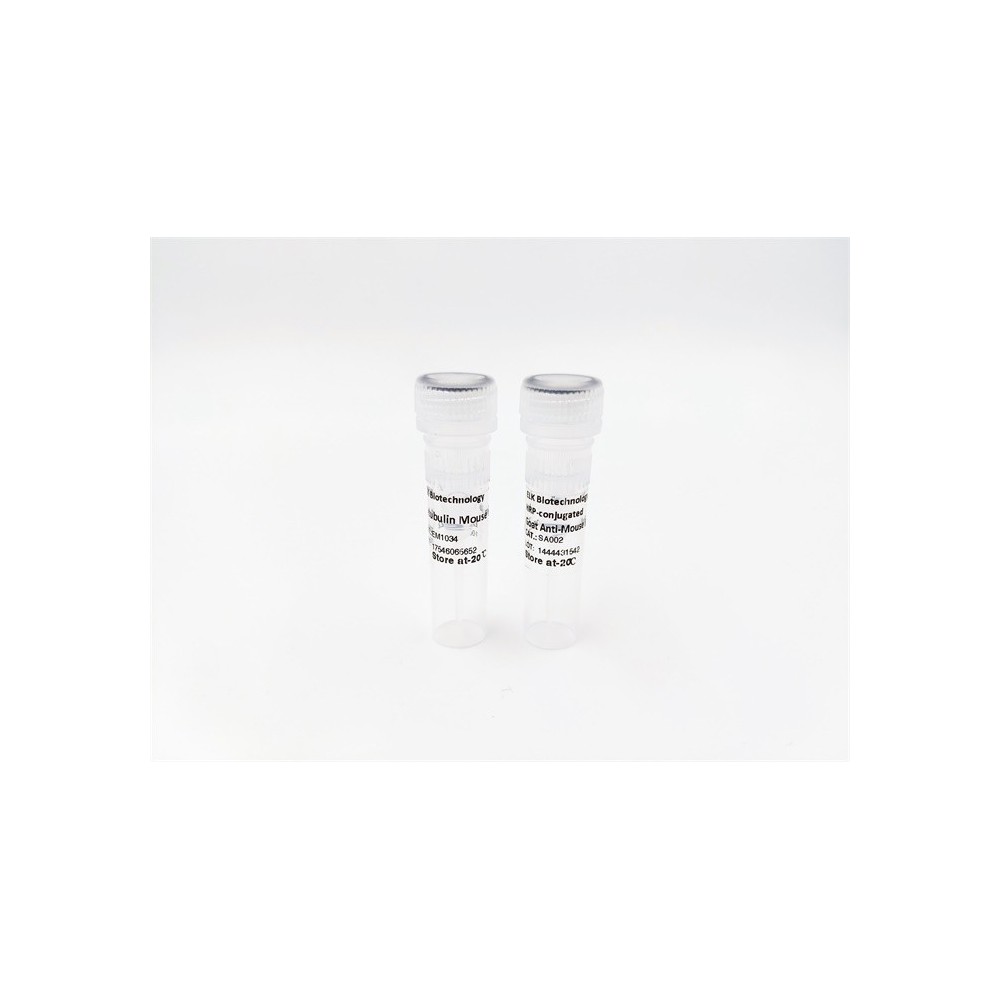

| ELK.No | ES2067 |
| Product name | CstF-64 rabbit pAb |
| Reactivity | Human;Mouse |
| Applications | WB;IHC;IF;ELISA |
| Other name | CSTF2; Cleavage stimulation factor subunit 2; CF-1 64 kDa subunit; Cleavage stimulation factor 64 kDa subunit; CSTF 64 kDa subunit; CstF-64 |
| Size | 50μL |
| Unit price ($) | 148 |
| Human gene ID | 1478 |
| Human Swiss-Prot | P33240 |
| Source | Rabbit |
| Isotype | IgG |
| Target | CstF-64 |
| Fields | >>mRNA surveillance pathway |
| Gene name | CSTF2 |
| Protein name | Cleavage stimulation factor subunit 2 |
| Human gene link | View Human Gene |
| Human Swiss link | View Human Swiss-Prot |
| Mouse gene ID | 108062 |
| Mouse gene link | View Mouse Gene |
| Mouse Swiss-Prot | Q8BIQ5 |
| Mouse Swiss link | View Mouse Swiss-Prot |
| Rat gene ID | |
| Rat gene link | |
| Rat Swiss-Prot | |
| Rat Swiss link | |
| Immunogen | The antiserum was produced against synthesized peptide derived from human CSTF2. AA range:11-60 |
| Specificity | CstF-64 Polyclonal Antibody detects endogenous levels of CstF-64 protein. |
| Formulation | Liquid in PBS containing 50% glycerol, 0.5% BSA and 0.02% sodium azide. |
| Clonality | Polyclonal |
| Dilution | Western Blot: 1/500 - 1/2000. Immunohistochemistry: 1/100 - 1/300. Immunofluorescence: 1/200 - 1/1000. ELISA: 1/5000. Not yet tested in other applications. |
| Purification | The antibody was affinity-purified from rabbit antiserum by affinity-chromatography using epitope-specific immunogen. |
| Concentration | 1 mg/ml |
| Storage stability | -20°C/1 year |
| Molecular Weight (Da) | |
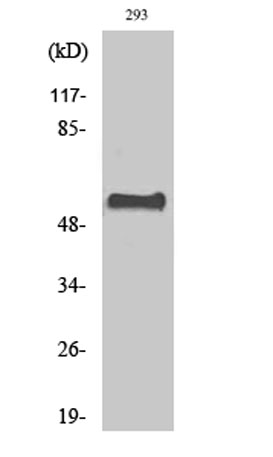
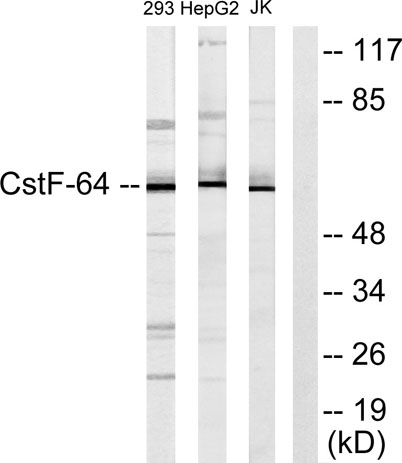
| Observed band (KD) | 60kD |
| Background | This gene encodes a nuclear protein with an RRM (RNA recognition motif) domain. The protein is a member of the cleavage stimulation factor (CSTF) complex that is involved in the 3' end cleavage and polyadenylation of pre-mRNAs. Specifically, this protein binds GU-rich elements within the 3'-untranslated region of mRNAs. [provided by RefSeq, Jul 2008], |
| Function | function:One of the multiple factors required for polyadenylation and 3'-end cleavage of mammalian pre-mRNAs. This subunit is directly involved in the binding to pre-mRNAs.,induction:Up-regulated during the G0 to S phase transition.,PTM:Phosphorylated upon DNA damage, probably by ATM or ATR.,similarity:Contains 1 RRM (RNA recognition motif) domain.,subunit:The CSTF complex is composed of CSTF1 (50 kDa subunit), CSTF2 (64 kDa subunit) and CSTF3 (77 kDa subunit). CSTF2 directly interacts with CSTF3, SYMPK and RPO2TC1. Interacts with HSF1 in heat-stressed cells. Interacts with FIP1L1., |
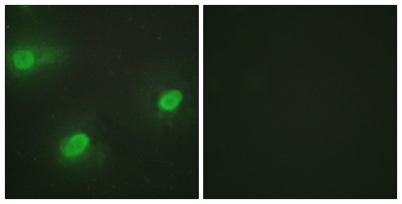
| Subcellular location | Nucleus . Localized with DDX1 in cleavage bodies. |
| Expression | Kidney,Ovary, |

Use collapsible tabs for more detailed information that will help customers make a purchasing decision.
Ex: Shipping and return policies, size guides, and other common questions.