 Français
 English

| ELK.No | ES20870 |
| Product name | STIP1/HOP Rabbit pAb |
| Reactivity | Human; Mouse;Rat |
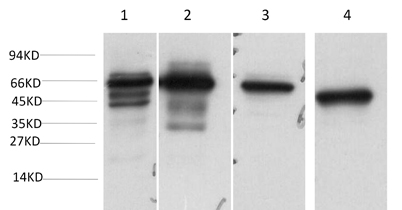
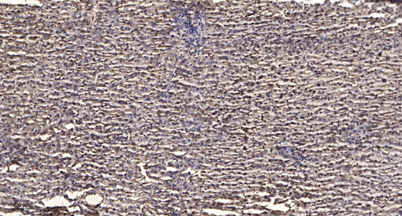
| Applications | IHC;WB |
| Other name | Stress-induced-phosphoprotein 1 (STI1) (Hsc70/Hsp90-organizing protein) (Hop) (Renal carcinoma antigen NY-REN-11) (Transformation-sensitive protein IEF SSP 3521) |
| Size | 100μL |
| Unit price ($) | 248 |
| Human gene ID | 10963 |
| Human Swiss-Prot | P31948 |
| Source | Rabbit |
| Isotype | IgG |
| Target | STIP1/HOP |
| Fields | >>Prion disease |
| Gene name | STIP1 |
| Protein name | STIP1/HOP |
| Human gene link | View Human Gene |
| Human Swiss link | View Human Swiss-Prot |
| Mouse gene ID | 20867 |
| Mouse gene link | View Mouse Gene |
| Mouse Swiss-Prot | Q60864 |
| Mouse Swiss link | View Mouse Swiss-Prot |
| Rat gene ID | 192277 |
| Rat gene link | View Rat Gene |
| Rat Swiss-Prot | O35814 |
| Rat Swiss link | View Rat Swiss-Prot |
| Immunogen | Synthesized peptide derived from human STIP1/HOP AA range: 250-300 |
| Specificity | This antibody detects endogenous levels of STIP1/HOP at Human, Mouse,Rat |
| Formulation | Liquid in PBS containing 50% glycerol, 0.5% BSA and 0.82% sodium azide. |
| Clonality | Polyclonal |
| Dilution | IHC-p1:50-200 ,WB 1:1000-2000 |
| Purification | The antibody was affinity-purified from rabbit serum by affinity-chromatography using specific immunogen. |
| Concentration | 1 mg/ml |
| Storage stability | -20°C/1 year |
| Molecular Weight (Da) | |
| Observed band (KD) | 64kD |
| Background | STIP1 is an adaptor protein that coordinates the functions of HSP70 (see HSPA1A; MIM 140550) and HSP90 (see HSP90AA1; MIM 140571) in protein folding. It is thought to assist in the transfer of proteins from HSP70 to HSP90 by binding both HSP90 and substrate-bound HSP70. STIP1 also stimulates the ATPase activity of HSP70 and inhibits the ATPase activity of HSP90, suggesting that it regulates both the conformations and ATPase cycles of these chaperones (Song and Masison, 2005 [PubMed 16100115]).[supplied by OMIM, Jul 2009], |
| Function | domain:The TPR 1 repeat interacts with the C-terminal of HSC70. The TPR 4, 5 and 6 repeats (also called TPR2A domain) and TPR 7, 8 and 9 repeats (also called TPR2B domain) interact with HSP90.,function:Mediates the association of the molecular chaperones HSC70 and HSP90 (HSPCA and HSPCB).,similarity:Contains 2 STI1 domains.,similarity:Contains 9 TPR repeats.,subunit:Forms a complex with HSC70 and HSPCA/HSP-86 and HSPCB/HSP-84. Interacts with PACRG., |
| Subcellular location | Cytoplasm . Nucleus . Dynein axonemal particle . |
| Expression | B-cell lymphoma,Brain,Cajal-Retzius cell,Epithelium,Fetal brain cortex,Kera |

Use collapsible tabs for more detailed information that will help customers make a purchasing decision.
Ex: Shipping and return policies, size guides, and other common questions.