 Français
 English
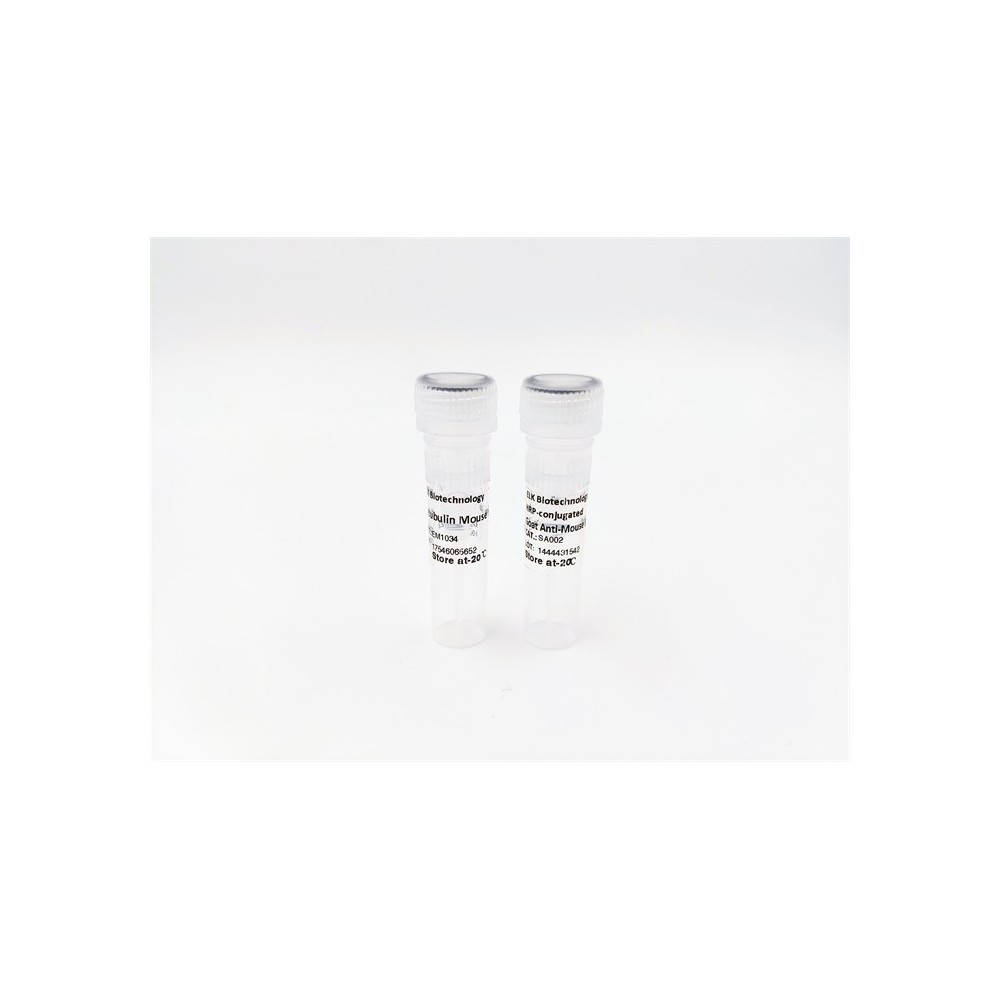

| ELK.No | ES2166 |
| Product name | DGK-ι rabbit pAb |
| Reactivity | Human;Rat |
| Applications | WB;IHC;IF;ELISA |
| Other name | DGKI; Diacylglycerol kinase iota; DAG kinase iota; Diglyceride kinase iota; DGK-iota |
| Size | 100μL |
| Unit price ($) | 248 |
| Human gene ID | 9162 |
| Human Swiss-Prot | O75912 |
| Source | Rabbit |
| Isotype | IgG |
| Target | DGK-ι |
| Fields | >>Glycerolipid metabolism;>>Glycerophospholipid metabolism;>>Metabolic pathways;>>Phosphatidylinositol signaling system;>>Phospholipase D signaling pathway;>>Choline metabolism in cancer |
| Gene name | DGKI |
| Protein name | Diacylglycerol kinase iota |
| Human gene link | View Human Gene |
| Human Swiss link | View Human Swiss-Prot |
| Mouse gene ID | |
| Mouse gene link | |
| Mouse Swiss-Prot | |
| Mouse Swiss link | |
| Rat gene ID | |
| Rat gene link | |
| Rat Swiss-Prot | |
| Rat Swiss link | |
| Immunogen | The antiserum was produced against synthesized peptide derived from human DGKI. AA range:991-1040 |
| Specificity | DGK-ι Polyclonal Antibody detects endogenous levels of DGK-ι protein. |
| Formulation | Liquid in PBS containing 50% glycerol, 0.5% BSA and 0.02% sodium azide. |
| Clonality | Polyclonal |
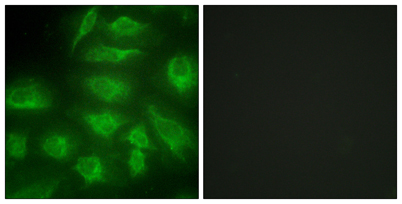
| Dilution | Western Blot: 1/500 - 1/2000. Immunohistochemistry: 1/100 - 1/300. Immunofluorescence: 1/200 - 1/1000. ELISA: 1/20000. Not yet tested in other applications. |
| Purification | The antibody was affinity-purified from rabbit antiserum by affinity-chromatography using epitope-specific immunogen. |
| Concentration | 1 mg/ml |
| Storage stability | -20°C/1 year |
| Molecular Weight (Da) | |
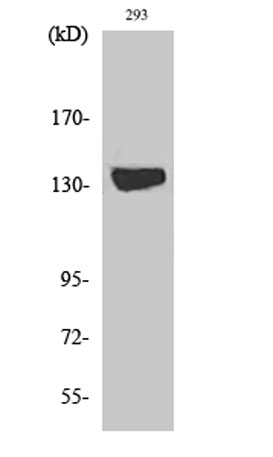
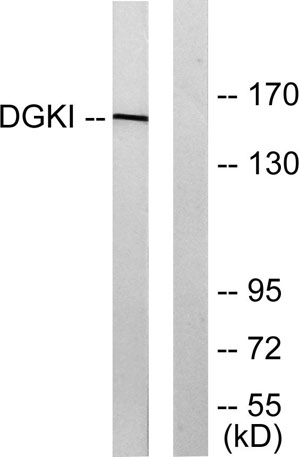
| Observed band (KD) | 160kD |
| Background | This gene is a member of the type IV diacylglycerol kinase subfamily. Diacylglycerol kinases regulate the intracellular concentration of diacylglycerol through its phosphorylation, producing phosphatidic acid. The specific role of the enzyme encoded by this gene is undetermined, however, it may play a crucial role in the production of phosphatidic acid in the retina or in recessive forms of retinal degeneration. [provided by RefSeq, Jul 2008], |
| Function | catalytic activity:ATP + 1,2-diacylglycerol = ADP + 1,2-diacyl-sn-glycerol 3-phosphate.,similarity:Belongs to the eukaryotic diacylglycerol kinase family.,similarity:Contains 1 DAGKc domain.,similarity:Contains 2 ANK repeats.,similarity:Contains 2 phorbol-ester/DAG-type zinc fingers., |
| Subcellular location | Cell projection, axon . Cell projection, dendrite . Cell junction, synapse, presynapse . Cell junction, synapse, postsynapse . Cell junction, synapse, postsynaptic density . Cell junction, synapse, synaptic cell membrane . Cytoplasmic vesicle, secretory vesicle, synaptic vesicle membrane . Cytoplasm, cytosol . Nucleus . Excluded from inhibitory synapses (By similarity). Localization between cytoplasm and nucleus is regulated by protein kinase C (PubMed:9830018). Both in the detergent soluble and particulate fractions (By similarity). . |
| Expression | Specifically expressed in brain and retina (PubMed:9830018). In brain, highly expressed in hippocampus, caudate nucleus, occipital pole, cerebral cortex, and cerebellum (PubMed:9830018). Also detected in kidney (PubMed:15894621). |

Use collapsible tabs for more detailed information that will help customers make a purchasing decision.
Ex: Shipping and return policies, size guides, and other common questions.