 Français
 English
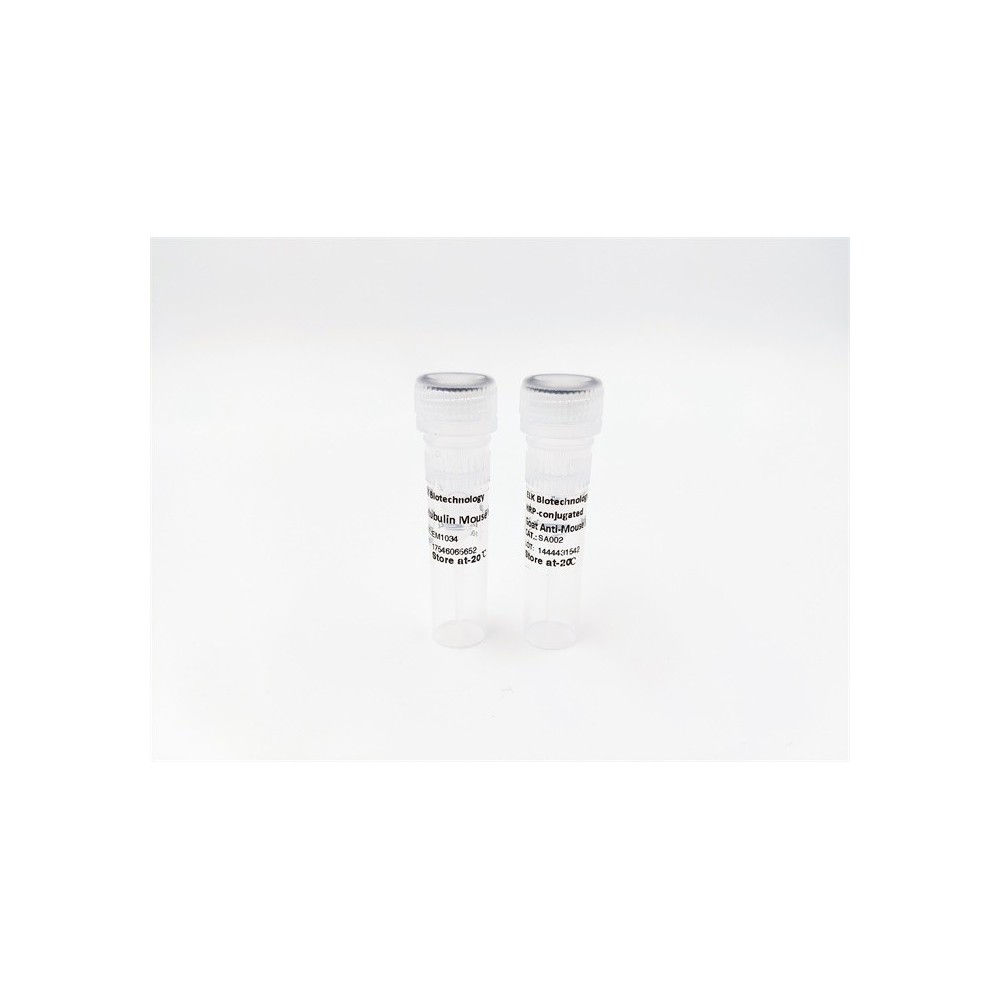

| ELK.No | ES2488 |
| Product name | GSTT1/4 rabbit pAb |
| Reactivity | Human;Rat;Mouse; |
| Applications | WB;ELISA |
| Other name | GSTT1; Glutathione S-transferase theta-1; GST class-theta-1; Glutathione transferase T1-1; GSTT4; Glutathione S-transferase theta-4; GST class-theta-4 |
| Size | 50μL |
| Unit price ($) | 148 |
| Human gene ID | 2952 |
| Human Swiss-Prot | P30711/A8MPT4 |
| Source | Rabbit |
| Isotype | IgG |
| Target | GSTT1/4 |
| Fields | >>Glutathione metabolism;>>Metabolism of xenobiotics by cytochrome P450;>>Drug metabolism - cytochrome P450;>>Drug metabolism - other enzymes;>>Metabolic pathways;>>Platinum drug resistance;>>Pathways in cancer;>>Chemical carcinogenesis - DNA adducts;>>Chemical carcinogenesis - receptor activation;>>Chemical carcinogenesis - reactive oxygen species;>>Hepatocellular carcinoma;>>Fluid shear stress and atherosclerosis |
| Gene name | GSTT1/GSTT4 |
| Protein name | Glutathione S-transferase theta-1/Glutathione S-transferase theta-4 |
| Human gene link | View Human Gene |
| Human Swiss link | View Human Swiss-Prot |
| Mouse gene ID | |
| Mouse gene link | |
| Mouse Swiss-Prot | |
| Mouse Swiss link | |
| Rat gene ID | |
| Rat gene link | |
| Rat Swiss-Prot | |
| Rat Swiss link | |
| Immunogen | The antiserum was produced against synthesized peptide derived from human GSTT1/4. AA range:10-59 |
| Specificity | GSTT1/4 Polyclonal Antibody detects endogenous levels of GSTT1/4 protein. |
| Formulation | Liquid in PBS containing 50% glycerol, 0.5% BSA and 0.02% sodium azide. |
| Clonality | Polyclonal |
| Dilution | Western Blot: 1/500 - 1/2000. ELISA: 1/40000. Not yet tested in other applications. |
| Purification | The antibody was affinity-purified from rabbit antiserum by affinity-chromatography using epitope-specific immunogen. |
| Concentration | 1 mg/ml |
| Storage stability | -20°C/1 year |
| Molecular Weight (Da) | |
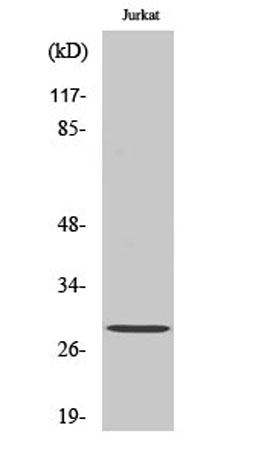
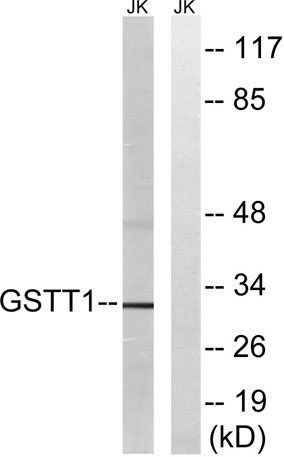
| Observed band (KD) | 30kD |
| Background | The protein encoded by this gene, glutathione S-transferase (GST) theta 1 (GSTT1), is a member of a superfamily of proteins that catalyze the conjugation of reduced glutathione to a variety of electrophilic and hydrophobic compounds. Human GSTs can be divided into five main classes: alpha, mu, pi, theta, and zeta. The theta class includes GSTT1, GSTT2, and GSTT2B. GSTT1 and GSTT2/GSTT2B share 55% amino acid sequence identity and may play a role in human carcinogenesis. The GSTT1 gene is haplotype-specific and is absent from 38% of the population. Alternative splicing of this gene results in multiple transcript variants. [provided by RefSeq, Sep 2015], |
| Function | catalytic activity:RX + glutathione = HX + R-S-glutathione.,function:Conjugation of reduced glutathione to a wide number of exogenous and endogenous hydrophobic electrophiles. Acts on 1,2-epoxy-3-(4-nitrophenoxy)propane, phenethylisothiocyanate 4-nitrobenzyl chloride and 4-nitrophenethyl bromide. Displays glutathione peroxidase activity with cumene hydroperoxide.,online information:The Singapore human mutation and polymorphism database,polymorphism:The GSTT1 gene is absent from 38% of the population. The presence or absence of the GSTT1 gene is coincident with the conjugator (GSST1+) and non-conjugator (GSTT1-) phenotypes respectively. The GSTT1+ phenotype can catalyze the glutathione conjugation of dichloromethane.,similarity:Belongs to the GST superfamily. Theta family.,similarity:Contains 1 GST C-terminal domain.,similarity:Contains 1 GST N-terminal domain.,subunit:Homodimer.,tissue s |
| Subcellular location | Cytoplasm. |
| Expression | Found in erythrocyte. Expressed at low levels in liver. In lung, expressed at low levels in Clara cells and ciliated cells at the alveolar/bronchiolar junction. Absent from epithelial cells of larger bronchioles. |

Use collapsible tabs for more detailed information that will help customers make a purchasing decision.
Ex: Shipping and return policies, size guides, and other common questions.