 Français
 English

| ELK.No | ES2496 |
| Product name | HCCS rabbit pAb |
| Reactivity | Human;Mouse;Monkey |
| Applications | WB;IHC;IF;ELISA |
| Other name | HCCS; CCHL; Cytochrome c-type heme lyase; CCHL; Holocytochrome c-type synthase |
| Size | 100μL |
| Unit price ($) | 248 |
| Human gene ID | 3052 |
| Human Swiss-Prot | P53701 |
| Source | Rabbit |
| Isotype | IgG |
| Target | HCCS |
| Fields | >>Porphyrin metabolism;>>Metabolic pathways |
| Gene name | HCCS |
| Protein name | Cytochrome c-type heme lyase |
| Human gene link | View Human Gene |
| Human Swiss link | View Human Swiss-Prot |
| Mouse gene ID | 15159 |
| Mouse gene link | View Mouse Gene |
| Mouse Swiss-Prot | P53702 |
| Mouse Swiss link | View Mouse Swiss-Prot |
| Rat gene ID | |
| Rat gene link | |
| Rat Swiss-Prot | |
| Rat Swiss link | |
| Immunogen | The antiserum was produced against synthesized peptide derived from human Cytochrome c-type Heme Lyase. AA range:81-130 |
| Specificity | HCCS Polyclonal Antibody detects endogenous levels of HCCS protein. |
| Formulation | Liquid in PBS containing 50% glycerol, 0.5% BSA and 0.02% sodium azide. |
| Clonality | Polyclonal |
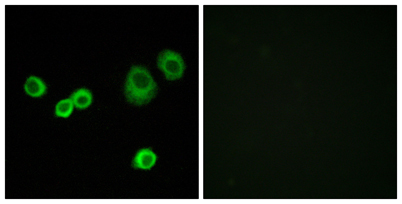
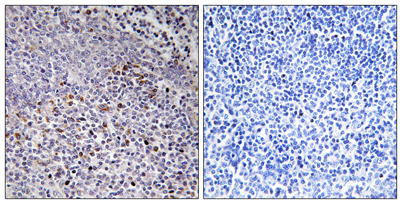
| Dilution | Western Blot: 1/500 - 1/2000. Immunohistochemistry: 1/100 - 1/300. Immunofluorescence: 1/200 - 1/1000. ELISA: 1/20000. Not yet tested in other applications. |
| Purification | The antibody was affinity-purified from rabbit antiserum by affinity-chromatography using epitope-specific immunogen. |
| Concentration | 1 mg/ml |
| Storage stability | -20°C/1 year |
| Molecular Weight (Da) | |
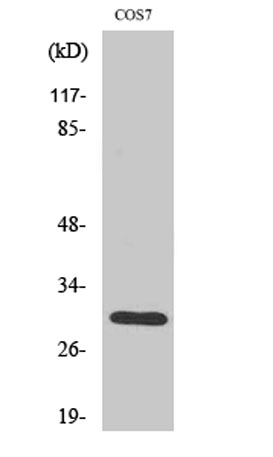
| Observed band (KD) | 31kD |
| Background | holocytochrome c synthase(HCCS) Homo sapiens The protein encoded by this gene is an enzyme that covalently links a heme group to the apoprotein of cytochrome c. Defects in this gene are a cause of microphthalmia syndromic type 7 (MCOPS7). Three transcript variants encoding the same protein have been found for this gene. [provided by RefSeq, Jan 2010], |
| Function | catalytic activity:Holocytochrome c = apocytochrome c + heme.,disease:Defects in HCCS are a cause of microphthalmia syndromic type 7 (MCOPS7) [MIM:309801]; also known as microphthalmia with linear skin defects (MLS) or MIDAS syndrome. Microphthalmia is a clinically heterogeneous disorder of eye formation, ranging from small size of a single eye TO complete bilateral absence of ocular tissues (anophthalmia). In many cases, microphthalmia/anophthalmia occurs in association with syndromes that include non-ocular abnormalities. MCOPS7 is a disorder characterized by unilateral or bilateral microphthalmia, linear skin defects in affected females, and in utero lethality for males. Skin defects are limited to the face and neck, consisting of areas of aplastic skin that heal with age to form hyperpigmented areas. Additional features in female patients include agenesis of the corpus callosum, scle |
| Subcellular location | Mitochondrion inner membrane . Membrane ; Lipid-anchor . |
| Expression | Brain,Liver,Ovary, |

Use collapsible tabs for more detailed information that will help customers make a purchasing decision.
Ex: Shipping and return policies, size guides, and other common questions.