 Français
 English
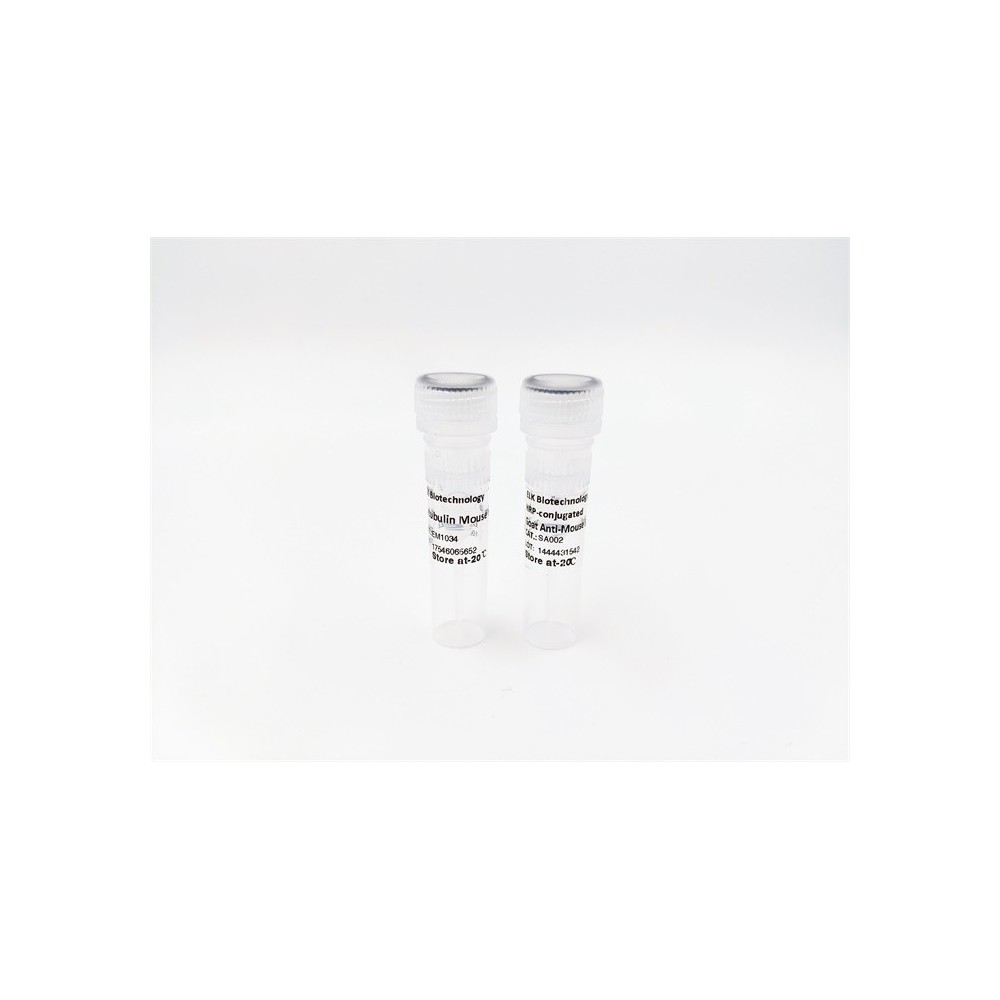

| ELK.No | ES2511 |
| Product name | HGK rabbit pAb |
| Reactivity | Human;Mouse |
| Applications | WB;IF;ELISA |
| Other name | MAP4K4; HGK; KIAA0687; NIK; Mitogen-activated protein kinase kinase kinase kinase 4; HPK/GCK-like kinase HGK; MAPK/ERK kinase kinase kinase 4; MEK kinase kinase 4; MEKKK 4; Nck-interacting kinase |
| Size | 50μL |
| Unit price ($) | 148 |
| Human gene ID | 9448 |
| Human Swiss-Prot | O95819 |
| Source | Rabbit |
| Isotype | IgG |
| Target | HGK |
| Fields | >>MAPK signaling pathway |
| Gene name | MAP4K4 |
| Protein name | Mitogen-activated protein kinase kinase kinase kinase 4 |
| Human gene link | View Human Gene |
| Human Swiss link | View Human Swiss-Prot |
| Mouse gene ID | 26921 |
| Mouse gene link | View Mouse Gene |
| Mouse Swiss-Prot | P97820 |
| Mouse Swiss link | View Mouse Swiss-Prot |
| Rat gene ID | |
| Rat gene link | |
| Rat Swiss-Prot | |
| Rat Swiss link | |
| Immunogen | The antiserum was produced against synthesized peptide derived from human MEKKK 4. AA range:406-455 |
| Specificity | HGK Polyclonal Antibody detects endogenous levels of HGK protein. |
| Formulation | Liquid in PBS containing 50% glycerol, 0.5% BSA and 0.02% sodium azide. |
| Clonality | Polyclonal |
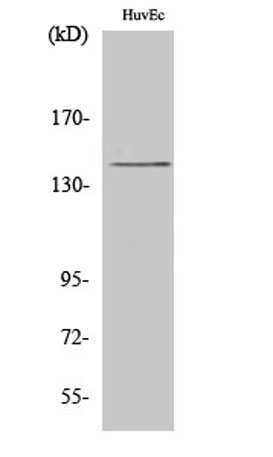
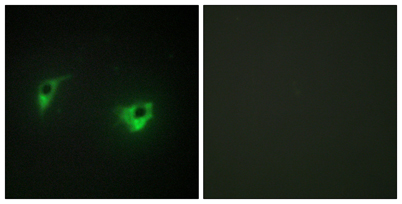
| Dilution | Western Blot: 1/500 - 1/2000. Immunofluorescence: 1/200 - 1/1000. ELISA: 1/40000. Not yet tested in other applications. |
| Purification | The antibody was affinity-purified from rabbit antiserum by affinity-chromatography using epitope-specific immunogen. |
| Concentration | 1 mg/ml |
| Storage stability | -20°C/1 year |
| Molecular Weight (Da) | |
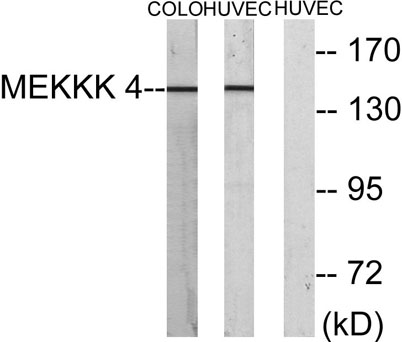
| Observed band (KD) | 142kD |
| Background | mitogen-activated protein kinase kinase kinase kinase 4(MAP4K4) Homo sapiens The protein encoded by this gene is a member of the serine/threonine protein kinase family. This kinase has been shown to specifically activate MAPK8/JNK. The activation of MAPK8 by this kinase is found to be inhibited by the dominant-negative mutants of MAP3K7/TAK1, MAP2K4/MKK4, and MAP2K7/MKK7, which suggests that this kinase may function through the MAP3K7-MAP2K4-MAP2K7 kinase cascade, and mediate the TNF-alpha signaling pathway. Alternatively spliced transcript variants encoding different isoforms have been identified. [provided by RefSeq, Jul 2008], |
| Function | catalytic activity:ATP + a protein = ADP + a phosphoprotein.,cofactor:Magnesium.,function:Serine/threonine kinase that may play a role in the response to environmental stress and cytokines such as TNF-alpha. Appears to act upstream of the JUN N-terminal pathway.,PTM:Phosphorylated upon DNA damage, probably by ATM or ATR.,similarity:Belongs to the protein kinase superfamily.,similarity:Belongs to the protein kinase superfamily. STE Ser/Thr protein kinase family. STE20 subfamily.,similarity:Contains 1 CNH domain.,similarity:Contains 1 protein kinase domain.,subunit:Interacts with the SH3 domain of the adapter proteins Nck (By similarity). Binds, via its CNH regulatory domain, to the N-terminal region of SPG3A.,tissue specificity:Appears to be ubiquitous, expressed in all tissue types examined. Isoform 5 appears to be more abundant in the brain, isoform 4 is predominant in the liver, skelet |
| Subcellular location | Cytoplasm . |
| Expression | Widely expressed. Isoform 5 is abundant in the brain. Isoform 4 is predominant in the liver, skeletal muscle and placenta. |

Use collapsible tabs for more detailed information that will help customers make a purchasing decision.
Ex: Shipping and return policies, size guides, and other common questions.