 Français
 English
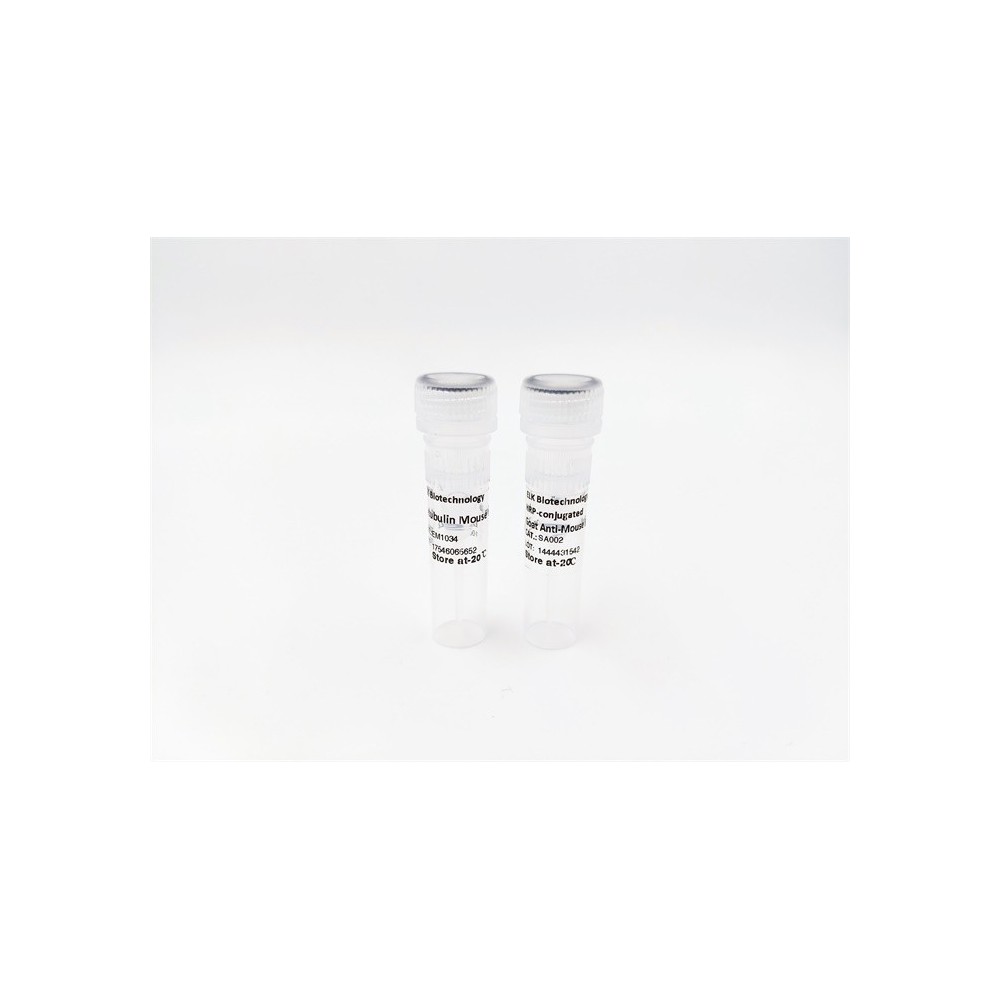

| ELK.No | ES2551 |
| Product name | hnRNP K rabbit pAb |
| Reactivity | Human;Mouse;Rat |
| Applications | WB;IHC;IF;ELISA |
| Other name | HNRNPK; HNRPK; Heterogeneous nuclear ribonucleoprotein K; hnRNP K; Transformation up-regulated nuclear protein; TUNP |
| Size | 100μL |
| Unit price ($) | 248 |
| Human gene ID | 3190 |
| Human Swiss-Prot | P61978 |
| Source | Rabbit |
| Isotype | IgG |
| Target | hnRNP K |
| Fields | >>Spliceosome;>>Viral carcinogenesis;>>MicroRNAs in cancer |
| Gene name | HNRNPK |
| Protein name | Heterogeneous nuclear ribonucleoprotein K |
| Human gene link | View Human Gene |
| Human Swiss link | View Human Swiss-Prot |
| Mouse gene ID | 15387 |
| Mouse gene link | View Mouse Gene |
| Mouse Swiss-Prot | P61979 |
| Mouse Swiss link | View Mouse Swiss-Prot |
| Rat gene ID | 117282 |
| Rat gene link | View Rat Gene |
| Rat Swiss-Prot | P61980 |
| Rat Swiss link | View Rat Swiss-Prot |
| Immunogen | The antiserum was produced against synthesized peptide derived from human hnRNP K. AA range:250-299 |
| Specificity | hnRNP K Polyclonal Antibody detects endogenous levels of hnRNP K protein. |
| Formulation | Liquid in PBS containing 50% glycerol, 0.5% BSA and 0.02% sodium azide. |
| Clonality | Polyclonal |
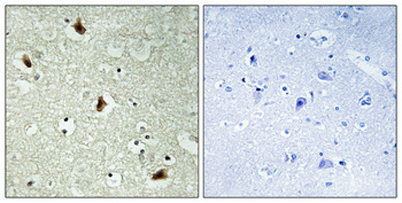
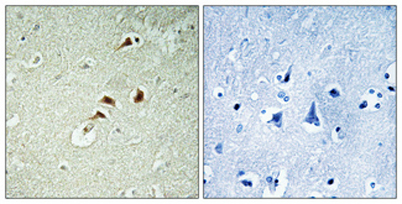
| Dilution | Western Blot: 1/500 - 1/2000. Immunohistochemistry: 1/100 - 1/300. ELISA: 1/40000. Not yet tested in other applications. |
| Purification | The antibody was affinity-purified from rabbit antiserum by affinity-chromatography using epitope-specific immunogen. |
| Concentration | 1 mg/ml |
| Storage stability | -20°C/1 year |
| Molecular Weight (Da) | |
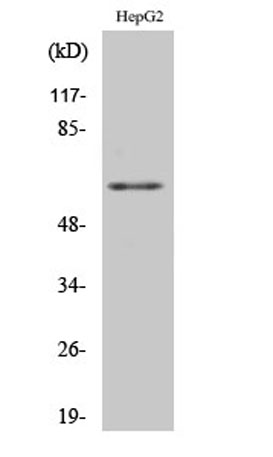
| Observed band (KD) | 51kD |
| Background | This gene belongs to the subfamily of ubiquitously expressed heterogeneous nuclear ribonucleoproteins (hnRNPs). The hnRNPs are RNA binding proteins and they complex with heterogeneous nuclear RNA (hnRNA). These proteins are associated with pre-mRNAs in the nucleus and appear to influence pre-mRNA processing and other aspects of mRNA metabolism and transport. While all of the hnRNPs are present in the nucleus, some seem to shuttle between the nucleus and the cytoplasm. The hnRNP proteins have distinct nucleic acid binding properties. The protein encoded by this gene is located in the nucleoplasm and has three repeats of KH domains that binds to RNAs. It is distinct among other hnRNP proteins in its binding preference; it binds tenaciously to poly(C). This protein is also thought to have a role during cell cycle progession. Several alternatively spliced transcript variants have |
| Function | function:One of the major pre-mRNA-binding proteins. Binds tenaciously to poly(C) sequences. Likely to play a role in the nuclear metabolism of hnRNAs, particularly for pre-mRNAs that contain cytidine-rich sequences. Can also bind poly(C) single-stranded DNA.,mass spectrometry: PubMed:11840567,PTM:Arg-296 and Arg-299 are dimethylated, probably to asymmetric dimethylarginine.,similarity:Contains 1 KH domain.,similarity:Contains 2 KH domains.,similarity:Contains 3 KH domains.,subcellular location:In case of ASFV infection, there is a shift in the localization which becomes predominantly nuclear.,subunit:Interacts with RBM42 and ZIK1 (By similarity). Identified in the spliceosome C complex, at least composed of AQR, ASCC3L1, C19orf29, CDC40, CDC5L, CRNKL1, DDX23, DDX41, DDX48, DDX5, DGCR14, DHX35, DHX38, DHX8, EFTUD2, FRG1, GPATC1, HNRPA1, HNRPA2B1, HNRPA3, HNRPC, HNRPF, HNRPH1, HNRNPK, HNR |
| Subcellular location | Cytoplasm . Nucleus, nucleoplasm . Cell projection, podosome . Recruited to p53/TP53-responsive promoters, in the presence of functional p53/TP53 (PubMed:16360036). In case of ASFV infection, there is a shift in the localization which becomes predominantly nuclear (PubMed:18775702). |
| Expression | Brain,Cajal-Retzius cell,Colorectal cancer and surrounding |

Use collapsible tabs for more detailed information that will help customers make a purchasing decision.
Ex: Shipping and return policies, size guides, and other common questions.