 Français
 English
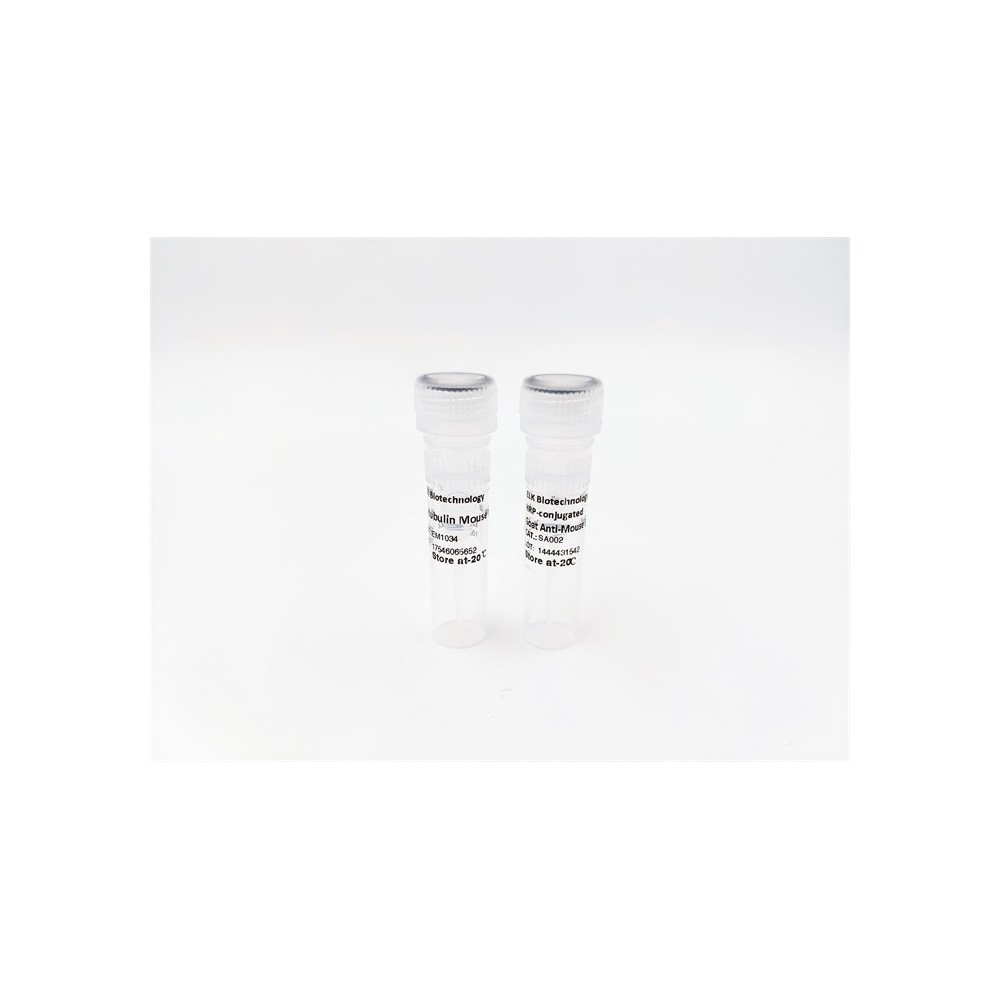

| ELK.No | ES2666 |
| Product name | KALIG-1 rabbit pAb |
| Reactivity | Human;Rat;Mouse; |
| Applications | WB;IHC |
| Other name | KAL1; ADMLX; KAL; KALIG1; Anosmin-1; Adhesion molecule-like X-linked; Kallmann syndrome protein |
| Size | 100μL |
| Unit price ($) | 248 |
| Human gene ID | 3730 |
| Human Swiss-Prot | P23352 |
| Source | Rabbit |
| Isotype | IgG |
| Target | KALIG-1 |
| Fields | |
| Gene name | KAL1 |
| Protein name | Anosmin-1 |
| Human gene link | View Human Gene |
| Human Swiss link | View Human Swiss-Prot |
| Mouse gene ID | |
| Mouse gene link | |
| Mouse Swiss-Prot | |
| Mouse Swiss link | |
| Rat gene ID | |
| Rat gene link | |
| Rat Swiss-Prot | |
| Rat Swiss link | |
| Immunogen | The antiserum was produced against synthesized peptide derived from human KAL1. AA range:151-200 |
| Specificity | KALIG-1 Polyclonal Antibody detects endogenous levels of KALIG-1 protein. |
| Formulation | Liquid in PBS containing 50% glycerol, 0.5% BSA and 0.02% sodium azide. |
| Clonality | Polyclonal |
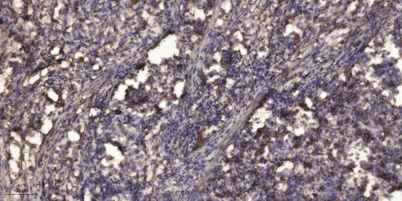
| Dilution | WB 1:500-2000;IHC-p 1:50-300 |
| Purification | The antibody was affinity-purified from rabbit antiserum by affinity-chromatography using epitope-specific immunogen. |
| Concentration | 1 mg/ml |
| Storage stability | -20°C/1 year |
| Molecular Weight (Da) | |
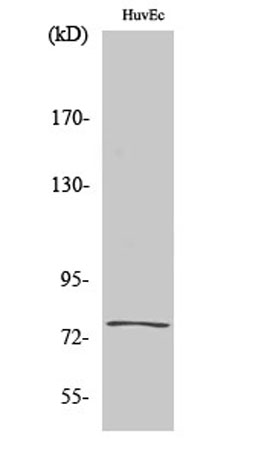
| Observed band (KD) | 76kD |
| Background | Mutations in this gene cause the X-linked Kallmann syndrome. The encoded protein is similar in sequence to proteins known to function in neural cell adhesion and axonal migration. In addition, this cell surface protein is N-glycosylated and may have anti-protease activity. [provided by RefSeq, Jul 2008], |
| Function | disease:Defects in KAL1 are the cause of Kallmann syndrome type 1 (KAL1) [MIM:308700]; also known as hypogonadotropic hypogonadism and anosmia. Anosmia or hyposmia is related to the absence or hypoplasia of the olfactory bulbs and tracts. Hypogonadism is due to deficiency in gonadotropin-releasing hormone and probably results from a failure of embryonic migration of gonadotropin-releasing hormone-synthesizing neurons. In some patients other developmental anomalies can be present, which include renal agenesis, cleft lip and/or palate, selective tooth agenesis, and bimanual synkinesis. In some cases anosmia may be absent or inconspicuous.,function:May be an adhesion-like molecule with anti-protease activity.,PTM:N-glycosylated.,similarity:Contains 1 WAP domain.,similarity:Contains 4 fibronectin type-III domains., |
| Subcellular location | Cell membrane ; Peripheral membrane protein . Secreted . Proteolytic cleavage may release it from the cell surface into the extracellular space. |
| Expression | Expressed in the cerebellum (at protein level). |

Use collapsible tabs for more detailed information that will help customers make a purchasing decision.
Ex: Shipping and return policies, size guides, and other common questions.