 Français
 English
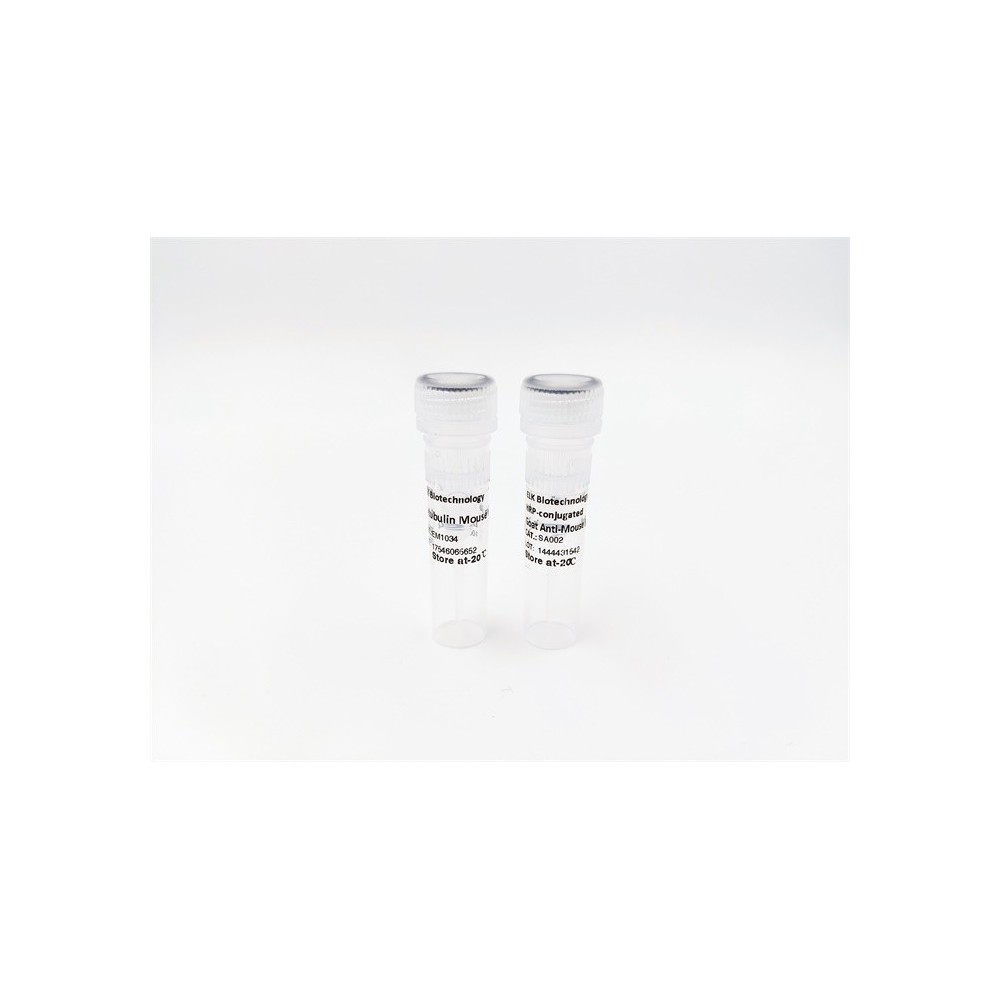

| ELK.No | ES2687 |
| Product name | Kv1.3 rabbit pAb |
| Reactivity | Human;Mouse;Rat |
| Applications | WB;IHC;IF;ELISA |
| Other name | KCNA3; HGK5; Potassium voltage-gated channel subfamily A member 3; HGK5; HLK3; HPCN3; Voltage-gated K(+) channel HuKIII; Voltage-gated potassium channel subunit Kv1.3 |
| Size | 50μL |
| Unit price ($) | 148 |
| Human gene ID | 3738 |
| Human Swiss-Prot | P22001 |
| Source | Rabbit |
| Isotype | IgG |
| Target | Kv1.3 |
| Fields | |
| Gene name | KCNA3 |
| Protein name | Potassium voltage-gated channel subfamily A member 3 |
| Human gene link | View Human Gene |
| Human Swiss link | View Human Swiss-Prot |
| Mouse gene ID | 16491 |
| Mouse gene link | View Mouse Gene |
| Mouse Swiss-Prot | P16390 |
| Mouse Swiss link | View Mouse Swiss-Prot |
| Rat gene ID | 29731 |
| Rat gene link | View Rat Gene |
| Rat Swiss-Prot | P15384 |
| Rat Swiss link | View Rat Swiss-Prot |
| Immunogen | The antiserum was produced against synthesized peptide derived from human Kv1.3/KCNA3. AA range:101-150 |
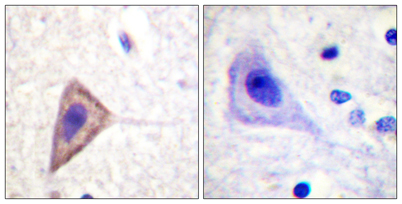
| Specificity | Kv1.3 Polyclonal Antibody detects endogenous levels of Kv1.3 protein. |
| Formulation | Liquid in PBS containing 50% glycerol, 0.5% BSA and 0.02% sodium azide. |
| Clonality | Polyclonal |
| Dilution | Western Blot: 1/500 - 1/2000. Immunohistochemistry: 1/100 - 1/300. Immunofluorescence: 1/200 - 1/1000. ELISA: 1/20000. Not yet tested in other applications. |
| Purification | The antibody was affinity-purified from rabbit antiserum by affinity-chromatography using epitope-specific immunogen. |
| Concentration | 1 mg/ml |
| Storage stability | -20°C/1 year |
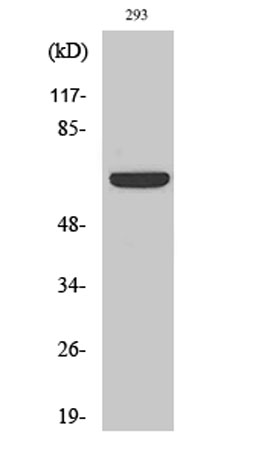
| Molecular Weight (Da) | 58kD |
| Observed band (KD) | |
| Background | Potassium channels represent the most complex class of voltage-gated ion channels from both functional and structural standpoints. Their diverse functions include regulating neurotransmitter release, heart rate, insulin secretion, neuronal excitability, epithelial electrolyte transport, smooth muscle contraction, and cell volume. Four sequence-related potassium channel genes - shaker, shaw, shab, and shal - have been identified in Drosophila, and each has been shown to have human homolog(s). This gene encodes a member of the potassium channel, voltage-gated, shaker-related subfamily. This member contains six membrane-spanning domains with a shaker-type repeat in the fourth segment. It belongs to the delayed rectifier class, members of which allow nerve cells to efficiently repolarize following an action potential. It plays an essential role in T-cell proliferation and |
| Function | caution:It is uncertain whether Met-1 or Met-53 is the initiator.,domain:The N-terminus may be important in determining the rate of inactivation of the channel while the tail may play a role in modulation of channel activity and/or targeting of the channel to specific subcellular compartments.,domain:The segment S4 is probably the voltage-sensor and is characterized by a series of positively charged amino acids at every third position.,function:Mediates the voltage-dependent potassium ion permeability of excitable membranes. Assuming opened or closed conformations in response to the voltage difference across the membrane, the protein forms a potassium-selective channel through which potassium ions may pass in accordance with their electrochemical gradient.,sequence caution:Translation N-terminally extended.,similarity:Belongs to the potassium channel family. A (Shaker) subfamily.,subunit |
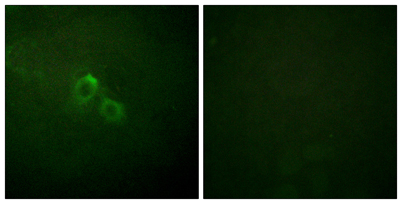
| Subcellular location | Cell membrane ; Multi-pass membrane protein. |
| Expression | Blood,Brain,Lymphocyte,Skeletal muscle, |

Use collapsible tabs for more detailed information that will help customers make a purchasing decision.
Ex: Shipping and return policies, size guides, and other common questions.