 Français
 English
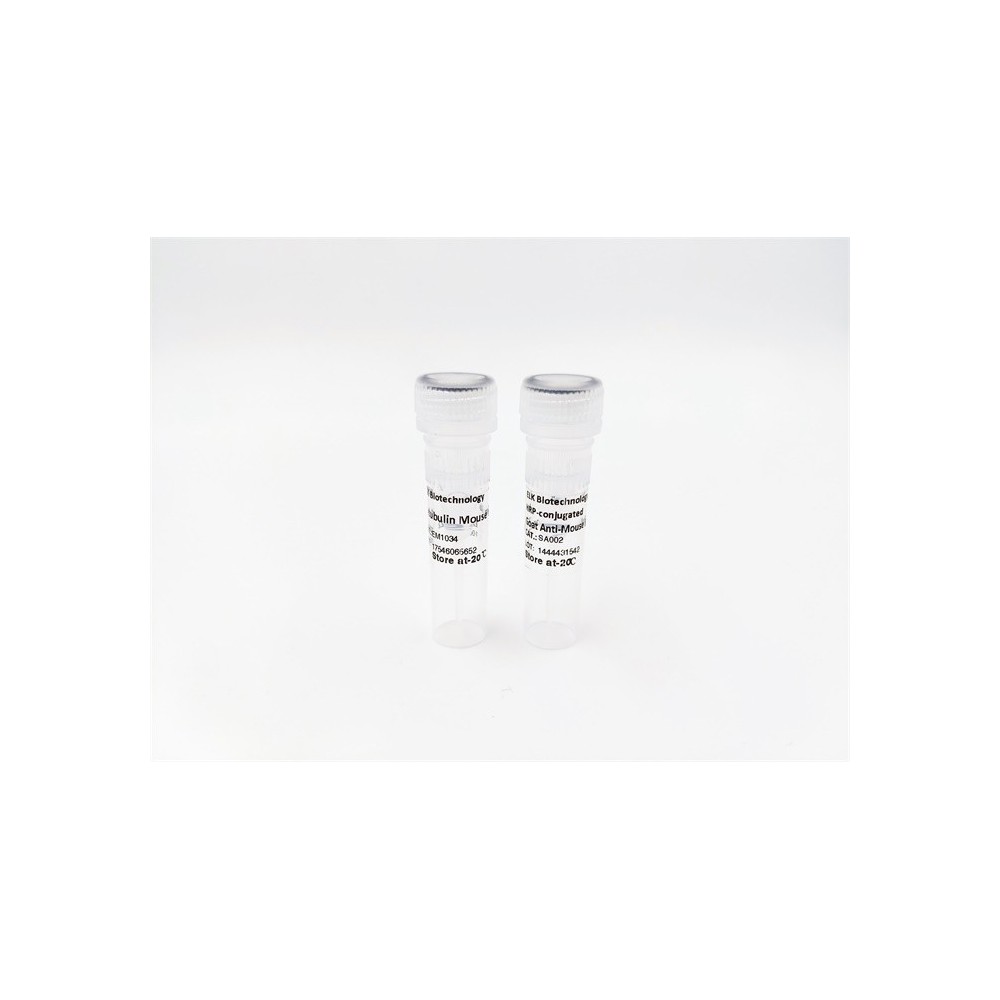

| ELK.No | ES2688 |
| Product name | KV1.5 rabbit pAb |
| Reactivity | Human;Mouse;Rat |
| Applications | WB;ELISA;IHC |
| Other name | KCNA5; Potassium voltage-gated channel subfamily A member 5; HPCN1; Voltage-gated potassium channel HK2; Voltage-gated potassium channel subunit Kv1.5 |
| Size | 50μL |
| Unit price ($) | 148 |
| Human gene ID | 3741 |
| Human Swiss-Prot | P22460 |
| Source | Rabbit |
| Isotype | IgG |
| Target | KV1.5 |
| Fields | |
| Gene name | KCNA5 |
| Protein name | Potassium voltage-gated channel subfamily A member 5 |
| Human gene link | View Human Gene |
| Human Swiss link | View Human Swiss-Prot |
| Mouse gene ID | 16493 |
| Mouse gene link | View Mouse Gene |
| Mouse Swiss-Prot | Q61762 |
| Mouse Swiss link | View Mouse Swiss-Prot |
| Rat gene ID | 25470 |
| Rat gene link | View Rat Gene |
| Rat Swiss-Prot | P19024 |
| Rat Swiss link | View Rat Swiss-Prot |
| Immunogen | The antiserum was produced against synthesized peptide derived from human KCNA5. AA range:253-302 |
| Specificity | KV1.5 Polyclonal Antibody detects endogenous levels of KV1.5 protein. |
| Formulation | Liquid in PBS containing 50% glycerol, 0.5% BSA and 0.02% sodium azide. |
| Clonality | Polyclonal |
| Dilution | WB 1:500-2000;IHC-p 1:50-300; ELISA 2000-20000 |
| Purification | The antibody was affinity-purified from rabbit antiserum by affinity-chromatography using epitope-specific immunogen. |
| Concentration | 1 mg/ml |
| Storage stability | -20°C/1 year |
| Molecular Weight (Da) | |
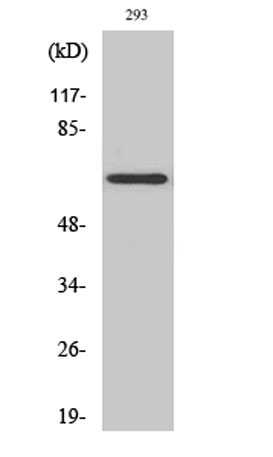
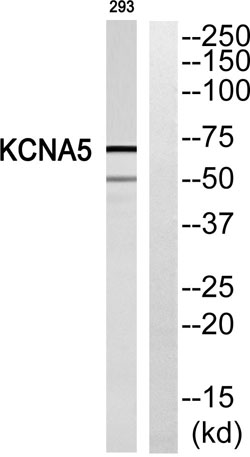
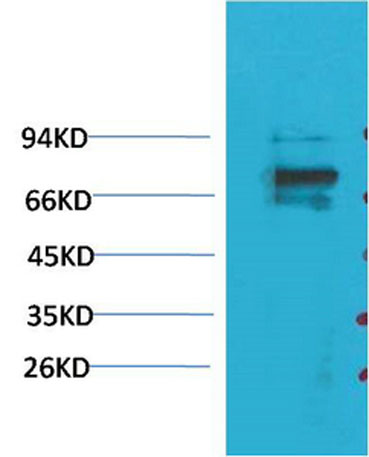
| Observed band (KD) | 68kD |
| Background | Potassium channels represent the most complex class of voltage-gated ino channels from both functional and structural standpoints. Their diverse functions include regulating neurotransmitter release, heart rate, insulin secretion, neuronal excitability, epithelial electrolyte transport, smooth muscle contraction, and cell volume. Four sequence-related potassium channel genes - shaker, shaw, shab, and shal - have been identified in Drosophila, and each has been shown to have human homolog(s). This gene encodes a member of the potassium channel, voltage-gated, shaker-related subfamily. This member contains six membrane-spanning domains with a shaker-type repeat in the fourth segment. It belongs to the delayed rectifier class, the function of which could restore the resting membrane potential of beta cells after depolarization and thereby contribute to the regulation of |
| Function | disease:Defects in KCNA5 are the cause of atrial fibrillation familial type 7 (ATFB7) [MIM:612240]. Atrial fibrillation is a common disorder of cardiac rhythm that is hereditary in a small subgroup of patients. It is characterized by disorganized atrial electrical activity, progressive deterioration of atrial electromechanical function and ineffective pumping of blood into the ventricles. It can be associated with palpitations, syncope, thromboembolic stroke, and congestive heart failure.,domain:The amino terminus may be important in determining the rate of inactivation of the channel while the C-terminal PDZ-binding motif may play a role in modulation of channel activity and/or targeting of the channel to specific subcellular compartments.,domain:The segment S4 is probably the voltage-sensor and is characterized by a series of positively charged amino acids at every third position.,func |
| Subcellular location | Cell membrane ; Multi-pass membrane protein . |
| Expression | Pancreatic islets and insulinoma. |

Use collapsible tabs for more detailed information that will help customers make a purchasing decision.
Ex: Shipping and return policies, size guides, and other common questions.