 Français
 English

| ELK.No | ES2958 |
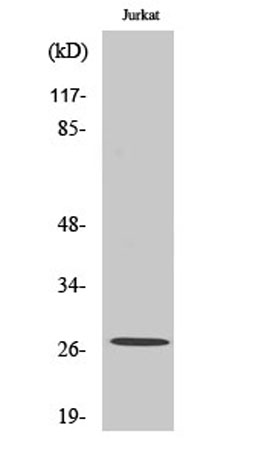
| Product name | NGF rabbit pAb |
| Reactivity | Human;Mouse;Rat |
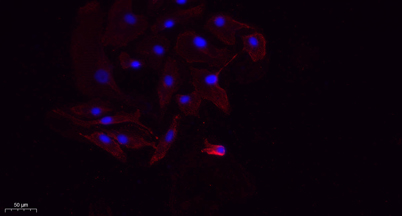
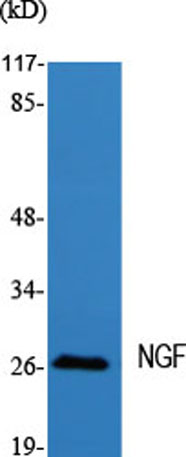
| Applications | WB;IHC;IF;ELISA |
| Other name | NGF; NGFB; Beta-nerve growth factor; Beta-NGF |
| Size | 100μL |
| Unit price ($) | 248 |
| Human gene ID | 4803 |
| Human Swiss-Prot | P01138 |
| Source | Rabbit |
| Isotype | IgG |
| Target | NGF |
| Fields | >>MAPK signaling pathway;>>Ras signaling pathway;>>Rap1 signaling pathway;>>Calcium signaling pathway;>>Cytokine-cytokine receptor interaction;>>PI3K-Akt signaling pathway;>>Apoptosis;>>Neurotrophin signaling pathway;>>Inflammatory mediator regulation of TRP channels |
| Gene name | NGF |
| Protein name | Beta-nerve growth factor |
| Human gene link | View Human Gene |
| Human Swiss link | View Human Swiss-Prot |
| Mouse gene ID | 18049 |
| Mouse gene link | View Mouse Gene |
| Mouse Swiss-Prot | P01139 |
| Mouse Swiss link | View Mouse Swiss-Prot |
| Rat gene ID | 310738 |
| Rat gene link | View Rat Gene |
| Rat Swiss-Prot | P25427 |
| Rat Swiss link | View Rat Swiss-Prot |
| Immunogen | The antiserum was produced against synthesized peptide derived from human NGF. AA range:33-82 |
| Specificity | NGF Polyclonal Antibody detects endogenous levels of NGF protein. |
| Formulation | Liquid in PBS containing 50% glycerol, 0.5% BSA and 0.02% sodium azide. |
| Clonality | Polyclonal |
| Dilution | Western Blot: 1/500 - 1/2000. IHC-p: 1:100-300 ELISA: 1/20000. IF 1:100-300 Not yet tested in other applications. |
| Purification | The antibody was affinity-purified from rabbit antiserum by affinity-chromatography using epitope-specific immunogen. |
| Concentration | 1 mg/ml |
| Storage stability | -20°C/1 year |
| Molecular Weight (Da) | |
| Observed band (KD) | 27kD |
| Background | This gene is a member of the NGF-beta family and encodes a secreted protein which homodimerizes and is incorporated into a larger complex. This protein has nerve growth stimulating activity and the complex is involved in the regulation of growth and the differentiation of sympathetic and certain sensory neurons. Mutations in this gene have been associated with hereditary sensory and autonomic neuropathy, type 5 (HSAN5), and dysregulation of this gene's expression is associated with allergic rhinitis. [provided by RefSeq, Jul 2008], |
| Function | disease:Defects in NGF are the cause of hereditary sensory and autonomic neuropathy type 5 (HSAN5) [MIM:608654]. The hereditary sensory and autonomic neuropathies are a genetically and clinically heterogeneous group of disorders characterized by degeneration of dorsal root and autonomic ganglion cells, and by sensory and/or autonomic abnormalities. HSAN5 patients manifest loss of pain perception and impaired temperature sensitivity, ulcers, and in some cases self-mutilation. The autonomic involvement is variable.,function:Nerve growth factor is important for the development and maintenance of the sympathetic and sensory nervous systems. It stimulates division and differentiation of sympathetic and embryonic sensory neurons.,online information:Nerve growth factor entry,similarity:Belongs to the NGF-beta family.,subunit:Homodimer., |
| Subcellular location | Secreted . Endosome lumen . ProNGF is endocytosed after binding to the cell surface receptor formed by SORT1 and NGFR. . |
| Expression | Brain,Epithelium,Eye,Leukocyte, |

Use collapsible tabs for more detailed information that will help customers make a purchasing decision.
Ex: Shipping and return policies, size guides, and other common questions.