 Français
 English
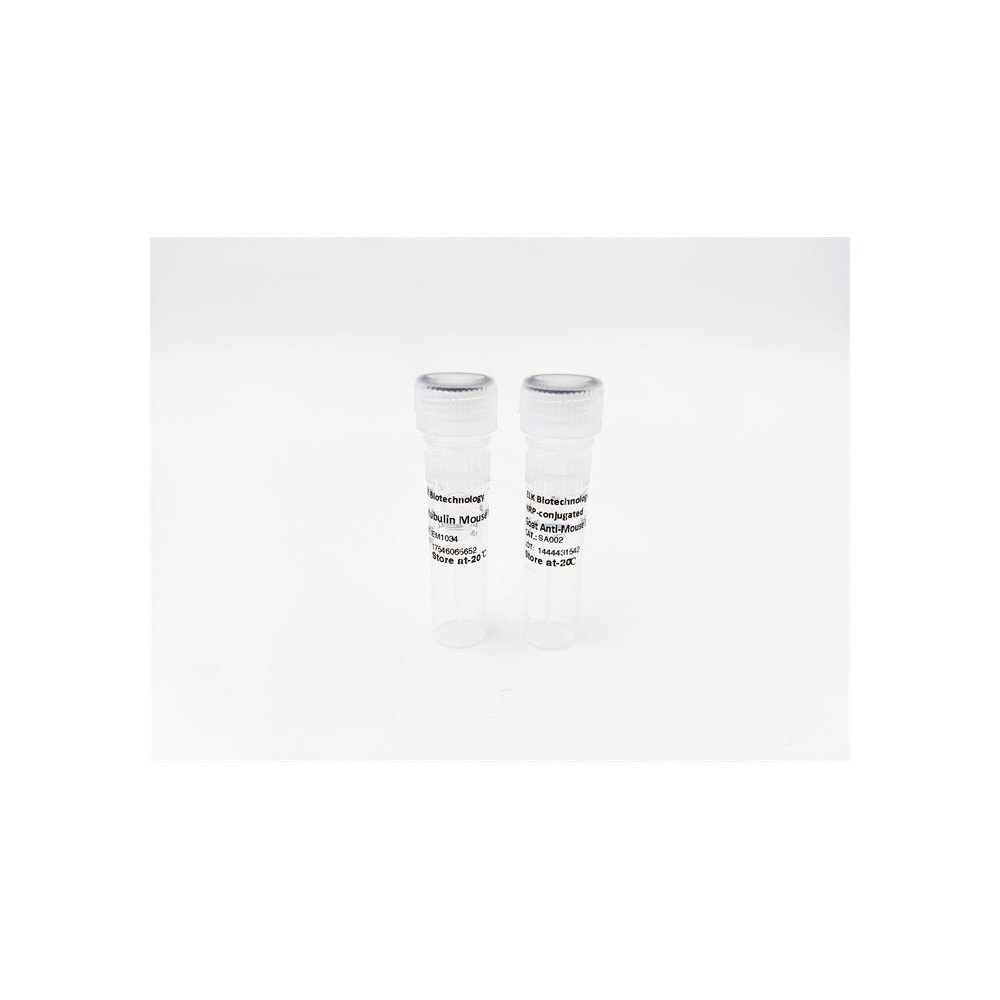

| ELK.No | ES2998 |
| Product name | OCRL rabbit pAb |
| Reactivity | Human;Mouse |
| Applications | WB;ELISA |
| Other name | OCRL; INPP5F; OCRL1; Inositol polyphosphate 5-phosphatase OCRL-1; Lowe oculocerebrorenal syndrome protein |
| Size | 100μL |
| Unit price ($) | 248 |
| Human gene ID | 4952 |
| Human Swiss-Prot | Q01968 |
| Source | Rabbit |
| Isotype | IgG |
| Target | OCRL |
| Fields | >>Inositol phosphate metabolism;>>Metabolic pathways;>>Phosphatidylinositol signaling system |
| Gene name | OCRL |
| Protein name | Inositol polyphosphate 5-phosphatase OCRL-1 |
| Human gene link | View Human Gene |
| Human Swiss link | View Human Swiss-Prot |
| Mouse gene ID | |
| Mouse gene link | |
| Mouse Swiss-Prot | |
| Mouse Swiss link | |
| Rat gene ID | |
| Rat gene link | |
| Rat Swiss-Prot | |
| Rat Swiss link | |
| Immunogen | The antiserum was produced against synthesized peptide derived from human OCRL. AA range:150-199 |
| Specificity | OCRL Polyclonal Antibody detects endogenous levels of OCRL protein. |
| Formulation | Liquid in PBS containing 50% glycerol, 0.5% BSA and 0.02% sodium azide. |
| Clonality | Polyclonal |
| Dilution | Western Blot: 1/500 - 1/2000. ELISA: 1/10000. Not yet tested in other applications. |
| Purification | The antibody was affinity-purified from rabbit antiserum by affinity-chromatography using epitope-specific immunogen. |
| Concentration | 1 mg/ml |
| Storage stability | -20°C/1 year |
| Molecular Weight (Da) | |
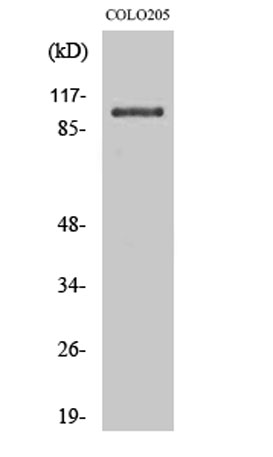
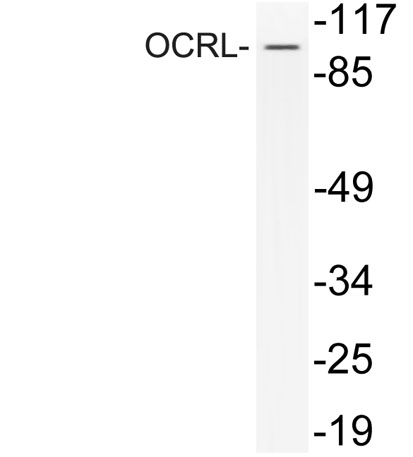
| Observed band (KD) | 104kD |
| Background | This gene encodes an inositol polyphosphate 5-phosphatase. This protein is involved in regulating membrane trafficking and is located in numerous subcellular locations including the trans-Golgi network, clathrin-coated vesicles and, endosomes and the plasma membrane. This protein may also play a role in primary cilium formation. Mutations in this gene cause oculocerebrorenal syndrome of Lowe and also Dent disease. Alternate splicing results in multiple transcript variants. [provided by RefSeq, Jan 2016], |
| Function | catalytic activity:1-phosphatidyl-1D-myo-inositol 4,5-bisphosphate + H(2)O = 1-phosphatidyl-1D-myo-inositol 4-phosphate + phosphate.,caution:It is uncertain whether Met-1, Met-18 or Met-20 is the initiator.,disease:Defects in OCRL are the cause of Dent disease type 2 (DD2) [MIM:300555]. DD2 is a renal disease belonging to the 'Dent disease complex', a group of disorders characterized by proximal renal tubular defect, hypercalciuria, nephrocalcinosis, and renal insufficiency. The spectrum of phenotypic features is remarkably similar in the various disorders, except for differences in the severity of bone deformities and renal impairment. Characteristic abnormalities include low-molecular-weight proteinuria and other features of Fanconi syndrome, such as glycosuria, aminoaciduria, and phosphaturia, but typically do not include proximal renal tubular acidosis. Progressive renal failure is c |
| Subcellular location | Cytoplasmic vesicle, phagosome membrane . Early endosome membrane . Membrane, clathrin-coated pit . Cell projection, cilium, photoreceptor outer segment . Cell projection, cilium . Cytoplasmic vesicle . Endosome . Golgi apparatus, trans-Golgi network . Lysosome . Also found on macropinosomes (PubMed:25869668). Colocalized with APPL1 on phagosomes (PubMed:22072788). . |
| Expression | Brain, skeletal muscle, heart, kidney, lung, placenta and fibroblasts. Expressed in the retina and the retinal pigment epithelium. |

Use collapsible tabs for more detailed information that will help customers make a purchasing decision.
Ex: Shipping and return policies, size guides, and other common questions.