 Français
 English
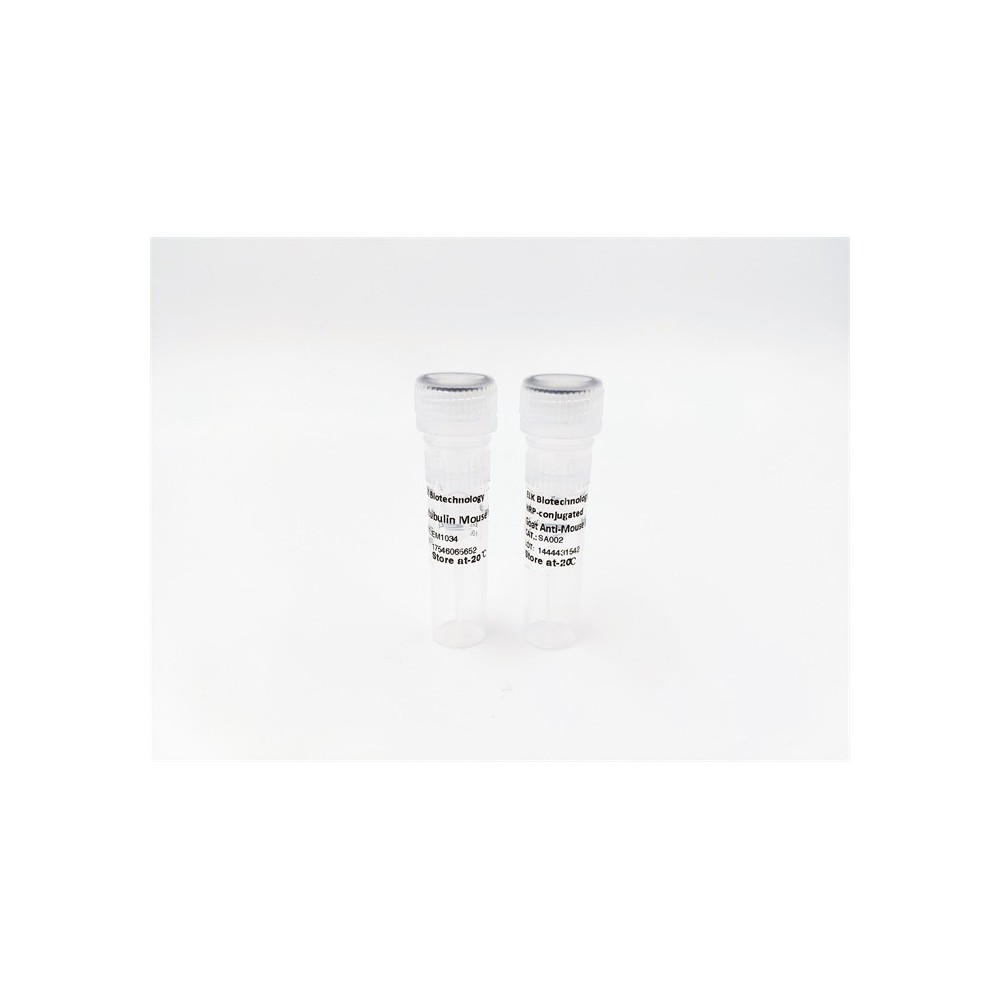

| ELK.No | ES3302 |
| Product name | Rad GTPase rabbit pAb |
| Reactivity | Human;Rat;Mouse; |
| Applications | WB;IHC;IF;ELISA |
| Other name | RRAD; RAD; GTP-binding protein RAD; RAD1; Ras associated with diabetes |
| Size | 50μL |
| Unit price ($) | 148 |
| Human gene ID | 6236 |
| Human Swiss-Prot | P55042 |
| Source | Rabbit |
| Isotype | IgG |
| Target | Rad GTPase |
| Fields | |
| Gene name | RRAD |
| Protein name | GTP-binding protein RAD |
| Human gene link | View Human Gene |
| Human Swiss link | View Human Swiss-Prot |
| Mouse gene ID | |
| Mouse gene link | |
| Mouse Swiss-Prot | O88667 |
| Mouse Swiss link | View Mouse Swiss-Prot |
| Rat gene ID | |
| Rat gene link | |
| Rat Swiss-Prot | |
| Rat Swiss link | |
| Immunogen | The antiserum was produced against synthesized peptide derived from human RAD. AA range:41-90 |
| Specificity | Rad GTPase Polyclonal Antibody detects endogenous levels of Rad GTPase protein. |
| Formulation | Liquid in PBS containing 50% glycerol, 0.5% BSA and 0.02% sodium azide. |
| Clonality | Polyclonal |
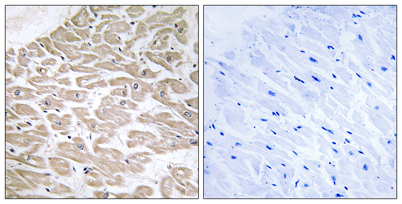
| Dilution | Western Blot: 1/500 - 1/2000. Immunohistochemistry: 1/100 - 1/300. Immunofluorescence: 1/200 - 1/1000. ELISA: 1/20000. Not yet tested in other applications. |
| Purification | The antibody was affinity-purified from rabbit antiserum by affinity-chromatography using epitope-specific immunogen. |
| Concentration | 1 mg/ml |
| Storage stability | -20°C/1 year |
| Molecular Weight (Da) | |
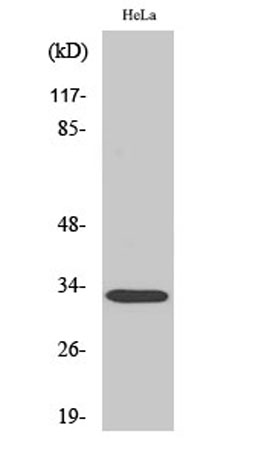
| Observed band (KD) | 33kD |
| Background | similarity:Belongs to the small GTPase superfamily. RGK family.,subunit:Interacts with calmodulin preferentially to the inactive, GDP-form. Binds CAMKII which is capable of phosphorylating RAD in vitro.,tissue specificity:Skeletal and cardiac muscle, and lung. Lesser amounts in placenta and kidney. Also detected in adipose tissue. Overexpressed in muscle of type II diabetic humans., |
| Function | similarity:Belongs to the small GTPase superfamily. RGK family.,subunit:Interacts with calmodulin preferentially to the inactive, GDP-form. Binds CAMKII which is capable of phosphorylating RAD in vitro.,tissue specificity:Skeletal and cardiac muscle, and lung. Lesser amounts in placenta and kidney. Also detected in adipose tissue. Overexpressed in muscle of type II diabetic humans., |
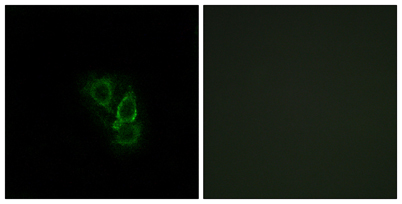
| Subcellular location | Cell membrane . |
| Expression | Most abundantly expressed in the heart. Also found in the skeletal muscle and lung. Lesser amounts in placenta and kidney. Also detected in adipose tissue. Overexpressed in muscle of type II diabetic humans. |

Use collapsible tabs for more detailed information that will help customers make a purchasing decision.
Ex: Shipping and return policies, size guides, and other common questions.