 Français
 English
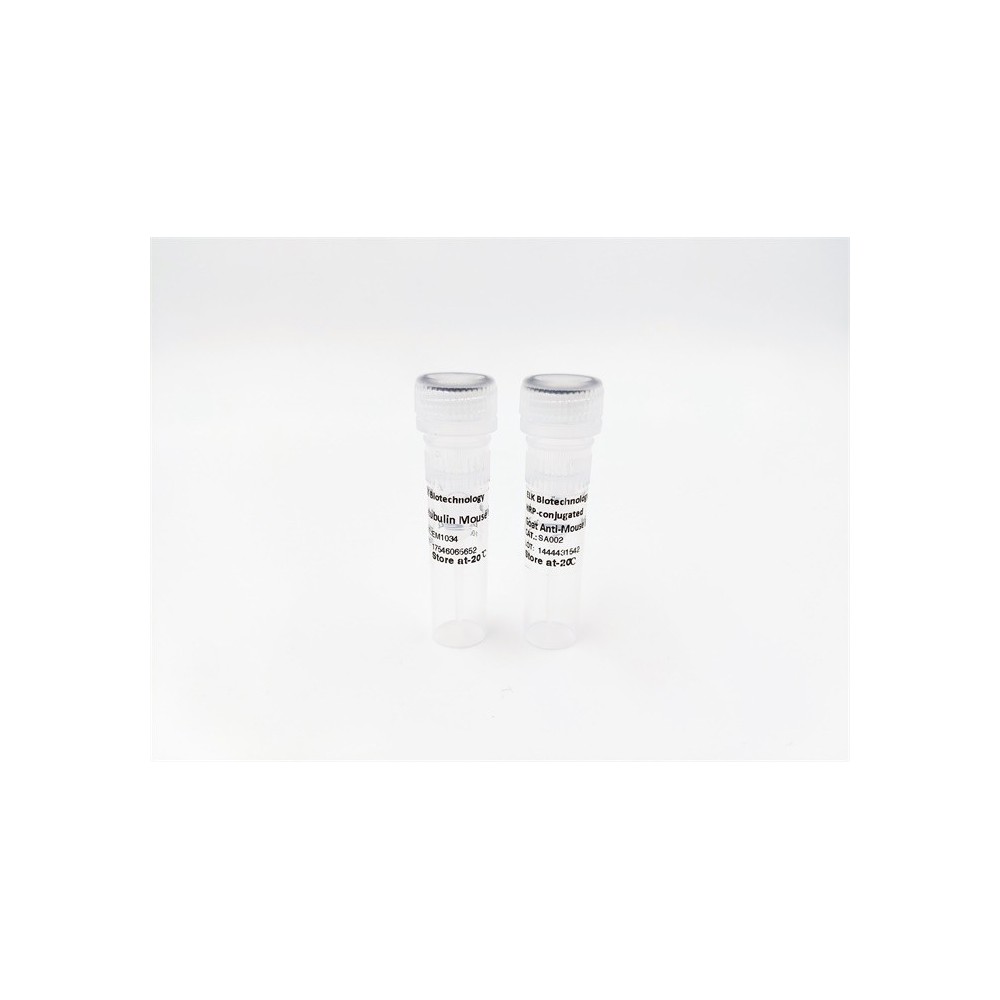

| ELK.No | ES3469 |
| Product name | sMtCK rabbit pAb |
| Reactivity | Human;Mouse;Rat |
| Applications | WB;IHC;IF;ELISA |
| Other name | CKMT2; Creatine kinase S-type; mitochondrial; Basic-type mitochondrial creatine kinase; Mib-CK; Sarcomeric mitochondrial creatine kinase; S-MtCK |
| Size | 100μL |
| Unit price ($) | 248 |
| Human gene ID | 1160 |
| Human Swiss-Prot | P17540 |
| Source | Rabbit |
| Isotype | IgG |
| Target | sMtCK |
| Fields | >>Arginine and proline metabolism;>>Metabolic pathways |
| Gene name | CKMT2 |
| Protein name | Creatine kinase S-type mitochondrial |
| Human gene link | View Human Gene |
| Human Swiss link | View Human Swiss-Prot |
| Mouse gene ID | 76722 |
| Mouse gene link | View Mouse Gene |
| Mouse Swiss-Prot | Q6P8J7 |
| Mouse Swiss link | View Mouse Swiss-Prot |
| Rat gene ID | |
| Rat gene link | |
| Rat Swiss-Prot | P09605 |
| Rat Swiss link | View Rat Swiss-Prot |
| Immunogen | The antiserum was produced against synthesized peptide derived from human CKMT2. AA range:231-280 |
| Specificity | sMtCK Polyclonal Antibody detects endogenous levels of sMtCK protein. |
| Formulation | Liquid in PBS containing 50% glycerol, 0.5% BSA and 0.02% sodium azide. |
| Clonality | Polyclonal |
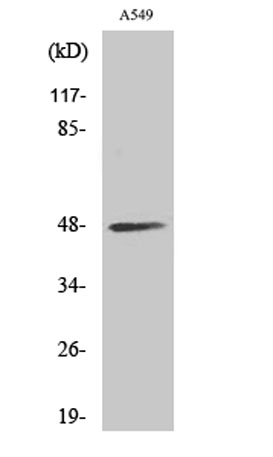
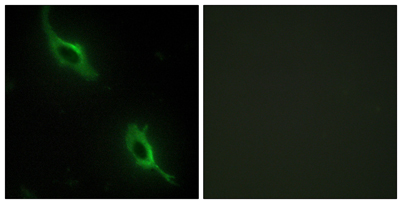
| Dilution | Western Blot: 1/500 - 1/2000. Immunohistochemistry: 1/100 - 1/300. Immunofluorescence: 1/200 - 1/1000. ELISA: 1/40000. Not yet tested in other applications. |
| Purification | The antibody was affinity-purified from rabbit antiserum by affinity-chromatography using epitope-specific immunogen. |
| Concentration | 1 mg/ml |
| Storage stability | -20°C/1 year |
| Molecular Weight (Da) | |
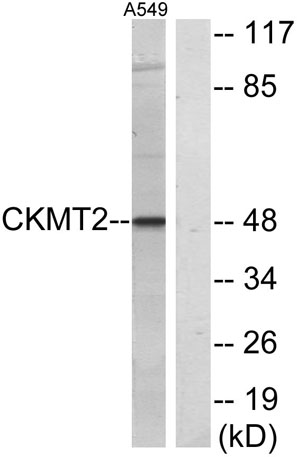
| Observed band (KD) | 48kD |
| Background | creatine kinase, mitochondrial 2(CKMT2) Homo sapiens Mitochondrial creatine kinase (MtCK) is responsible for the transfer of high energy phosphate from mitochondria to the cytosolic carrier, creatine. It belongs to the creatine kinase isoenzyme family. It exists as two isoenzymes, sarcomeric MtCK and ubiquitous MtCK, encoded by separate genes. Mitochondrial creatine kinase occurs in two different oligomeric forms: dimers and octamers, in contrast to the exclusively dimeric cytosolic creatine kinase isoenzymes. Sarcomeric mitochondrial creatine kinase has 80% homology with the coding exons of ubiquitous mitochondrial creatine kinase. This gene contains sequences homologous to several motifs that are shared among some nuclear genes encoding mitochondrial proteins and thus may be essential for the coordinated activation of these genes during mitochondrial biogenesis. Three transcript variants encoding the same protein have been found for this gen |
| Function | catalytic activity:ATP + creatine = ADP + phosphocreatine.,function:Reversibly catalyzes the transfer of phosphate between ATP and various phosphogens (e.g. creatine phosphate). Creatine kinase isoenzymes play a central role in energy transduction in tissues with large, fluctuating energy demands, such as skeletal muscle, heart, brain and spermatozoa.,miscellaneous:Mitochondrial creatine kinase binds cardiolipin.,similarity:Belongs to the ATP:guanido phosphotransferase family.,subunit:Exists as an octamer composed of four CKMT2 homodimers.,tissue specificity:Sarcomere-specific. Found only in heart and skeletal muscles., |
| Subcellular location | Mitochondrion inner membrane; Peripheral membrane protein; Intermembrane side. |
| Expression | Sarcomere-specific. Found only in heart and skeletal muscles. |

Use collapsible tabs for more detailed information that will help customers make a purchasing decision.
Ex: Shipping and return policies, size guides, and other common questions.