 Français
 English
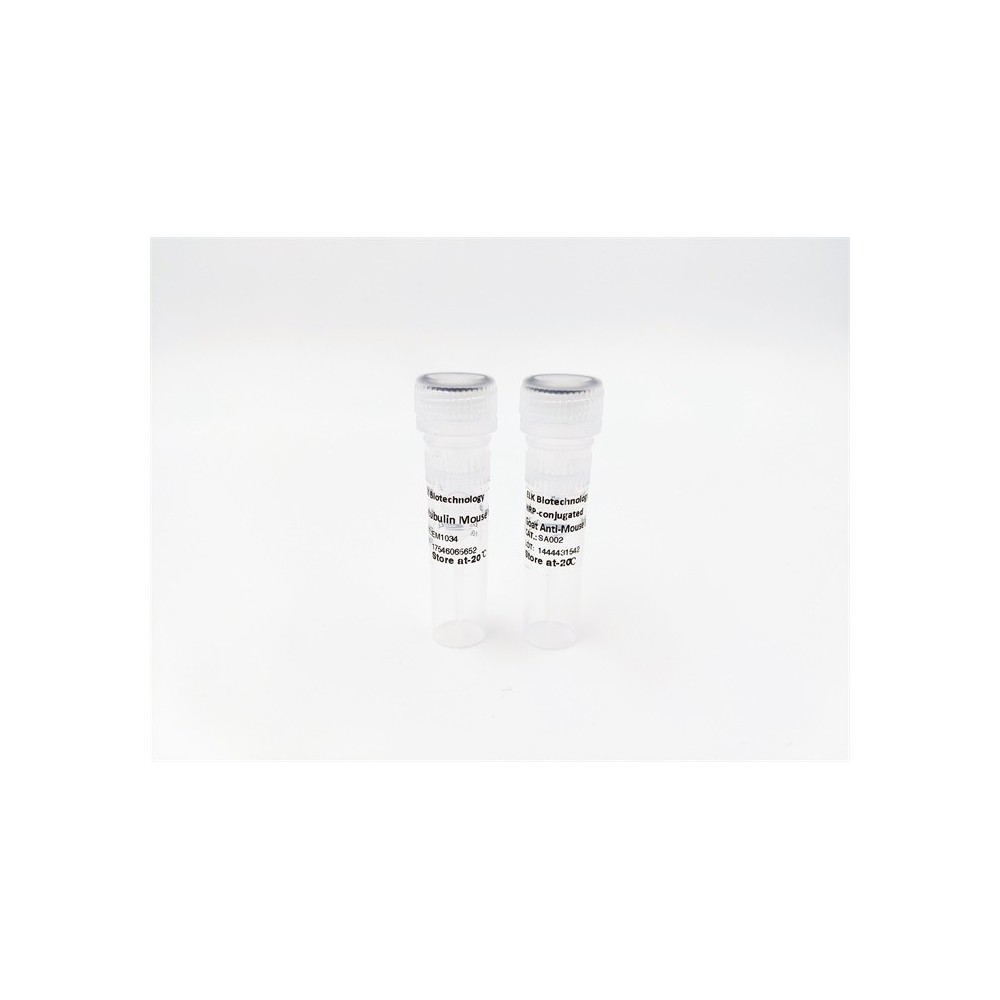

| ELK.No | ES3754 |
| Product name | MCAD rabbit pAb |
| Reactivity | Human;Mouse;Rat |
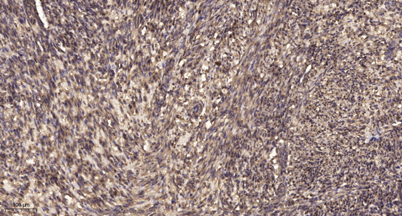
| Applications | WB;IHC |
| Other name | ACADM; Medium-chain specific acyl-CoA dehydrogenase, mitochondrial; MCAD |
| Size | 50μL |
| Unit price ($) | 148 |
| Human gene ID | 34 |
| Human Swiss-Prot | P11310 |
| Source | Rabbit |
| Isotype | IgG |
| Target | MCAD |
| Fields | >>Fatty acid degradation;>>Valine, leucine and isoleucine degradation;>>Metabolic pathways;>>Fatty acid metabolism;>>PPAR signaling pathway;>>Alcoholic liver disease |
| Gene name | ACADM |
| Protein name | Medium-chain specific acyl-CoA dehydrogenase mitochondrial |
| Human gene link | View Human Gene |
| Human Swiss link | View Human Swiss-Prot |
| Mouse gene ID | 11364 |
| Mouse gene link | View Mouse Gene |
| Mouse Swiss-Prot | P45952 |
| Mouse Swiss link | View Mouse Swiss-Prot |
| Rat gene ID | 24158 |
| Rat gene link | View Rat Gene |
| Rat Swiss-Prot | P08503 |
| Rat Swiss link | View Rat Swiss-Prot |
| Immunogen | The antiserum was produced against synthesized peptide derived from human MCAD. AA range:134-183 |
| Specificity | MCAD Polyclonal Antibody detects endogenous levels of MCAD protein. |
| Formulation | Liquid in PBS containing 50% glycerol, 0.5% BSA and 0.02% sodium azide. |
| Clonality | Polyclonal |
| Dilution | WB 1:500-2000;IHC-p 1:50-300 |
| Purification | The antibody was affinity-purified from rabbit antiserum by affinity-chromatography using epitope-specific immunogen. |
| Concentration | 1 mg/ml |
| Storage stability | -20°C/1 year |
| Molecular Weight (Da) | |
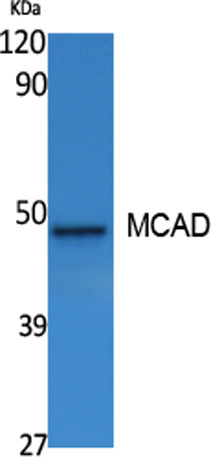
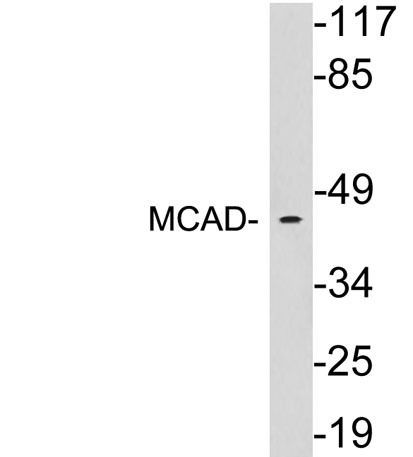
| Observed band (KD) | 46kD |
| Background | This gene encodes the medium-chain specific (C4 to C12 straight chain) acyl-Coenzyme A dehydrogenase. The homotetramer enzyme catalyzes the initial step of the mitochondrial fatty acid beta-oxidation pathway. Defects in this gene cause medium-chain acyl-CoA dehydrogenase deficiency, a disease characterized by hepatic dysfunction, fasting hypoglycemia, and encephalopathy, which can result in infantile death. Alternatively spliced transcript variants encoding different isoforms have been found for this gene. [provided by RefSeq, Jul 2008], |
| Function | catalytic activity:Acyl-CoA + acceptor = 2,3-dehydroacyl-CoA + reduced acceptor.,cofactor:FAD.,disease:Defects in ACADM are the cause of medium-chain acyl-CoA dehydrogenase deficiency (MCAD deficiency) [MIM:201450]. It is an autosomal recessive disease which causes fasting hypoglycemia, hepatic dysfunction, and encephalopathy, often resulting in death in infancy. The disease frequency is one in 13000.,function:This enzyme is specific for acyl chain lengths of 4 to 16.,miscellaneous:A number of straight-chain acyl-CoA dehydrogenases of different substrate specificities are present in mammalian tissues.,miscellaneous:Utilizes the electron transfer flavoprotein (ETF) as electron acceptor that transfers the electrons to the main mitochondrial respiratory chain via ETF-ubiquinone oxidoreductase (ETF dehydrogenase).,pathway:Lipid metabolism; mitochondrial fatty acid beta-oxidation.,similarity: |
| Subcellular location | Mitochondrion matrix . |
| Expression | Brain,Cajal-Retzius cell,Cerebellum,Colon,Liver, |

Use collapsible tabs for more detailed information that will help customers make a purchasing decision.
Ex: Shipping and return policies, size guides, and other common questions.