 Français
 English

| ELK.No | ES3856 |
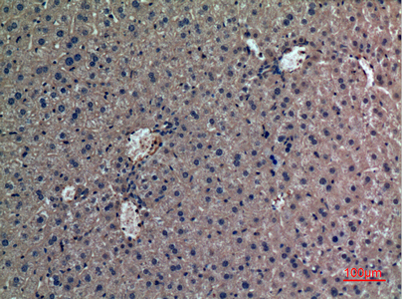
| Product name | Prothrombin rabbit pAb |
| Reactivity | Human;Mouse;Rat |
| Applications | WB;IHC;IF;ELISA |
| Other name | F2; Prothrombin; Coagulation factor II |
| Size | 50μL |
| Unit price ($) | 148 |
| Human gene ID | 2147 |
| Human Swiss-Prot | P00734 |
| Source | Rabbit |
| Isotype | IgG |
| Target | Prothrombin |
| Fields | >>Phospholipase D signaling pathway;>>Neuroactive ligand-receptor interaction;>>Complement and coagulation cascades;>>Platelet activation;>>Regulation of actin cytoskeleton;>>Pathogenic Escherichia coli infection;>>Coronavirus disease - COVID-19;>>Pathways in cancer |
| Gene name | F2 |
| Protein name | Prothrombin |
| Human gene link | View Human Gene |
| Human Swiss link | View Human Swiss-Prot |
| Mouse gene ID | 14061 |
| Mouse gene link | View Mouse Gene |
| Mouse Swiss-Prot | P19221 |
| Mouse Swiss link | View Mouse Swiss-Prot |
| Rat gene ID | |
| Rat gene link | |
| Rat Swiss-Prot | P18292 |
| Rat Swiss link | View Rat Swiss-Prot |
| Immunogen | Synthesized peptide derived from the Internal region of human Prothrombin. AA range 420-470 |
| Specificity | Prothrombin Polyclonal Antibody detects endogenous levels of Prothrombin protein. |
| Formulation | Liquid in PBS containing 50% glycerol, 0.5% BSA and 0.02% sodium azide. |
| Clonality | Polyclonal |
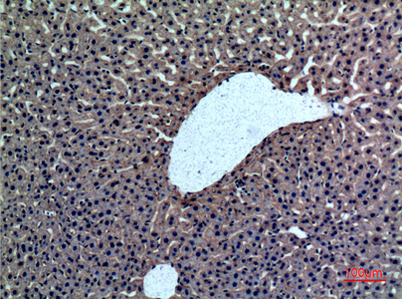
| Dilution | Western Blot: 1/500 - 1/2000. IHC-p: 1:100-300 ELISA: 1/20000. Not yet tested in other applications. |
| Purification | The antibody was affinity-purified from rabbit antiserum by affinity-chromatography using epitope-specific immunogen. |
| Concentration | 1 mg/ml |
| Storage stability | -20°C/1 year |
| Molecular Weight (Da) | |
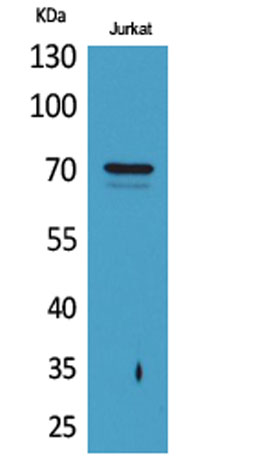
| Observed band (KD) | 70kD |
| Background | Coagulation factor II is proteolytically cleaved to form thrombin in the first step of the coagulation cascade which ultimately results in the stemming of blood loss. F2 also plays a role in maintaining vascular integrity during development and postnatal life. Peptides derived from the C-terminus of this protein have antimicrobial activity against E. coli and P. aeruginosa. Mutations in F2 lead to various forms of thrombosis and dysprothrombinemia. Alternative splicing results in multiple transcript variants. [provided by RefSeq, Aug 2015], |
| Function | catalytic activity:Selective cleavage of Arg-|-Gly bonds in fibrinogen to form fibrin and release fibrinopeptides A and B.,disease:Defects in F2 are the cause of various forms of dysprothrombinemia [MIM:176930].,disease:Genetic variations in F2 may be a cause of susceptibility to ischemic stroke [MIM:601367]; also known as cerebrovascular accident or cerebral infarction. A stroke is an acute neurologic event leading to death of neural tissue of the brain and resulting in loss of motor, sensory and/or cognitive function. Ischemic strokes, resulting from vascular occlusion, is considered to be a highly complex disease consisting of a group of heterogeneous disorders with multiple genetic and environmental risk factors.,function:Thrombin, which cleaves bonds after Arg and Lys, converts fibrinogen to fibrin and activates factors V, VII, VIII, XIII, and, in complex with thrombomodulin, protei |
| Subcellular location | Secreted, extracellular space. |
| Expression | Expressed by the liver and secreted in plasma. |

Use collapsible tabs for more detailed information that will help customers make a purchasing decision.
Ex: Shipping and return policies, size guides, and other common questions.