 Français
 English
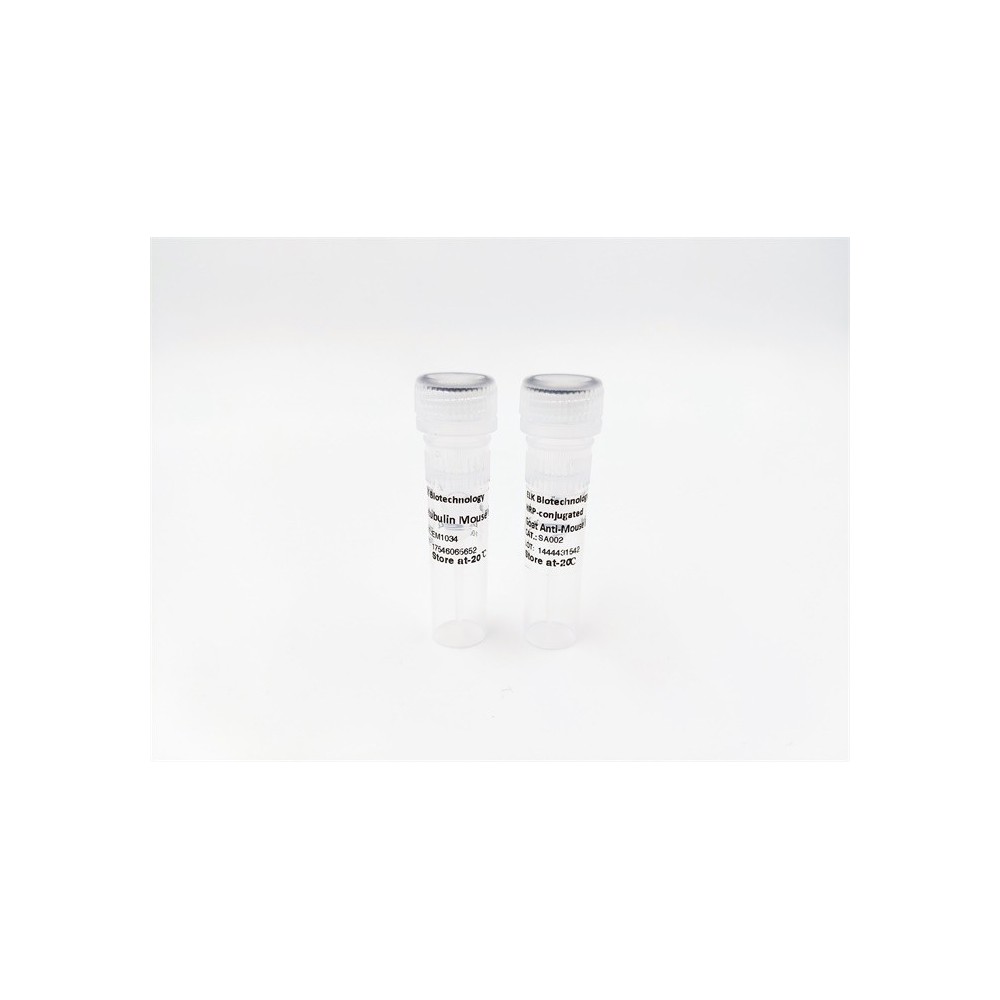

| ELK.No | ES3895 |
| Product name | Trk C rabbit pAb |
| Reactivity | Human;Rat;Mouse; |
| Applications | WB;ELISA |
| Other name | NTRK3; TRKC; NT-3 growth factor receptor; GP145-TrkC; Trk-C; Neurotrophic tyrosine kinase receptor type 3; TrkC tyrosine kinase |
| Size | 50μL |
| Unit price ($) | 148 |
| Human gene ID | 4916 |
| Human Swiss-Prot | Q16288 |
| Source | Rabbit |
| Isotype | IgG |
| Target | Trk C |
| Fields | >>Calcium signaling pathway;>>Neurotrophin signaling pathway;>>Central carbon metabolism in cancer |
| Gene name | NTRK3 |
| Protein name | NT-3 growth factor receptor |
| Human gene link | View Human Gene |
| Human Swiss link | View Human Swiss-Prot |
| Mouse gene ID | |
| Mouse gene link | |
| Mouse Swiss-Prot | Q6VNS1 |
| Mouse Swiss link | View Mouse Swiss-Prot |
| Rat gene ID | |
| Rat gene link | |
| Rat Swiss-Prot | |
| Rat Swiss link | |
| Immunogen | The antiserum was produced against synthesized peptide derived from the Internal region of human NTRK3. AA range:281-330 |
| Specificity | Trk C Polyclonal Antibody detects endogenous levels of Trk C protein. |
| Formulation | Liquid in PBS containing 50% glycerol, 0.5% BSA and 0.02% sodium azide. |
| Clonality | Polyclonal |
| Dilution | Western Blot: 1/500 - 1/2000. ELISA: 1/20000. Not yet tested in other applications. |
| Purification | The antibody was affinity-purified from rabbit antiserum by affinity-chromatography using epitope-specific immunogen. |
| Concentration | 1 mg/ml |
| Storage stability | -20°C/1 year |
| Molecular Weight (Da) | |
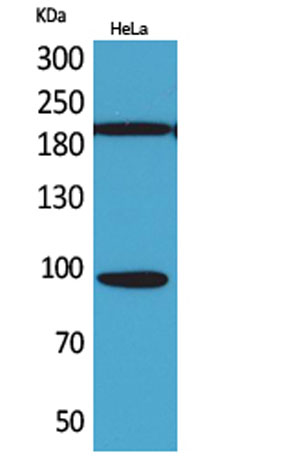
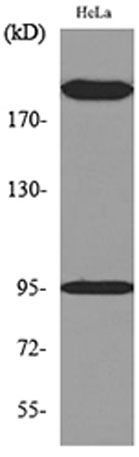
| Observed band (KD) | 95kD |
| Background | This gene encodes a member of the neurotrophic tyrosine receptor kinase (NTRK) family. This kinase is a membrane-bound receptor that, upon neurotrophin binding, phosphorylates itself and members of the MAPK pathway. Signalling through this kinase leads to cell differentiation and may play a role in the development of proprioceptive neurons that sense body position. Mutations in this gene have been associated with medulloblastomas, secretory breast carcinomas and other cancers. Several transcript variants encoding different isoforms have been found for this gene. [provided by RefSeq, Jul 2011], |
| Function | alternative products:Additional isoforms seem to exist,catalytic activity:ATP + a [protein]-L-tyrosine = ADP + a [protein]-L-tyrosine phosphate.,function:Receptor for neurotrophin-3 (NT-3). This is a tyrosine-protein kinase receptor. Known substrates for the trk receptors are SHC1, PI-3 kinase, and PLCG1. The different isoforms do not have identical signaling properties.,PTM:Ligand-mediated auto-phosphorylation.,similarity:Belongs to the protein kinase superfamily. Tyr protein kinase family. Insulin receptor subfamily.,similarity:Contains 1 protein kinase domain.,similarity:Contains 2 Ig-like C2-type (immunoglobulin-like) domains.,similarity:Contains 2 LRR (leucine-rich) repeats.,subunit:Exists in a dynamic equilibrium between monomeric (low affinity) and dimeric (high affinity) structures. Binds SH2B2. Interacts with SQSTM1 and KIDINS220.,tissue specificity:Widely expressed but mainly i |
| Subcellular location | Membrane; Single-pass type I membrane protein. |
| Expression | Widely expressed but mainly in nervous tissue. Isoform 2 is expressed at higher levels in adult brain than in fetal brain. |

Use collapsible tabs for more detailed information that will help customers make a purchasing decision.
Ex: Shipping and return policies, size guides, and other common questions.