 Français
 English

| ELK.No | ES3902 |
| Product name | CD66e rabbit pAb |
| Reactivity | Human;Rat;Mouse; |
| Applications | WB;IHC;IF;ELISA |
| Other name | CEACAM5; CEA; Carcinoembryonic antigen-related cell adhesion molecule 5; Carcinoembryonic antigen; CEA; Meconium antigen 100; CD66e |
| Size | 50μL |
| Unit price ($) | 148 |
| Human gene ID | 1048 |
| Human Swiss-Prot | P06731 |
| Source | Rabbit |
| Isotype | IgG |
| Target | CEA |
| Fields | |
| Gene name | CEACAM5 |
| Protein name | Carcinoembryonic antigen-related cell adhesion molecule 5 |
| Human gene link | View Human Gene |
| Human Swiss link | View Human Swiss-Prot |
| Mouse gene ID | |
| Mouse gene link | |
| Mouse Swiss-Prot | Q3UKK2 |
| Mouse Swiss link | View Mouse Swiss-Prot |
| Rat gene ID | |
| Rat gene link | |
| Rat Swiss-Prot | |
| Rat Swiss link | |
| Immunogen | The antiserum was produced against synthesized peptide derived from the Internal region of human CEACAM5. AA range:481-530 |
| Specificity | CD66e Polyclonal Antibody detects endogenous levels of CD66e protein. |
| Formulation | Liquid in PBS containing 50% glycerol, 0.5% BSA and 0.02% sodium azide. |
| Clonality | Polyclonal |
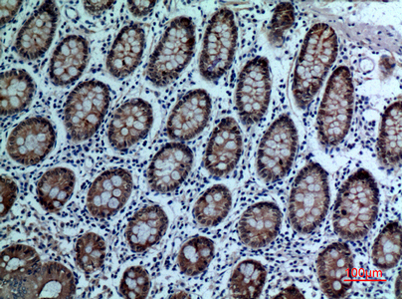
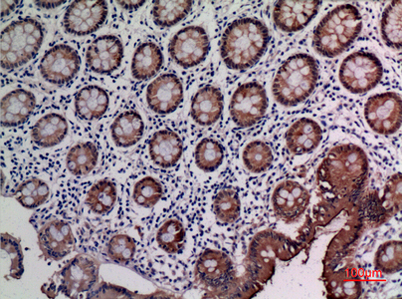
| Dilution | Western Blot: 1/500 - 1/2000. IHC-p: 1:100-300 ELISA: 1/20000. Not yet tested in other applications. |
| Purification | The antibody was affinity-purified from rabbit antiserum by affinity-chromatography using epitope-specific immunogen. |
| Concentration | 1 mg/ml |
| Storage stability | -20°C/1 year |
| Molecular Weight (Da) | |
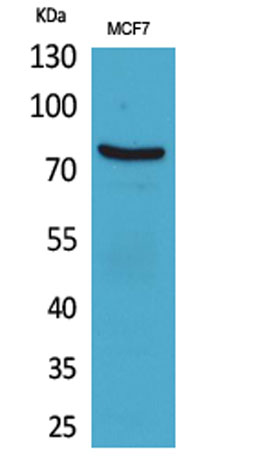
| Observed band (KD) | 76kD |
| Background | This gene encodes a cell surface glycoprotein that represents the founding member of the carcinoembryonic antigen (CEA) family of proteins. The encoded protein is used as a clinical biomarker for gastrointestinal cancers and may promote tumor development through its role as a cell adhesion molecule. Additionally, the encoded protein may regulate differentiation, apoptosis, and cell polarity. This gene is present in a CEA family gene cluster on chromosome 19. Alternative splicing results in multiple transcript variants. [provided by RefSeq, Jul 2015], |
| Function | function:Cell surface glycoprotein that plays a role in cell adhesion and in intracellular signaling. Receptor for E.coli Dr adhesins.,PTM:Complex immunoreactive glycoprotein with a MW of 180 kDa comprising 60% carbohydrate.,similarity:Belongs to the immunoglobulin superfamily. CEA family.,similarity:Contains 7 Ig-like (immunoglobulin-like) domains.,subunit:Homodimer. Binding of E.coli Dr adhesins leads to dissociation of the homodimer.,tissue specificity:Found in adenocarcinomas of endodermally derived digestive system epithelium and fetal colon., |
| Subcellular location | Cell membrane ; Lipid-anchor, GPI-anchor . Apical cell membrane . Cell surface . Localized to the apical glycocalyx surface. . |
| Expression | Expressed in columnar epithelial and goblet cells of the colon (at protein level) (PubMed:10436421). Found in adenocarcinomas of endodermally derived digestive system epithelium and fetal colon. |

Use collapsible tabs for more detailed information that will help customers make a purchasing decision.
Ex: Shipping and return policies, size guides, and other common questions.