 Français
 English
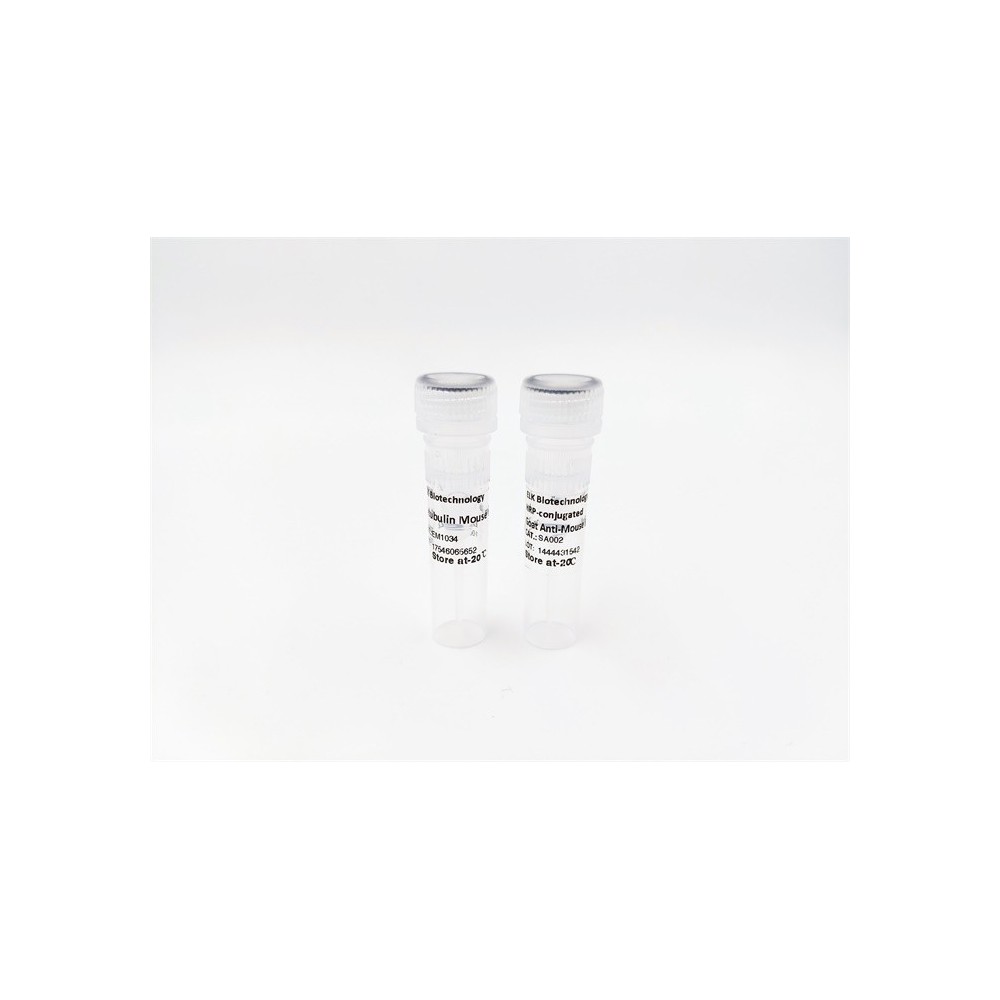

| ELK.No | ES3917 |
| Product name | Angptl1/2 rabbit pAb |
| Reactivity | Human;Mouse;Rat |
| Applications | WB;ELISA |
| Other name | ANGPTL1; ANG3; ANGPT3; ARP1; PSEC0154; Angiopoietin-related protein 1; Angiopoietin-3; ANG-3; Angiopoietin-like protein 1; ANGPTL2; ARP2; Angiopoietin-related protein 2; Angiopoietin-like protein 2 |
| Size | 100μL |
| Unit price ($) | 248 |
| Human gene ID | 9068 |
| Human Swiss-Prot | O95841 |
| Source | Rabbit |
| Isotype | IgG |
| Target | Angptl1/2 |
| Fields | |
| Gene name | ANGPTL1/ANGPTL2 |
| Protein name | Angiopoietin-related protein 1/Angiopoietin-related protein 2 |
| Human gene link | View Human Gene |
| Human Swiss link | View Human Swiss-Prot |
| Mouse gene ID | 72713 |
| Mouse gene link | View Mouse Gene |
| Mouse Swiss-Prot | Q640P2 |
| Mouse Swiss link | View Mouse Swiss-Prot |
| Rat gene ID | |
| Rat gene link | |
| Rat Swiss-Prot | |
| Rat Swiss link | |
| Immunogen | The antiserum was produced against synthesized peptide derived from the Internal region of human ANGPTL1/2. AA range:91-140 |
| Specificity | Angptl1/2 Polyclonal Antibody detects endogenous levels of Angptl1/2 protein. |
| Formulation | Liquid in PBS containing 50% glycerol, 0.5% BSA and 0.02% sodium azide. |
| Clonality | Polyclonal |
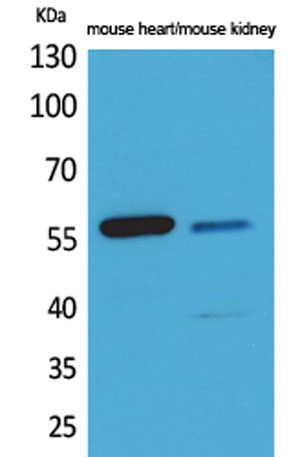
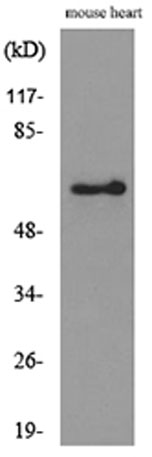
| Dilution | Western Blot: 1/500 - 1/2000. ELISA: 1/20000. Not yet tested in other applications. |
| Purification | The antibody was affinity-purified from rabbit antiserum by affinity-chromatography using epitope-specific immunogen. |
| Concentration | 1 mg/ml |
| Storage stability | -20°C/1 year |
| Molecular Weight (Da) | |
| Observed band (KD) | 60kD |
| Background | Angiopoietins are members of the vascular endothelial growth factor family and the only known growth factors largely specific for vascular endothelium. Angiopoietin-1, angiopoietin-2, and angiopoietin-4 participate in the formation of blood vessels. The protein encoded by this gene is another member of the angiopoietin family that is widely expressed in adult tissues with mRNA levels highest in highly vascularized tissues. This protein was found to be a secretory protein that does not act as an endothelial cell mitogen in vitro. [provided by RefSeq, Jul 2008], |
| Function | similarity:Contains 1 fibrinogen C-terminal domain.,tissue specificity:Highly expressed in adrenal gland, placenta, thyroid gland, heart, skeletal muscle and small intestine. Weakly expressed in testis, ovary, colon, pancreas, kidney and stomach., |
| Subcellular location | Secreted . |
| Expression | Highly expressed in adrenal gland, placenta, thyroid gland, heart, skeletal muscle and small intestine. Weakly expressed in testis, ovary, colon, pancreas, kidney and stomach. |

Use collapsible tabs for more detailed information that will help customers make a purchasing decision.
Ex: Shipping and return policies, size guides, and other common questions.