 Français
 English

| ELK.No | ES3921 |
| Product name | SP-A rabbit pAb |
| Reactivity | Human;Mouse;Rat |
| Applications | WB;IHC;IF;ELISA |
| Other name | SFTPA2; COLEC5; PSAP; SFTP1; SFTPA; SFTPA2B; Pulmonary surfactant-associated protein A2; PSP-A; PSPA; SP-A; SP-A2; 35 kDa pulmonary surfactant-associated protein; Alveolar proteinosis protein; Collectin-5; SFTPA1; COLEC4; PSAP;SFTP1; SFTPA; SFTPA1B; Pulmonary surfactant-associated protein A1; PSP-A; PSPA; SP-A; SP-A1; 35 kDa pulmonary surfactant-associated protein; Alveolar proteinosis protein; Collectin-4 |
| Size | 50μL |
| Unit price ($) | 148 |
| Human gene ID | 729238 |
| Human Swiss-Prot | Q8IWL1 |
| Source | Rabbit |
| Isotype | IgG |
| Target | SP-A |
| Fields | >>Phagosome;>>Pertussis |
| Gene name | SFTPA2/SFTPA1 |
| Protein name | Pulmonary surfactant-associated protein A2/Pulmonary surfactant-associated protein A1 |
| Human gene link | View Human Gene |
| Human Swiss link | View Human Swiss-Prot |
| Mouse gene ID | |
| Mouse gene link | |
| Mouse Swiss-Prot | |
| Mouse Swiss link | |
| Rat gene ID | 24773 |
| Rat gene link | View Rat Gene |
| Rat Swiss-Prot | P08427 |
| Rat Swiss link | View Rat Swiss-Prot |
| Immunogen | The antiserum was produced against synthesized peptide derived from the Internal region of human SFTPA1/2. AA range:141-190 |
| Specificity | SP-A Polyclonal Antibody detects endogenous levels of SP-A protein. |
| Formulation | Liquid in PBS containing 50% glycerol, 0.5% BSA and 0.02% sodium azide. |
| Clonality | Polyclonal |
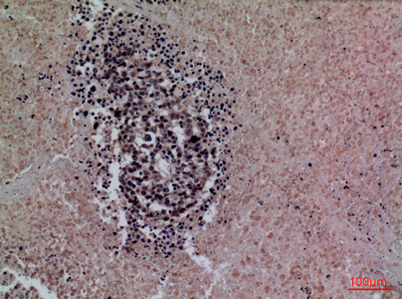
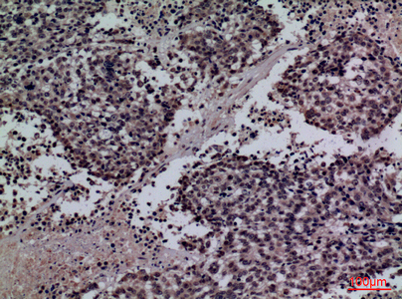
| Dilution | Western Blot: 1/500 - 1/2000. IHC-p: 1:100-300 ELISA: 1/20000. Not yet tested in other applications. |
| Purification | The antibody was affinity-purified from rabbit antiserum by affinity-chromatography using epitope-specific immunogen. |
| Concentration | 1 mg/ml |
| Storage stability | -20°C/1 year |
| Molecular Weight (Da) | |
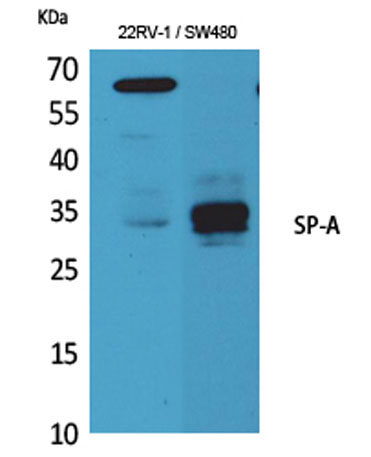
| Observed band (KD) | 34kD |
| Background | This gene is one of several genes encoding pulmonary-surfactant associated proteins (SFTPA) located on chromosome 10. Mutations in this gene and a highly similar gene located nearby, which affect the highly conserved carbohydrate recognition domain, are associated with idiopathic pulmonary fibrosis. The current version of the assembly displays only a single centromeric SFTPA gene pair rather than the two gene pairs shown in the previous assembly which were thought to have resulted from a duplication. [provided by RefSeq, Sep 2009], |
| Function | function:In presence of calcium ions, it binds to surfactant phospholipids and contributes to lower the surface tension at the air-liquid interface in the alveoli of the mammalian lung and is essential for normal respiration.,miscellaneous:Pulmonary surfactant consists of 90% lipid and 10% protein. There are 4 surfactant-associated proteins: 2 collagenous, carbohydrate-binding glycoproteins (SP-A and SP-D) and 2 small hydrophobic proteins (SP-B and SP-C).,polymorphism:At least 6 alleles of SFTPA2 are known: 1A, 1A(0), 1A(1), 1A(2), 1A(3) and 1A(4). The sequence shown is that of allele 1A(0).,similarity:Belongs to the SFTPA family.,similarity:Contains 1 C-type lectin domain.,similarity:Contains 1 collagen-like domain.,subunit:Oligomeric complex of 6 set of homotrimers., |
| Subcellular location | Secreted . Secreted, extracellular space, extracellular matrix. Secreted, extracellular space, surface film. |
| Expression |

Use collapsible tabs for more detailed information that will help customers make a purchasing decision.
Ex: Shipping and return policies, size guides, and other common questions.