 Français
 English
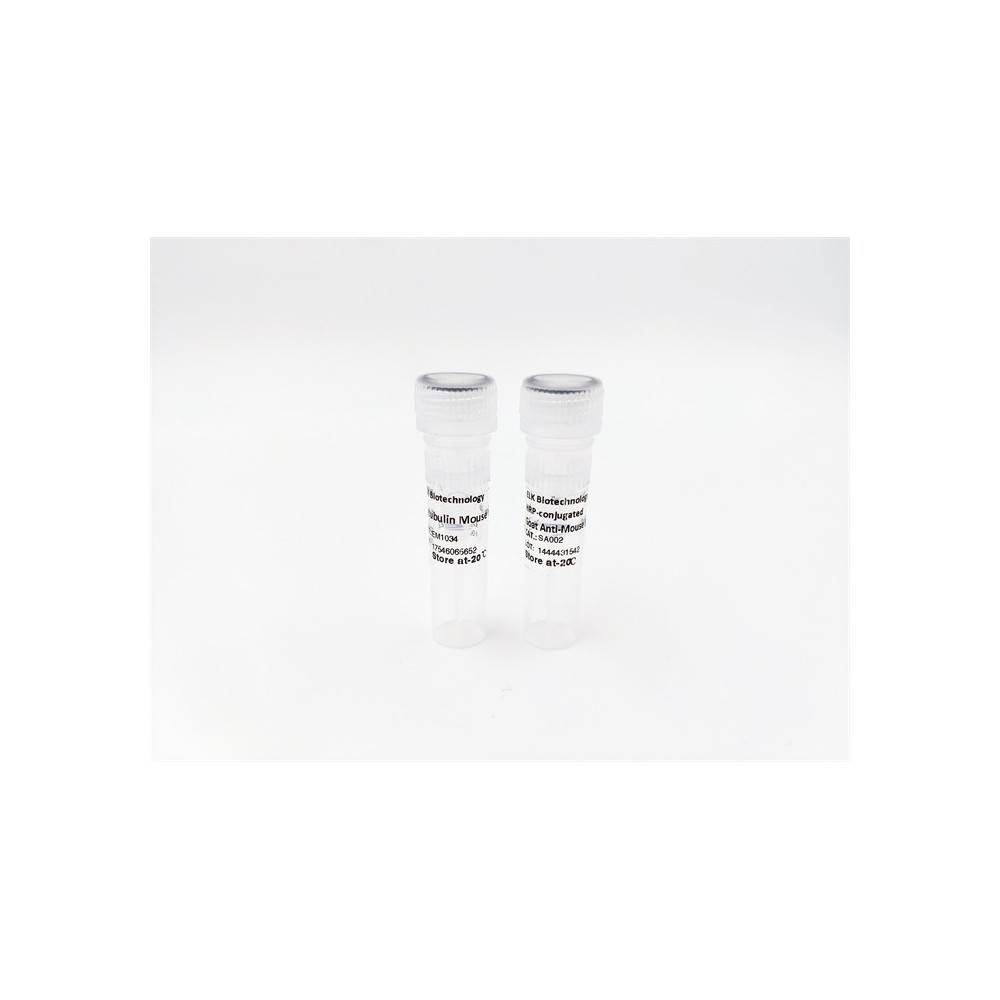

| ELK.No | ES3957 |
| Product name | DPYD rabbit pAb |
| Reactivity | Human;Mouse;Rat |
| Applications | WB;IHC;IF;ELISA |
| Other name | DPYD; Dihydropyrimidine dehydrogenase [NADP(+)]; DHPDHase; DPD; Dihydrothymine dehydrogenase; Dihydrouracil dehydrogenase |
| Size | 100μL |
| Unit price ($) | 248 |
| Human gene ID | 1806 |
| Human Swiss-Prot | Q12882 |
| Source | Rabbit |
| Isotype | IgG |
| Target | DPYD |
| Fields | >>Pyrimidine metabolism;>>beta-Alanine metabolism;>>Pantothenate and CoA biosynthesis;>>Drug metabolism - other enzymes;>>Metabolic pathways |
| Gene name | DPYD |
| Protein name | Dihydropyrimidine dehydrogenase [NADP(+)] |
| Human gene link | View Human Gene |
| Human Swiss link | View Human Swiss-Prot |
| Mouse gene ID | 99586 |
| Mouse gene link | View Mouse Gene |
| Mouse Swiss-Prot | Q8CHR6 |
| Mouse Swiss link | View Mouse Swiss-Prot |
| Rat gene ID | 81656 |
| Rat gene link | View Rat Gene |
| Rat Swiss-Prot | O89000 |
| Rat Swiss link | View Rat Swiss-Prot |
| Immunogen | The antiserum was produced against synthesized peptide derived from the Internal region of human DPYD. AA range:351-400 |
| Specificity | DPYD Polyclonal Antibody detects endogenous levels of DPYD protein. |
| Formulation | Liquid in PBS containing 50% glycerol, 0.5% BSA and 0.02% sodium azide. |
| Clonality | Polyclonal |
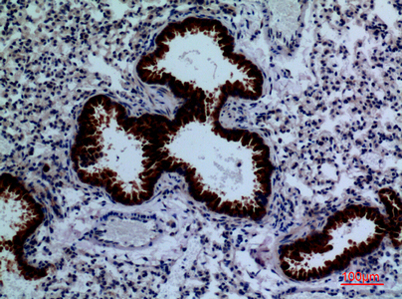
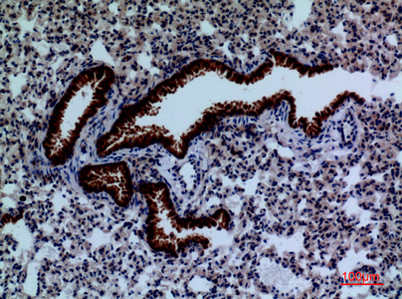
| Dilution | Western Blot: 1/500 - 1/2000. IHC-p: 1:100-300 ELISA: 1/20000. Not yet tested in other applications. |
| Purification | The antibody was affinity-purified from rabbit antiserum by affinity-chromatography using epitope-specific immunogen. |
| Concentration | 1 mg/ml |
| Storage stability | -20°C/1 year |
| Molecular Weight (Da) | |
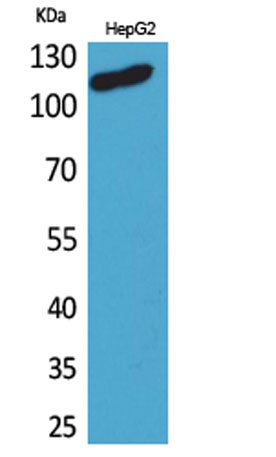
| Observed band (KD) | 120kD |
| Background | The protein encoded by this gene is a pyrimidine catabolic enzyme and the initial and rate-limiting factor in the pathway of uracil and thymidine catabolism. Mutations in this gene result in dihydropyrimidine dehydrogenase deficiency, an error in pyrimidine metabolism associated with thymine-uraciluria and an increased risk of toxicity in cancer patients receiving 5-fluorouracil chemotherapy. Two transcript variants encoding different isoforms have been found for this gene. [provided by RefSeq, May 2009], |
| Function | catalytic activity:5,6-dihydrouracil + NADP(+) = uracil + NADPH.,cofactor:Binds 2 4Fe-4S clusters. Contains approximately 33 iron atoms per molecule.,cofactor:Binds 2 FAD.,cofactor:Binds 2 FMN.,disease:Defects in DPYD are the cause of dihydropyrimidine dehydrogenase deficiency (DPYD deficiency) [MIM:274270]; also known as hereditary thymine-uraciluria or familial pyrimidinemia. DPYD deficiency is a disease characterized by persistent urinary excretion of excessive amounts of uracil, thymine and 5-hydroxymethyluracil. Patients suffering from this disease show a severe reaction to the anticancer drug 5-fluorouracil. This reaction includes stomatitis, Leukopenia, thrombocytopenia, hair loss, diarrhea, fever, marked weight loss, cerebellar ataxia, and neurologic symptoms, progressing to semicoma.,function:Involved in pyrimidine base degradation. Catalyzes the reduction of uracil and thymine. |
| Subcellular location | Cytoplasm. |
| Expression | Found in most tissues with greatest activity found in liver and peripheral blood mononuclear cells. |

Use collapsible tabs for more detailed information that will help customers make a purchasing decision.
Ex: Shipping and return policies, size guides, and other common questions.