 Français
 English
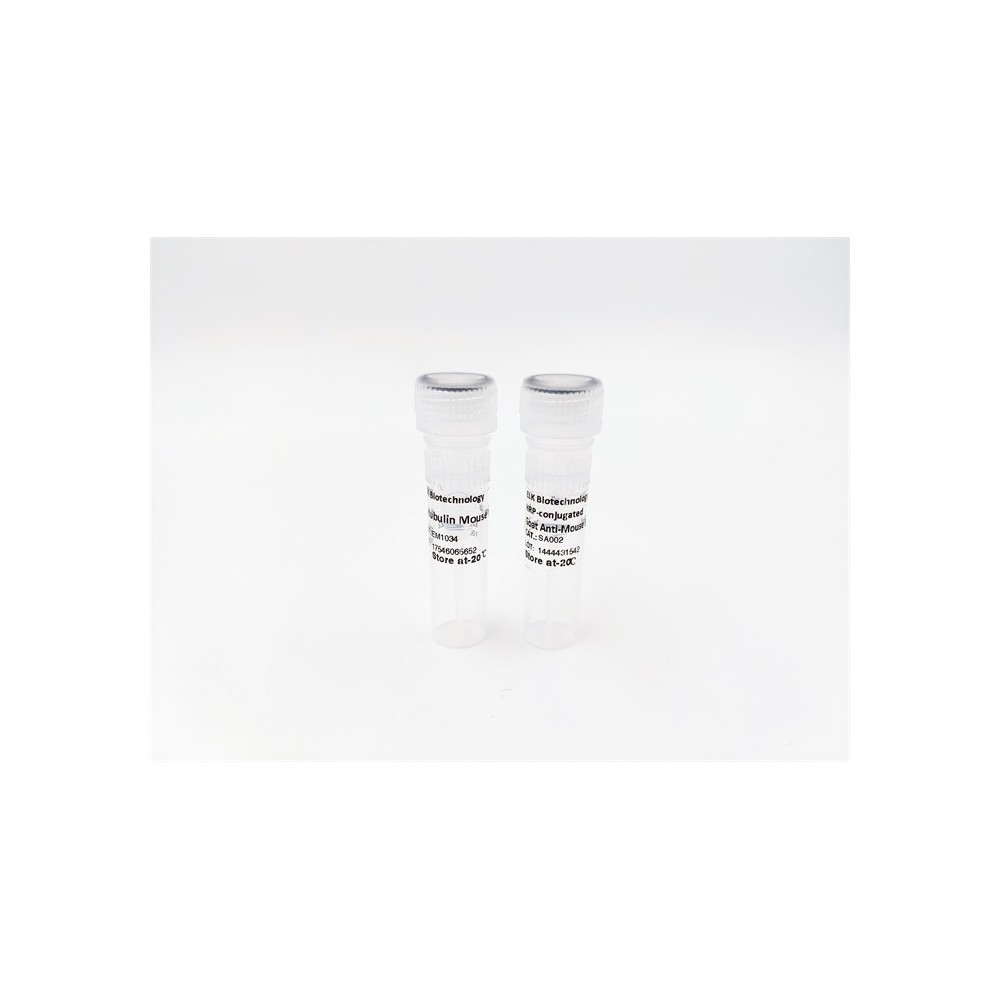

| ELK.No | ES3966 |
| Product name | PEPCK-C rabbit pAb |
| Reactivity | Human;Mouse;Rat |
| Applications | WB;IHC;IF;ELISA |
| Other name | PCK1; PEPCK1; Phosphoenolpyruvate carboxykinase, cytosolic [GTP]; PEPCK-C; Phosphoenolpyruvate carboxylase |
| Size | 100μL |
| Unit price ($) | 248 |
| Human gene ID | 5105 |
| Human Swiss-Prot | P35558 |
| Source | Rabbit |
| Isotype | IgG |
| Target | PEPCK-C |
| Fields | >>Glycolysis / Gluconeogenesis;>>Citrate cycle (TCA cycle);>>Pyruvate metabolism;>>Metabolic pathways;>>PPAR signaling pathway;>>FoxO signaling pathway;>>PI3K-Akt signaling pathway;>>AMPK signaling pathway;>>Insulin signaling pathway;>>Adipocytokine signaling pathway;>>Glucagon signaling pathway;>>Insulin resistance;>>Proximal tubule bicarbonate reclamation |
| Gene name | PCK1 |
| Protein name | Phosphoenolpyruvate carboxykinase cytosolic [GTP] |
| Human gene link | View Human Gene |
| Human Swiss link | View Human Swiss-Prot |
| Mouse gene ID | 18534 |
| Mouse gene link | View Mouse Gene |
| Mouse Swiss-Prot | Q9Z2V4 |
| Mouse Swiss link | View Mouse Swiss-Prot |
| Rat gene ID | 362282 |
| Rat gene link | View Rat Gene |
| Rat Swiss-Prot | P07379 |
| Rat Swiss link | View Rat Swiss-Prot |
| Immunogen | The antiserum was produced against synthesized peptide derived from the Internal region of human PCK1. AA range:491-540 |
| Specificity | PEPCK-C Polyclonal Antibody detects endogenous levels of PEPCK-C protein. |
| Formulation | Liquid in PBS containing 50% glycerol, 0.5% BSA and 0.02% sodium azide. |
| Clonality | Polyclonal |
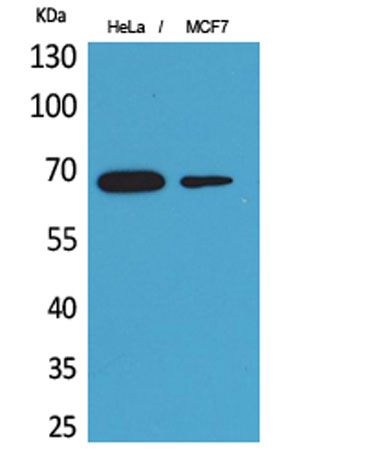
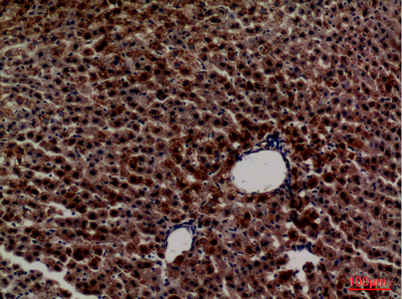
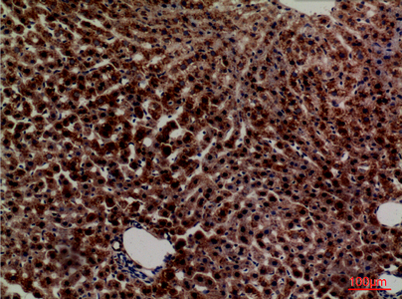
| Dilution | Western Blot: 1/500 - 1/2000. IHC-p: 1:100-300 ELISA: 1/20000. Not yet tested in other applications. |
| Purification | The antibody was affinity-purified from rabbit antiserum by affinity-chromatography using epitope-specific immunogen. |
| Concentration | 1 mg/ml |
| Storage stability | -20°C/1 year |
| Molecular Weight (Da) | |
| Observed band (KD) | 65kD |
| Background | This gene is a main control point for the regulation of gluconeogenesis. The cytosolic enzyme encoded by this gene, along with GTP, catalyzes the formation of phosphoenolpyruvate from oxaloacetate, with the release of carbon dioxide and GDP. The expression of this gene can be regulated by insulin, glucocorticoids, glucagon, cAMP, and diet. Defects in this gene are a cause of cytosolic phosphoenolpyruvate carboxykinase deficiency. A mitochondrial isozyme of the encoded protein also has been characterized. [provided by RefSeq, Jul 2008], |
| Function | catalytic activity:GTP + oxaloacetate = GDP + phosphoenolpyruvate + CO(2).,cofactor:Binds 1 manganese ion per subunit.,disease:Defects in PCK1 are the cause of cytosolic phosphoenolpyruvate carboxykinase deficiency (cytosolic PEPCK deficiency) [MIM:261680]. PEPCK deficiency is a metabolic disorder resulting from impaired gluconeogenesis. It is a rare disease with less than 10 cases reported in the literature. Clinical characteristics include hypotonia, hepatomegaly, failure to thrive, lactic acidosis and hypoglycaemia. Autoposy reveals fatty infiltration of both the liver and kidneys. The disorder is transmitted as an autosomal recessive trait.,enzyme regulation:Activity is affected by a number of hormones regulating this metabolic process (such as glucagon, insulin, or glucocorticoids).,function:Catalyzes the conversion of oxaloacetate (OAA) to phosphoenolpyruvate (PEP), the rate-limiti |
| Subcellular location | Cytoplasm, cytosol . Endoplasmic reticulum . Phosphorylation at Ser-90 promotes translocation to the endoplasmic reticulum. . |
| Expression | Major sites of expression are liver, kidney and adipocytes. |

Use collapsible tabs for more detailed information that will help customers make a purchasing decision.
Ex: Shipping and return policies, size guides, and other common questions.