 Français
 English

| ELK.No | ES3982 |
| Product name | CD59 rabbit pAb |
| Reactivity | Human;Rat;Mouse; |
| Applications | WB;IHC;IF;ELISA |
| Other name | CD59; MIC11; MIN1; MIN2; MIN3; MSK21; CD59 glycoprotein; 1F5 antigen; 20 kDa homologous restriction factor; HRF-20; HRF20; MAC-inhibitory protein; MAC-IP;MEM43 antigen; Membrane attack complex inhibition factor; MACIF; Membrane inhibitor of reactive lysis; MIRL; Protectin; CD59 |
| Size | 50μL |
| Unit price ($) | 148 |
| Human gene ID | 966 |
| Human Swiss-Prot | P13987 |
| Source | Rabbit |
| Isotype | IgG |
| Target | CD59 |
| Fields | >>Complement and coagulation cascades;>>Hematopoietic cell lineage |
| Gene name | CD59 |
| Protein name | CD59 glycoprotein |
| Human gene link | View Human Gene |
| Human Swiss link | View Human Swiss-Prot |
| Mouse gene ID | |
| Mouse gene link | |
| Mouse Swiss-Prot | |
| Mouse Swiss link | |
| Rat gene ID | |
| Rat gene link | |
| Rat Swiss-Prot | |
| Rat Swiss link | |
| Immunogen | The antiserum was produced against synthesized peptide derived from the Internal region of human CD59. AA range:51-100 |
| Specificity | CD59 Polyclonal Antibody detects endogenous levels of CD59 protein. |
| Formulation | Liquid in PBS containing 50% glycerol, 0.5% BSA and 0.02% sodium azide. |
| Clonality | Polyclonal |
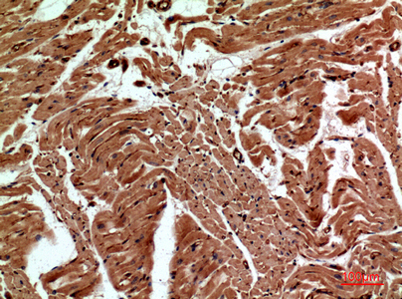
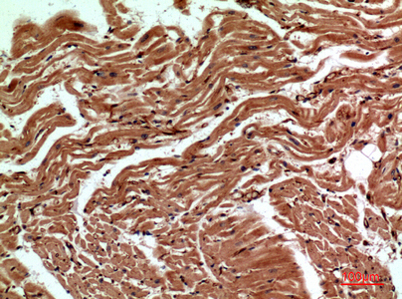
| Dilution | Western Blot: 1/500 - 1/2000. IHC-p: 1:100-300 ELISA: 1/20000. Not yet tested in other applications. |
| Purification | The antibody was affinity-purified from rabbit antiserum by affinity-chromatography using epitope-specific immunogen. |
| Concentration | 1 mg/ml |
| Storage stability | -20°C/1 year |
| Molecular Weight (Da) | |
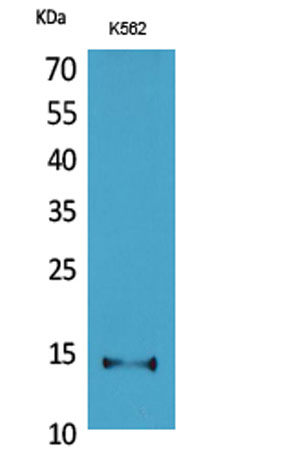
| Observed band (KD) | 16kD |
| Background | This gene encodes a cell surface glycoprotein that regulates complement-mediated cell lysis, and it is involved in lymphocyte signal transduction. This protein is a potent inhibitor of the complement membrane attack complex, whereby it binds complement C8 and/or C9 during the assembly of this complex, thereby inhibiting the incorporation of multiple copies of C9 into the complex, which is necessary for osmolytic pore formation. This protein also plays a role in signal transduction pathways in the activation of T cells. Mutations in this gene cause CD59 deficiency, a disease resulting in hemolytic anemia and thrombosis, and which causes cerebral infarction. Multiple alternatively spliced transcript variants, which encode the same protein, have been identified for this gene. [provided by RefSeq, Jul 2008], |
| Function | disease:Defects in CD59 are the cause of CD59 deficiency [MIM:612300].,function:Potent inhibitor of the complement membrane attack complex (MAC) action. Acts by binding to the C8 and/or C9 complements of the assembling MAC, thereby preventing incorporation of the multiple copies of C9 required for complete formation of the osmolytic pore. This inhibitor appears to be species-specific. Involved in signal transduction for T-cell activation complexed to a protein tyrosine kinase.,function:The soluble form from urine retains its specific complement binding activity, but exhibits greatly reduced ability to inhibit MAC assembly on cell membranes.,online information:CD59 mutation db,PTM:Glycated. Glycation is found in diabetic subjects, but only at minimal levels in nondiabetic subjects. Glycated CD59 lacks MAC-inhibitory function and confers to vascular complications of diabetes.,PTM:N- and O- |
| Subcellular location | Cell membrane; Lipid-anchor, GPI-anchor. Secreted. Soluble form found in a number of tissues. |
| Expression | Blood,Colon,Heart,Milk,T-cell,Urine, |

Use collapsible tabs for more detailed information that will help customers make a purchasing decision.
Ex: Shipping and return policies, size guides, and other common questions.