 Français
 English

| ELK.No | ES3986 |
| Product name | CD84 rabbit pAb |
| Reactivity | Human;Mouse |
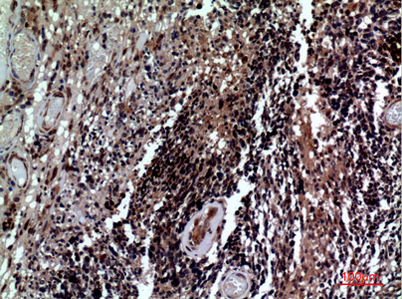
| Applications | WB;IHC;IF;ELISA |
| Other name | CD84; SLAMF5; SLAM family member 5; Cell surface antigen MAX.3; Hly9-beta; Leukocyte differentiation antigen CD84; Signaling lymphocytic activation molecule 5; CD84 |
| Size | 100μL |
| Unit price ($) | 248 |
| Human gene ID | 8832 |
| Human Swiss-Prot | Q9UIB8 |
| Source | Rabbit |
| Isotype | IgG |
| Target | CD84 |
| Fields | |
| Gene name | CD84 |
| Protein name | SLAM family member 5 |
| Human gene link | View Human Gene |
| Human Swiss link | View Human Swiss-Prot |
| Mouse gene ID | 12523 |
| Mouse gene link | View Mouse Gene |
| Mouse Swiss-Prot | Q18PI6 |
| Mouse Swiss link | View Mouse Swiss-Prot |
| Rat gene ID | |
| Rat gene link | |
| Rat Swiss-Prot | |
| Rat Swiss link | |
| Immunogen | The antiserum was produced against synthesized peptide derived from the Internal region of human CD84. AA range:131-180 |
| Specificity | CD84 Polyclonal Antibody detects endogenous levels of CD84 protein. |
| Formulation | Liquid in PBS containing 50% glycerol, 0.5% BSA and 0.02% sodium azide. |
| Clonality | Polyclonal |
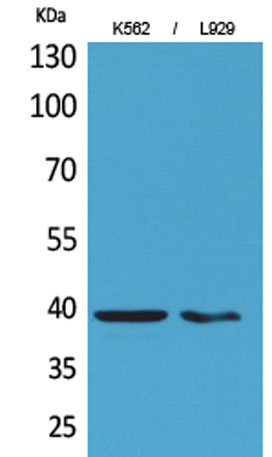
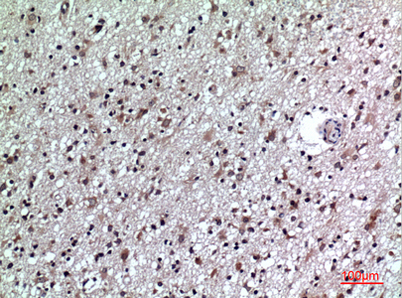
| Dilution | Western Blot: 1/500 - 1/2000. IHC-p: 1:100-300 ELISA: 1/20000. Not yet tested in other applications. |
| Purification | The antibody was affinity-purified from rabbit antiserum by affinity-chromatography using epitope-specific immunogen. |
| Concentration | 1 mg/ml |
| Storage stability | -20°C/1 year |
| Molecular Weight (Da) | |
| Observed band (KD) | 39kD |
| Background | This gene encodes a membrane glycoprotein that is a member of the signaling lymphocyte activation molecule (SLAM) family. This family forms a subset of the larger CD2 cell-surface receptor Ig superfamily. The encoded protein is a homophilic adhesion molecule that is expressed in numerous immune cells types and is involved in regulating receptor-mediated signaling in those cells. Alternate splicing results in multiple transcript variants. [provided by RefSeq, Oct 2011], |
| Function | developmental stage:Expression is slightly increased in naive B-cells after the first dividion. By contrast, expression on memory B-cells decreased with each successive division.,domain:ITSM (immunoreceptor tyrosine-based switch motif) motif is a cytoplasmic motif which may bind SH2D1A.,function:Plays a role as adhesion receptor functioning by homophilic interactions and by clustering. Recruits SH2 domain-containing proteins SH2D1A/SAP. Increases proliferative responses of activated T-cells and SH2D1A/SAP does not seen be required for this process. Homophilic interactions enhance interferon gamma/IFNG secretion in lymphocytes and induce platelet stimulation via a SH2D1A/SAP-dependent pathway. May serve as a marker for hematopoietic progenitor cells.,PTM:N-glycosylated.,PTM:Phosphorylated by tyrosine-protein kinase LCK on tyrosine residues following ligation induced by agonist monoclonal |
| Subcellular location | Cell membrane ; Single-pass type I membrane protein . |
| Expression | Predominantly expressed in hematopoietic tissues, such as lymph node, spleen and peripheral leukocytes. Expressed in macrophages, B-cells, monocytes, platelets, thymocytes, T-cells and dendritic cells. Highly expressed in memory T-cells. Expressed in mast cells. |

Use collapsible tabs for more detailed information that will help customers make a purchasing decision.
Ex: Shipping and return policies, size guides, and other common questions.