 Français
 English
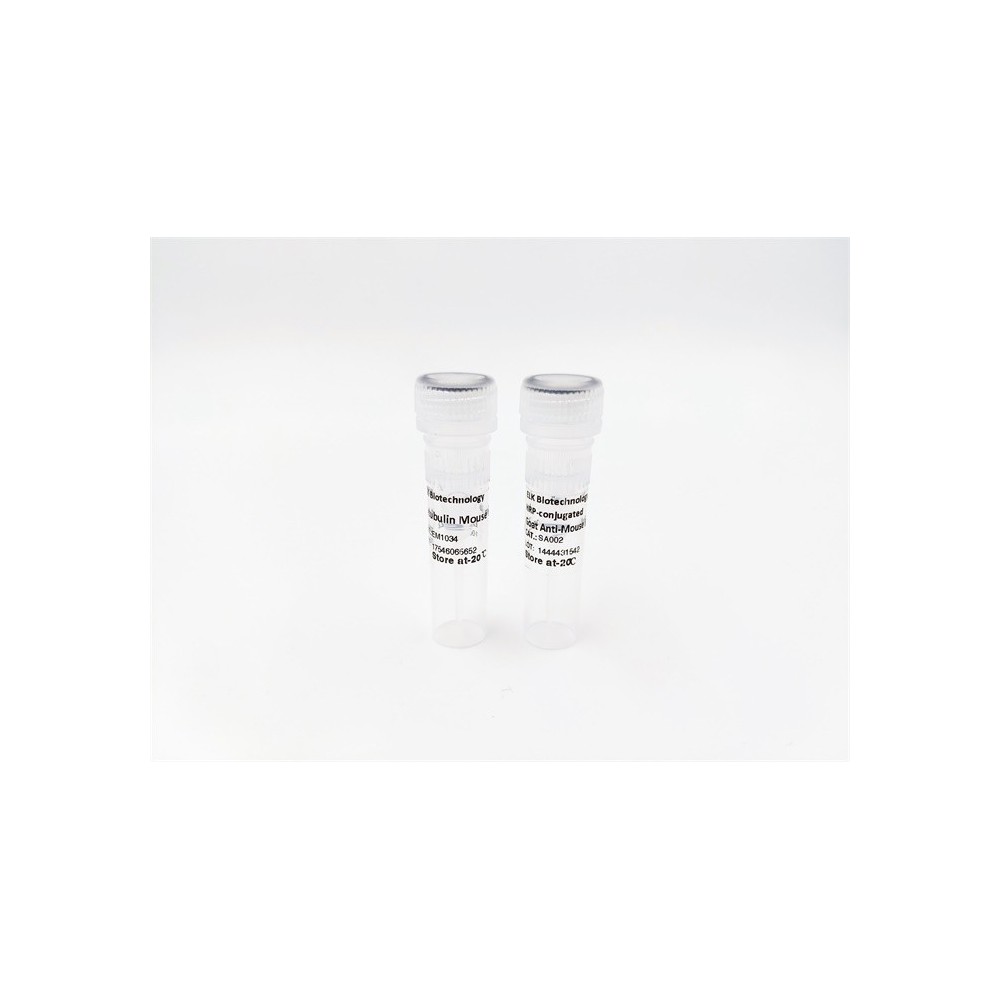

| ELK.No | ES4023 |
| Product name | MCP-2 rabbit pAb |
| Reactivity | Human;Rat;Mouse; |
| Applications | WB;ELISA;IHC |
| Other name | CCL8; MCP2; SCYA10; SCYA8; C-C motif chemokine 8; HC14; Monocyte chemoattractant protein 2; Monocyte chemotactic protein 2; MCP-2; Small-inducible cytokine A8 |
| Size | 100μL |
| Unit price ($) | 248 |
| Human gene ID | 6355 |
| Human Swiss-Prot | P80075 |
| Source | Rabbit |
| Isotype | IgG |
| Target | MCP-2 |
| Fields | >>Cytokine-cytokine receptor interaction;>>Viral protein interaction with cytokine and cytokine receptor;>>Chemokine signaling pathway |
| Gene name | CCL8 |
| Protein name | C-C motif chemokine 8 |
| Human gene link | View Human Gene |
| Human Swiss link | View Human Swiss-Prot |
| Mouse gene ID | 100503254 |
| Mouse gene link | View Mouse Gene |
| Mouse Swiss-Prot | Q9Z121 |
| Mouse Swiss link | View Mouse Swiss-Prot |
| Rat gene ID | |
| Rat gene link | |
| Rat Swiss-Prot | |
| Rat Swiss link | |
| Immunogen | The antiserum was produced against synthesized peptide derived from the C-terminal region of human CCL8. AA range:50-99 |
| Specificity | MCP-2 Polyclonal Antibody detects endogenous levels of MCP-2 protein. |
| Formulation | Liquid in PBS containing 50% glycerol, 0.5% BSA and 0.02% sodium azide. |
| Clonality | Polyclonal |
| Dilution | WB 1:500-2000;IHC-p 1:50-300; ELISA 2000-20000 |
| Purification | The antibody was affinity-purified from rabbit antiserum by affinity-chromatography using epitope-specific immunogen. |
| Concentration | 1 mg/ml |
| Storage stability | -20°C/1 year |
| Molecular Weight (Da) | |
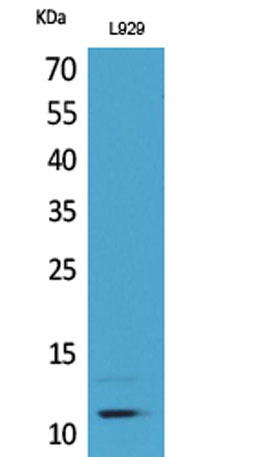
| Observed band (KD) | 15kD |
| Background | This antimicrobial gene is one of several chemokine genes clustered on the q-arm of chromosome 17. Chemokines form a superfamily of secreted proteins involved in immunoregulatory and inflammatory processes. The superfamily is divided into four subfamilies based on the arrangement of N-terminal cysteine residues of the mature peptide. This chemokine is a member of the CC subfamily which is characterized by two adjacent cysteine residues. This cytokine displays chemotactic activity for monocytes, lymphocytes, basophils and eosinophils. By recruiting leukocytes to sites of inflammation this cytokine may contribute to tumor-associated leukocyte infiltration and to the antiviral state against HIV infection. [provided by RefSeq, Sep 2014], |
| Function | function:Chemotactic factor that attracts monocytes, lymphocytes, basophils and eosinophils. May play a role in neoplasia and inflammatory host responses. This protein can bind heparin. The processed form MCP-2(6-76) does not show monocyte chemotactic activity, but inhibits the chemotactic effect most predominantly of CCL7, and also of CCL2 and CCL5 and CCL8.,induction:By interferon gamma, mitogens and interleukin-1.,online information:CCL8 entry,PTM:N-terminal processed form MCP-2(6-76) is produced by proteolytic cleavage after secretion from peripheral blood monocytes.,similarity:Belongs to the intercrine beta (chemokine CC) family.,subunit:Monomer or homodimer; in equilibrium.,tissue specificity:Highest expression found in the small intestine and peripheral blood cells. Intermediate levels seen in the heart, placenta, lung, skeletal muscle, thymus, colon, ovary, spinal cord and pancre |
| Subcellular location | Secreted. |
| Expression | Highest expression found in the small intestine and peripheral blood cells. Intermediate levels seen in the heart, placenta, lung, skeletal muscle, thymus, colon, ovary, spinal cord and pancreas. Low levels seen in the brain, liver, spleen and prostate. |



Use collapsible tabs for more detailed information that will help customers make a purchasing decision.
Ex: Shipping and return policies, size guides, and other common questions.