 Français
 English
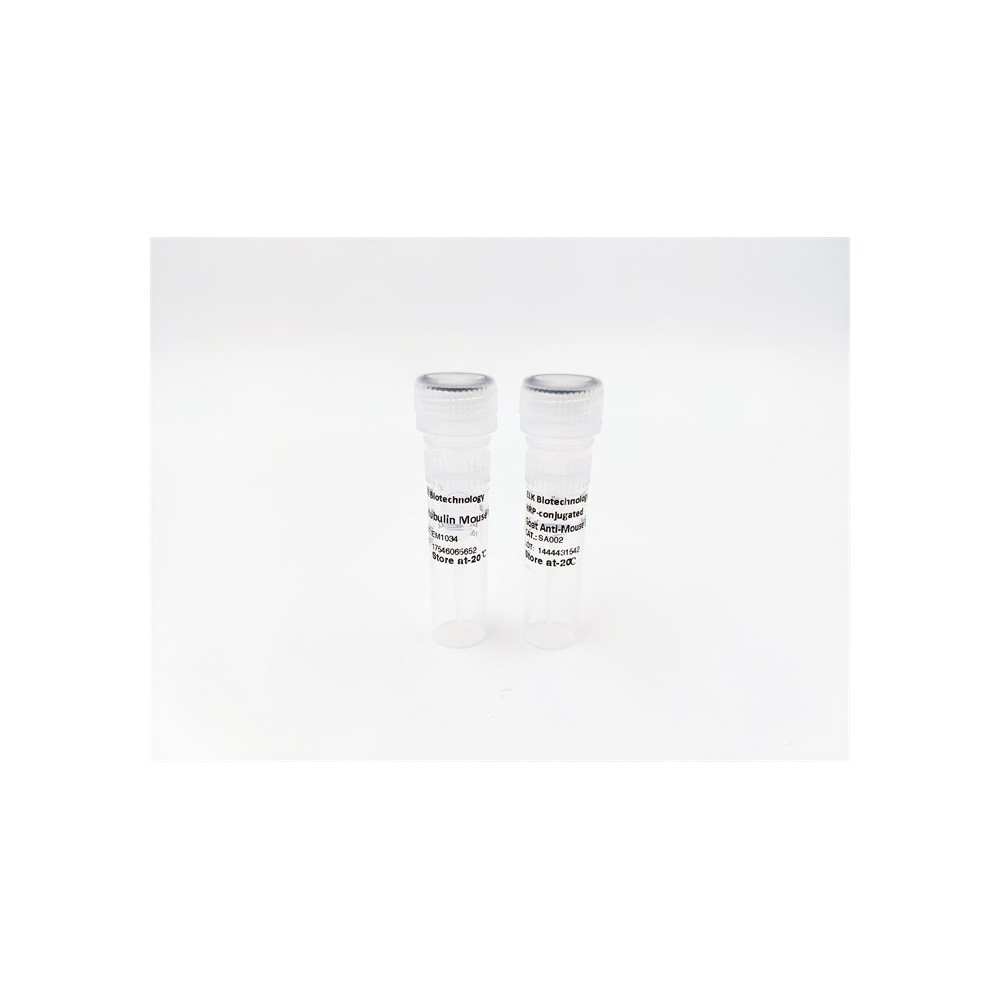

| ELK.No | ES4032 |
| Product name | GDF-5 rabbit pAb |
| Reactivity | Human;Mouse;Rat |
| Applications | WB;IHC;IF;ELISA |
| Other name | GDF5; CDMP1; Growth/differentiation factor 5; GDF-5; Cartilage-derived morphogenetic protein 1; CDMP-1; Radotermin |
| Size | 50μL |
| Unit price ($) | 148 |
| Human gene ID | 8200 |
| Human Swiss-Prot | P43026 |
| Source | Rabbit |
| Isotype | IgG |
| Target | GDF-5 |
| Fields | >>Cytokine-cytokine receptor interaction;>>TGF-beta signaling pathway;>>Hippo signaling pathway |
| Gene name | GDF5 |
| Protein name | Growth/differentiation factor 5 |
| Human gene link | View Human Gene |
| Human Swiss link | View Human Swiss-Prot |
| Mouse gene ID | 14563 |
| Mouse gene link | View Mouse Gene |
| Mouse Swiss-Prot | P43027 |
| Mouse Swiss link | View Mouse Swiss-Prot |
| Rat gene ID | |
| Rat gene link | |
| Rat Swiss-Prot | |
| Rat Swiss link | |
| Immunogen | The antiserum was produced against synthesized peptide derived from the Internal region of human GDF5. AA range:361-410 |
| Specificity | GDF-5 Polyclonal Antibody detects endogenous levels of GDF-5 protein. |
| Formulation | Liquid in PBS containing 50% glycerol, 0.5% BSA and 0.02% sodium azide. |
| Clonality | Polyclonal |
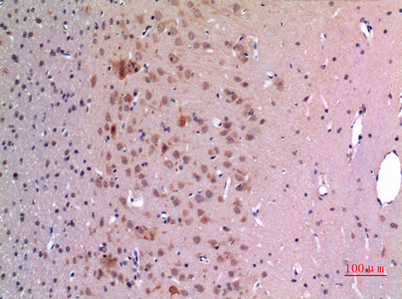
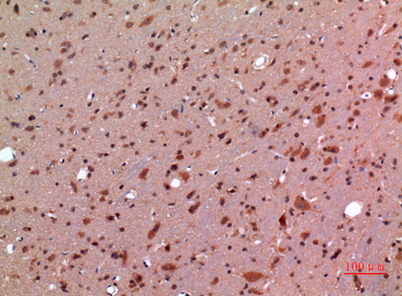
| Dilution | Western Blot: 1/500 - 1/2000. IHC-p: 1/100-1/300. ELISA: 1/20000. Not yet tested in other applications. |
| Purification | The antibody was affinity-purified from rabbit antiserum by affinity-chromatography using epitope-specific immunogen. |
| Concentration | 1 mg/ml |
| Storage stability | -20°C/1 year |
| Molecular Weight (Da) | |
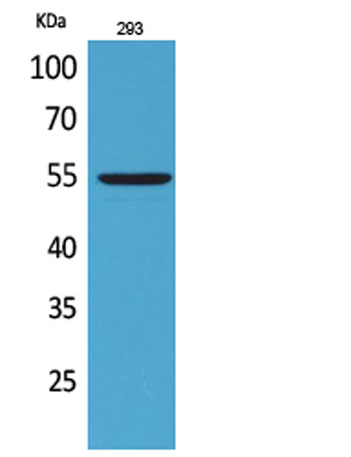
| Observed band (KD) | 55kD |
| Background | This gene encodes a secreted ligand of the TGF-beta (transforming growth factor-beta) superfamily of proteins. Ligands of this family bind various TGF-beta receptors leading to recruitment and activation of SMAD family transcription factors that regulate gene expression. The encoded preproprotein is proteolytically processed to generate each subunit of the disulfide-linked homodimer. This protein regulates the development of numerous tissue and cell types, including cartilage, joints, brown fat, teeth, and the growth of neuronal axons and dendrites. Mutations in this gene are associated with acromesomelic dysplasia, brachydactyly, chondrodysplasia, multiple synostoses syndrome, proximal symphalangism, and susceptibility to osteoarthritis. [provided by RefSeq, Aug 2016], |
| Function | disease:Defects in GDF5 are a cause of brachydactyly type A2 (BDA2) [MIM:112600]. Brachydactylies (BDs) are a group of inherited malformations characterized by shortening of the digits due to abnormal development of the phalanges and/or the metacarpals. They have been classified on an anatomic and genetic basis into five groups, A to E, including three subgroups (A1 to A3) that usually manifest as autosomal dominant traits.,disease:Defects in GDF5 are a cause of symphalangism proximal syndrome (SYM1) [MIM:185800]. SYM1 is characterized by the hereditary absence of the proximal interphalangeal (PIP) joints (Cushing symphalangism). Severity of PIP joint involvement diminishes towards the radial side. Distal interphalangeal joints are less frequently involved and metacarpophalangeal joints are rarely affected whereas carpal bone malformation and fusion are common. In the lower extremities, |
| Subcellular location | Secreted . Cell membrane . |
| Expression | Predominantly expressed in long bones during embryonic development. Expressed in monocytes (at protein level). |

Use collapsible tabs for more detailed information that will help customers make a purchasing decision.
Ex: Shipping and return policies, size guides, and other common questions.