 Français
 English
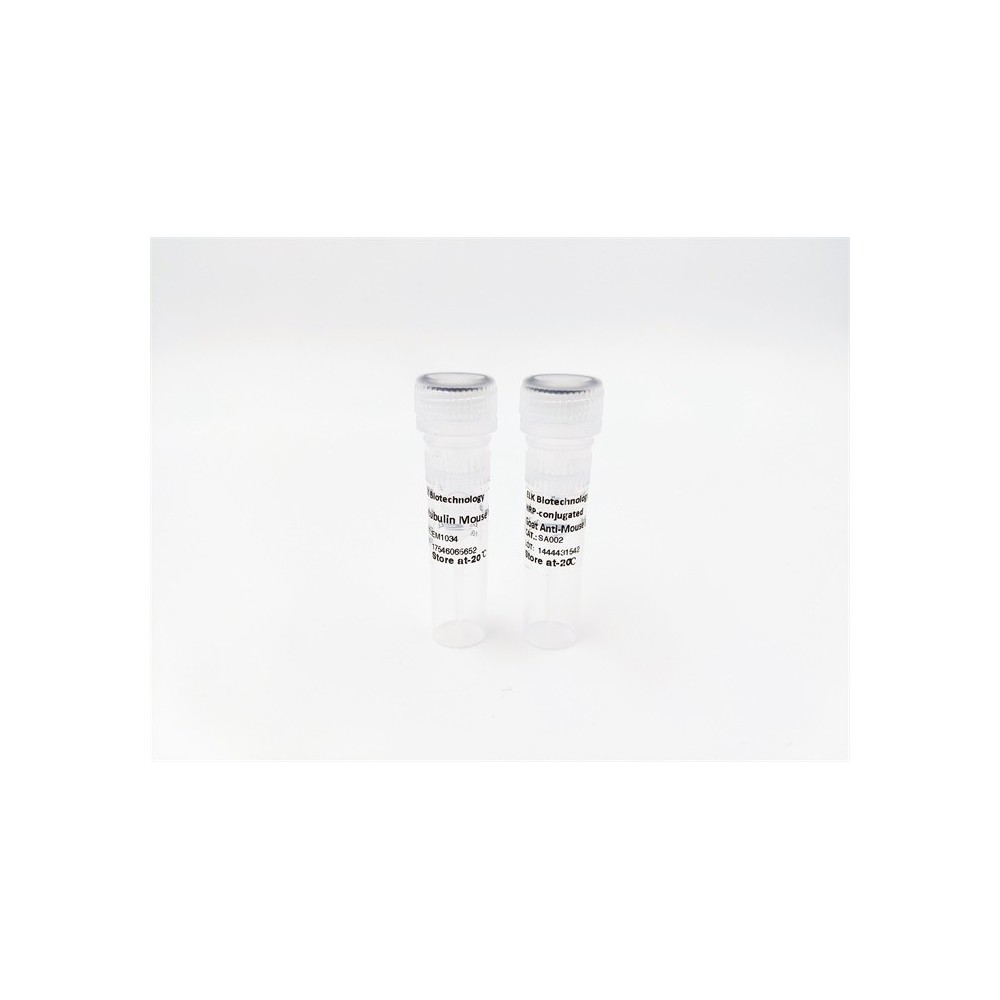

| ELK.No | ES4086 |
| Product name | RUNX2 rabbit pAb |
| Reactivity | Human;Mouse;Rat;Dog |
| Applications | IF;WB;ELISA |
| Other name | RUNX2; AML3; CBFA1; OSF2; PEBP2A; Runt-related transcription factor 2; Acute myeloid leukemia 3 protein; Core-binding factor subunit alpha-1; CBF-alpha-1; Oncogene AML-3Osteoblast-specific transcription factor 2; OSF-2; Polyomavirus enhancer-binding protein 2 alpha A subunit; PEA2-alpha A; PEBP2-alpha A; SL3-3 enhancer factor 1 alpha A subunit; SL3/AKV core-binding factor alpha A subunit |
| Size | 100μL |
| Unit price ($) | 248 |
| Human gene ID | 860 |
| Human Swiss-Prot | Q13950 |
| Source | Rabbit |
| Isotype | IgG |
| Target | RUNX2 |
| Fields | >>Parathyroid hormone synthesis, secretion and action;>>Transcriptional misregulation in cancer |
| Gene name | RUNX2 |
| Protein name | Runt-related transcription factor 2 |
| Human gene link | View Human Gene |
| Human Swiss link | View Human Swiss-Prot |
| Mouse gene ID | 12393 |
| Mouse gene link | View Mouse Gene |
| Mouse Swiss-Prot | Q08775 |
| Mouse Swiss link | View Mouse Swiss-Prot |
| Rat gene ID | |
| Rat gene link | |
| Rat Swiss-Prot | Q9Z2J9 |
| Rat Swiss link | View Rat Swiss-Prot |
| Immunogen | The antiserum was produced against synthesized peptide derived from the Internal region of human RUNX2. AA range:201-250 |
| Specificity | RUNX2 Polyclonal Antibody detects endogenous levels of RUNX2 protein. |
| Formulation | Liquid in PBS containing 50% glycerol, 0.5% BSA and 0.02% sodium azide. |
| Clonality | Polyclonal |
| Dilution | IF: 1:50-200 Western Blot: 1/500 - 1/2000. ELISA: 1/20000. Not yet tested in other applications. |
| Purification | The antibody was affinity-purified from rabbit antiserum by affinity-chromatography using epitope-specific immunogen. |
| Concentration | 1 mg/ml |
| Storage stability | -20°C/1 year |
| Molecular Weight (Da) | |
| Observed band (KD) | 56kD |
| Background | This gene is a member of the RUNX family of transcription factors and encodes a nuclear protein with an Runt DNA-binding domain. This protein is essential for osteoblastic differentiation and skeletal morphogenesis and acts as a scaffold for nucleic acids and regulatory factors involved in skeletal gene expression. The protein can bind DNA both as a monomer or, with more affinity, as a subunit of a heterodimeric complex. Two regions of potential trinucleotide repeat expansions are present in the N-terminal region of the encoded protein, and these and other mutations in this gene have been associated with the bone development disorder cleidocranial dysplasia (CCD). Transcript variants that encode different protein isoforms result from the use of alternate promoters as well as alternate splicing. [provided by RefSeq, Jul 2016], |
| Function | disease:Defects in RUNX2 are the cause of cleidocranial dysplasia (CCD) [MIM:119600]. CCD is an autosomal dominant skeletal disorder with high penetrance and variable expressivity. It is due to defective endochondral and intramembranous bone formation. Typical features include hypoplasia/aplasia of clavicles, patent fontanelles, wormian bones (additional cranial plates caused by abnormal ossification of the calvaria), supernumerary teeth, short stature, and other skeletal changes. In some cases defects in RUNX2 are exclusively associated with dental anomalies.,domain:A proline/serine/threonine rich region at the C-terminus is necessary for transcriptional activation of target genes and contains the phosphorylation sites.,function:Transcription factor involved in osteoblastic differentiation and skeletal morphogenesis. Essential for the maturation of osteoblasts and both intramembranous a |
| Subcellular location | Nucleus . |
| Expression | Specifically expressed in osteoblasts. |

Use collapsible tabs for more detailed information that will help customers make a purchasing decision.
Ex: Shipping and return policies, size guides, and other common questions.