 Français
 English
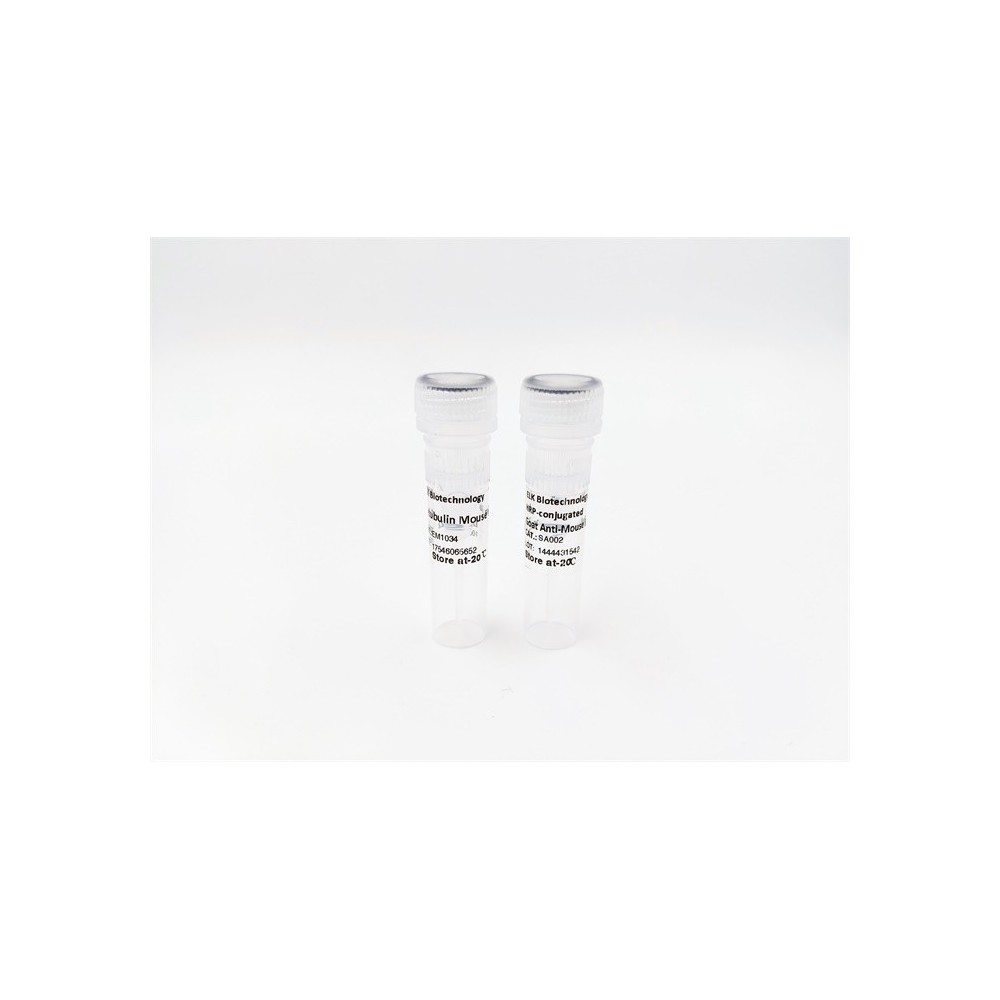

| ELK.No | ES4108 |
| Product name | Apaf-1 rabbit pAb |
| Reactivity | Human;Mouse;Rat |
| Applications | WB;IHC;IF;ELISA |
| Other name | APAF1; KIAA0413; Apoptotic protease-activating factor 1; APAF-1 |
| Size | 100μL |
| Unit price ($) | 248 |
| Human gene ID | 317 |
| Human Swiss-Prot | O14727 |
| Source | Rabbit |
| Isotype | IgG |
| Target | APAF1 |
| Fields | >>Platinum drug resistance;>>p53 signaling pathway;>>Apoptosis;>>Apoptosis - multiple species;>>Alzheimer disease;>>Parkinson disease;>>Amyotrophic lateral sclerosis;>>Huntington disease;>>Prion disease;>>Pathways of neurodegeneration - multiple diseases;>>Legionellosis;>>Tuberculosis;>>Hepatitis C;>>Hepatitis B;>>Measles;>>Influenza A;>>Herpes simplex virus 1 infection;>>Epstein-Barr virus infection;>>Pathways in cancer;>>Small cell lung cancer;>>Lipid and atherosclerosis |
| Gene name | APAF1 |
| Protein name | Apoptotic protease-activating factor 1 |
| Human gene link | View Human Gene |
| Human Swiss link | View Human Swiss-Prot |
| Mouse gene ID | 11783 |
| Mouse gene link | View Mouse Gene |
| Mouse Swiss-Prot | O88879 |
| Mouse Swiss link | View Mouse Swiss-Prot |
| Rat gene ID | 78963 |
| Rat gene link | View Rat Gene |
| Rat Swiss-Prot | Q9EPV5 |
| Rat Swiss link | View Rat Swiss-Prot |
| Immunogen | The antiserum was produced against synthesized peptide derived from the Internal region of human APAF1. AA range:501-550 |
| Specificity | Apaf-1 Polyclonal Antibody detects endogenous levels of Apaf-1 protein. |
| Formulation | Liquid in PBS containing 50% glycerol, 0.5% BSA and 0.02% sodium azide. |
| Clonality | Polyclonal |
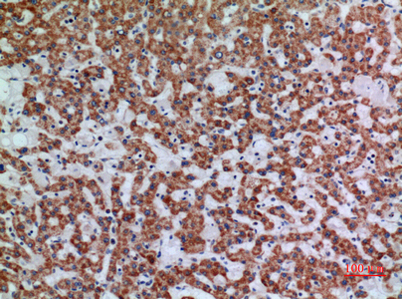
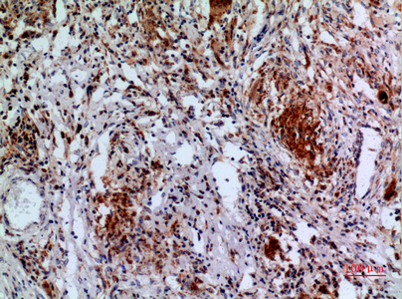
| Dilution | Western Blot: 1/500 - 1/2000. IHC-p: 1/100-1/300. ELISA: 1/20000. Not yet tested in other applications. |
| Purification | The antibody was affinity-purified from rabbit antiserum by affinity-chromatography using epitope-specific immunogen. |
| Concentration | 1 mg/ml |
| Storage stability | -20°C/1 year |
| Molecular Weight (Da) | |
| Observed band (KD) | 135kD |
| Background | This gene encodes a cytoplasmic protein that initiates apoptosis. This protein contains several copies of the WD-40 domain, a caspase recruitment domain (CARD), and an ATPase domain (NB-ARC). Upon binding cytochrome c and dATP, this protein forms an oligomeric apoptosome. The apoptosome binds and cleaves caspase 9 preproprotein, releasing its mature, activated form. Activated caspase 9 stimulates the subsequent caspase cascade that commits the cell to apoptosis. Alternative splicing results in several transcript variants encoding different isoforms. [provided by RefSeq, Jul 2008], |
| Function | domain:The CARD domain mediates interaction with APIP.,function:Oligomeric Apaf-1 mediates the cytochrome c-dependent autocatalytic activation of pro-caspase-9 (Apaf-3), leading to the activation of caspase-3 and apoptosis. This activation requires ATP. Isoform 6 is less effective in inducing apoptosis.,induction:By E2F and p53 in apoptotic neurons.,similarity:Contains 1 CARD domain.,similarity:Contains 1 NB-ARC domain.,similarity:Contains 13 WD repeats.,subunit:Monomer. Oligomerizes upon binding of cytochrome c and dATP. Oligomeric Apaf-1 and pro-caspase-9 bind to each other via their respective NH2-terminal CARD domains and consecutively mature caspase-9 is released from the complex. Pro-caspase-3 is recruited into the Apaf-1-pro-caspase-9 complex via interaction with pro-caspase-9. Interacts with APIP.,tissue specificity:Ubiquitous. Highest levels of expression in adult spleen and per |
| Subcellular location | Cytoplasm . |
| Expression | Ubiquitous. Highest levels of expression in adult spleen and peripheral blood leukocytes, and in fetal brain, kidney and lung. Isoform 1 is expressed in heart, kidney and liver. |


Use collapsible tabs for more detailed information that will help customers make a purchasing decision.
Ex: Shipping and return policies, size guides, and other common questions.