 Français
 English
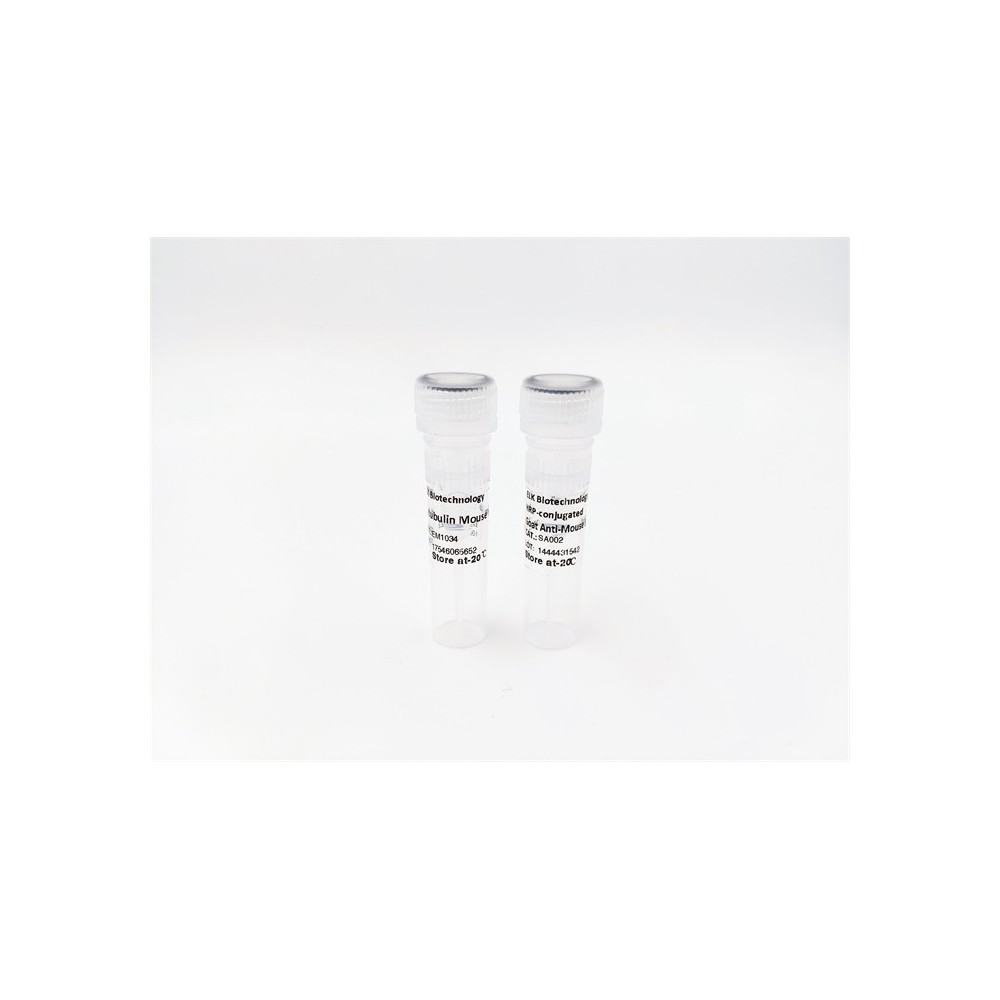

| ELK.No | ES4122 |
| Product name | CD38 rabbit pAb |
| Reactivity | Human;Rat;Mouse; |
| Applications | WB;IHC;IF;ELISA |
| Other name | CD38; ADP-ribosyl cyclase 1; Cyclic ADP-ribose hydrolase 1; cADPr hydrolase 1; T10; CD38 |
| Size | 50μL |
| Unit price ($) | 148 |
| Human gene ID | 952 |
| Human Swiss-Prot | P28907 |
| Source | Rabbit |
| Isotype | IgG |
| Target | CD38 |
| Fields | >>Nicotinate and nicotinamide metabolism;>>Metabolic pathways;>>Calcium signaling pathway;>>Hematopoietic cell lineage;>>Oxytocin signaling pathway;>>Salivary secretion;>>Pancreatic secretion |
| Gene name | CD38 |
| Protein name | ADP-ribosyl cyclase 1 |
| Human gene link | View Human Gene |
| Human Swiss link | View Human Swiss-Prot |
| Mouse gene ID | |
| Mouse gene link | |
| Mouse Swiss-Prot | P56528 |
| Mouse Swiss link | View Mouse Swiss-Prot |
| Rat gene ID | |
| Rat gene link | |
| Rat Swiss-Prot | |
| Rat Swiss link | |
| Immunogen | The antiserum was produced against synthesized peptide derived from the Internal region of human CD38. AA range:211-260 |
| Specificity | CD38 Polyclonal Antibody detects endogenous levels of CD38 protein. |
| Formulation | Liquid in PBS containing 50% glycerol, 0.5% BSA and 0.02% sodium azide. |
| Clonality | Polyclonal |
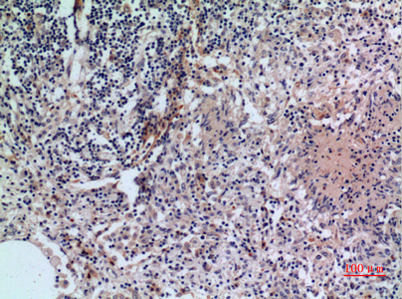
| Dilution | Western Blot: 1/500 - 1/2000. IHC-p: 1/100-1/300. ELISA: 1/20000. Not yet tested in other applications. |
| Purification | The antibody was affinity-purified from rabbit antiserum by affinity-chromatography using epitope-specific immunogen. |
| Concentration | 1 mg/ml |
| Storage stability | -20°C/1 year |
| Molecular Weight (Da) | |
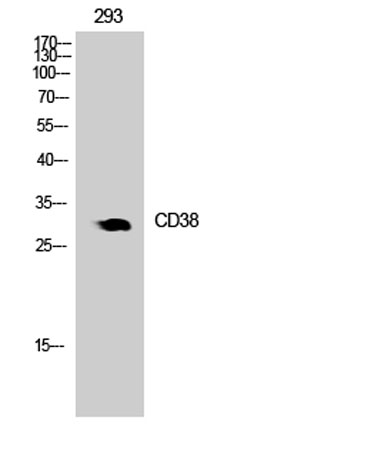
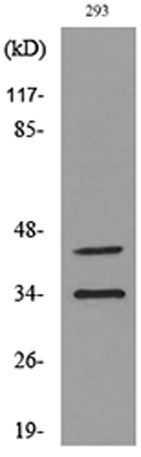
| Observed band (KD) | 35kD |
| Background | The protein encoded by this gene is a non-lineage-restricted, type II transmembrane glycoprotein that synthesizes and hydrolyzes cyclic adenosine 5'-diphosphate-ribose, an intracellular calcium ion mobilizing messenger. The release of soluble protein and the ability of membrane-bound protein to become internalized indicate both extracellular and intracellular functions for the protein. This protein has an N-terminal cytoplasmic tail, a single membrane-spanning domain, and a C-terminal extracellular region with four N-glycosylation sites. Crystal structure analysis demonstrates that the functional molecule is a dimer, with the central portion containing the catalytic site. It is used as a prognostic marker for patients with chronic lymphocytic leukemia. Alternative splicing results in multiple transcript variants. [provided by RefSeq, Sep 2015], |
| Function | catalytic activity:NAD(+) + H(2)O = ADP-ribose + nicotinamide.,developmental stage:Preferentially expressed at both early and late stages of the B and T-cell maturation. It is also detected on erythroid and myeloid progenitors in bone marrow, where the level of surface expression was shown to decrease during differentiation of blast-forming unit E to colony-forming unit E.,enzyme regulation:ATP inhibits the hydrolyzing activity.,function:Synthesizes cyclic ADP-ribose, a second messenger for glucose-induced insulin secretion. Also has cADPr hydrolase activity. Also moonlights as a receptor in cells of the immune system.,online information:CD38 entry,similarity:Belongs to the ADP-ribosyl cyclase family.,tissue specificity:Expressed at high levels in pancreas, liver, kidney, brain, testis, ovary, placenta, malignant lymphoma and neuroblastoma., |
| Subcellular location | Membrane; Single-pass type II membrane protein. |
| Expression | Expressed at high levels in pancreas, liver, kidney, brain, testis, ovary, placenta, malignant lymphoma and neuroblastoma. |

Use collapsible tabs for more detailed information that will help customers make a purchasing decision.
Ex: Shipping and return policies, size guides, and other common questions.