 Français
 English
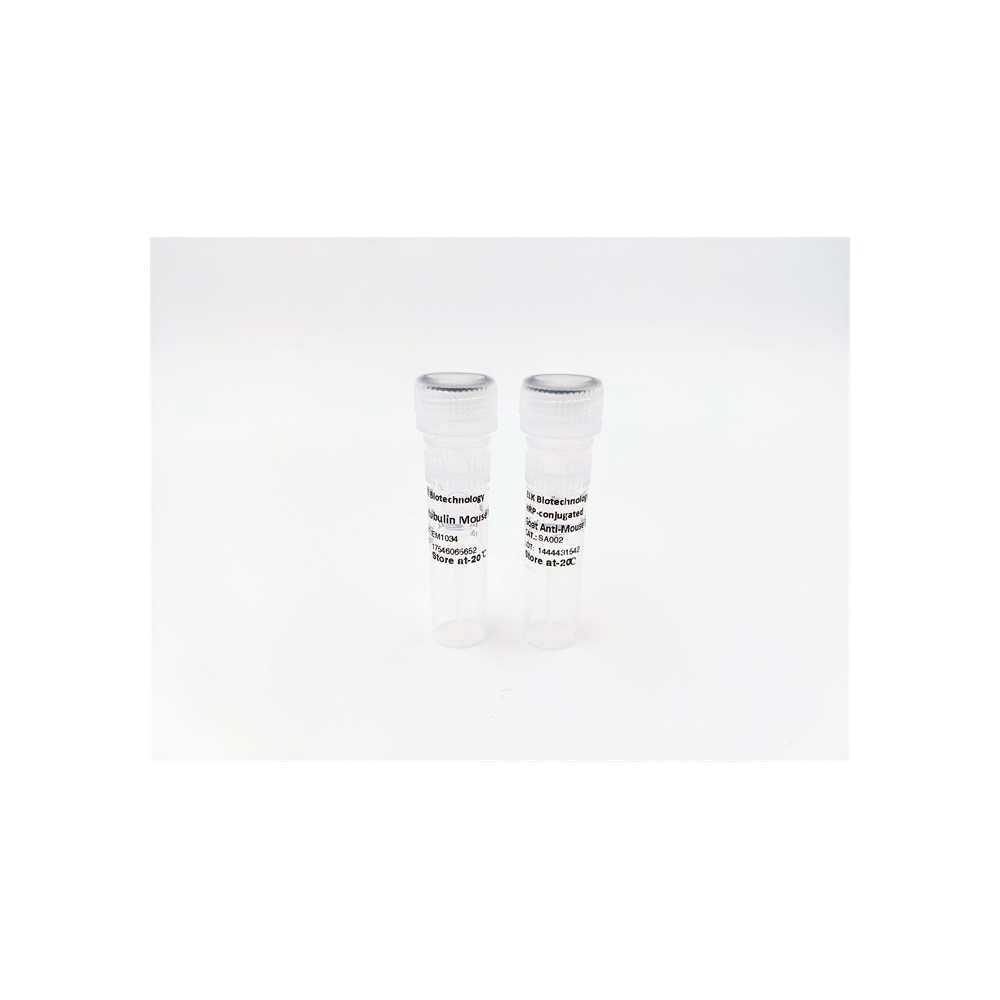

| ELK.No | ES4167 |
| Product name | FGF-8 rabbit pAb |
| Reactivity | Human;Mouse;Rat |
| Applications | WB;ELISA |
| Other name | FGF8; AIGF; Fibroblast growth factor 8; FGF-8; Androgen-induced growth factor; AIGF; Heparin-binding growth factor 8; HBGF-8 |
| Size | 100μL |
| Unit price ($) | 248 |
| Human gene ID | 2253 |
| Human Swiss-Prot | P55075 |
| Source | Rabbit |
| Isotype | IgG |
| Target | FGF-8 |
| Fields | >>MAPK signaling pathway;>>Ras signaling pathway;>>Rap1 signaling pathway;>>Calcium signaling pathway;>>PI3K-Akt signaling pathway;>>Regulation of actin cytoskeleton;>>Pathways in cancer;>>Chemical carcinogenesis - receptor activation;>>Melanoma;>>Breast cancer;>>Gastric cancer |
| Gene name | FGF8 |
| Protein name | Fibroblast growth factor 8 |
| Human gene link | View Human Gene |
| Human Swiss link | View Human Swiss-Prot |
| Mouse gene ID | 14179 |
| Mouse gene link | View Mouse Gene |
| Mouse Swiss-Prot | P37237 |
| Mouse Swiss link | View Mouse Swiss-Prot |
| Rat gene ID | |
| Rat gene link | |
| Rat Swiss-Prot | |
| Rat Swiss link | |
| Immunogen | The antiserum was produced against synthesized peptide derived from the Internal region of human FGF8. AA range:141-190 |
| Specificity | FGF-8 Polyclonal Antibody detects endogenous levels of FGF-8 protein. |
| Formulation | Liquid in PBS containing 50% glycerol, 0.5% BSA and 0.02% sodium azide. |
| Clonality | Polyclonal |
| Dilution | Western Blot: 1/500 - 1/2000. ELISA: 1/20000. Not yet tested in other applications. |
| Purification | The antibody was affinity-purified from rabbit antiserum by affinity-chromatography using epitope-specific immunogen. |
| Concentration | 1 mg/ml |
| Storage stability | -20°C/1 year |
| Molecular Weight (Da) | |
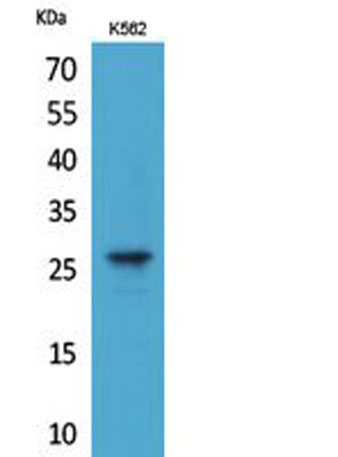
| Observed band (KD) | 26kD |
| Background | The protein encoded by this gene is a member of the fibroblast growth factor (FGF) family. FGF family members possess broad mitogenic and cell survival activities, and are involved in a variety of biological processes, including embryonic development, cell growth, morphogenesis, tissue repair, tumor growth and invasion. This protein is known to be a factor that supports androgen and anchorage independent growth of mammary tumor cells. Overexpression of this gene has been shown to increase tumor growth and angiogensis. The adult expression of this gene is restricted to testes and ovaries. Temporal and spatial pattern of this gene expression suggests its function as an embryonic epithelial factor. Studies of the mouse and chick homologs revealed roles in midbrain and limb development, organogenesis, embryo gastrulation and left-right axis determination. The alternative splicing of this gene re |
| Function | alternative products:Additional isoforms seem to exist,developmental stage:In adults expression is restricted to the gonads.,disease:Defects in FGF8 are a cause of idiopathic hypogonadotropic hypogonadism (IHH) [MIM:146110]. IHH is defined as a deficiency of the pituitary secretion of follicle-stimulating hormone and luteinizing hormone, which results in the impairment of pubertal maturation and of reproductive function.,disease:Defects in FGF8 are the cause of Kallmann syndrome type 6 (KAL6) [MIM:612702]. Kallmann syndrome is a disorder that associates hypogonadotropic hypogonadism and anosmia. Anosmia or hyposmia is related to the absence or hypoplasia of the olfactory bulbs and tracts. Hypogonadism is due to deficiency in gonadotropin-releasing hormone and probably results from a failure of embryonic migration of gonadotropin-releasing hormone-synthesizing neurons. In some patients ot |
| Subcellular location | Secreted. |
| Expression | Oesophageal carcinoma,Placenta,Prostate, |

Use collapsible tabs for more detailed information that will help customers make a purchasing decision.
Ex: Shipping and return policies, size guides, and other common questions.