 Français
 English
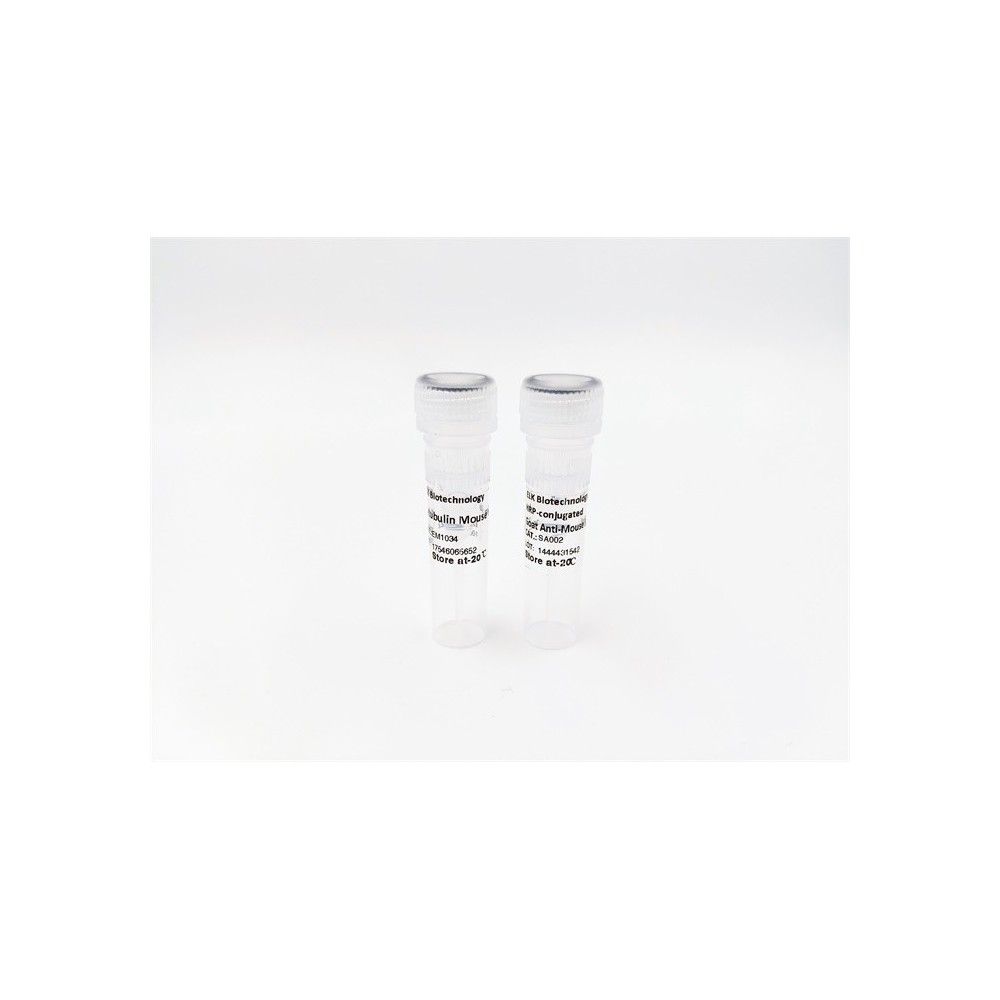

| ELK.No | ES4173 |
| Product name | ECA39 rabbit pAb |
| Reactivity | Human;Mouse;Rat |
| Applications | WB;IHC;IF;ELISA |
| Other name | BCAT1; BCT1; ECA39; Branched-chain-amino-acid aminotransferase, cytosolic; BCAT(c); Protein ECA39 |
| Size | 100μL |
| Unit price ($) | 248 |
| Human gene ID | 586 |
| Human Swiss-Prot | P54687 |
| Source | Rabbit |
| Isotype | IgG |
| Target | ECA39 |
| Fields | >>Cysteine and methionine metabolism;>>Valine, leucine and isoleucine degradation;>>Valine, leucine and isoleucine biosynthesis;>>Pantothenate and CoA biosynthesis;>>Metabolic pathways;>>2-Oxocarboxylic acid metabolism;>>Biosynthesis of amino acids;>>Biosynthesis of cofactors |
| Gene name | BCAT1 |
| Protein name | Branched-chain-amino-acid aminotransferase, cytosolic |
| Human gene link | View Human Gene |
| Human Swiss link | View Human Swiss-Prot |
| Mouse gene ID | 12035 |
| Mouse gene link | View Mouse Gene |
| Mouse Swiss-Prot | P24288 |
| Mouse Swiss link | View Mouse Swiss-Prot |
| Rat gene ID | 29592 |
| Rat gene link | View Rat Gene |
| Rat Swiss-Prot | P54690 |
| Rat Swiss link | View Rat Swiss-Prot |
| Immunogen | The antiserum was produced against synthesized peptide derived from the Internal region of human BCAT1. AA range:231-280 |
| Specificity | ECA39 Polyclonal Antibody detects endogenous levels of ECA39 protein. |
| Formulation | Liquid in PBS containing 50% glycerol, 0.5% BSA and 0.02% sodium azide. |
| Clonality | Polyclonal |
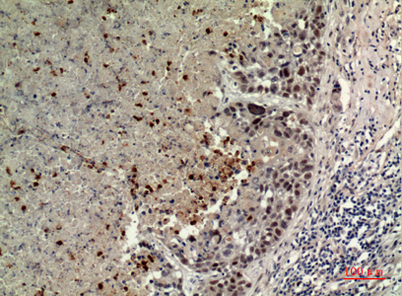
| Dilution | Western Blot: 1/500 - 1/2000. IHC-p: 1/100-1/300. ELISA: 1/20000. Not yet tested in other applications. |
| Purification | The antibody was affinity-purified from rabbit antiserum by affinity-chromatography using epitope-specific immunogen. |
| Concentration | 1 mg/ml |
| Storage stability | -20°C/1 year |
| Molecular Weight (Da) | |
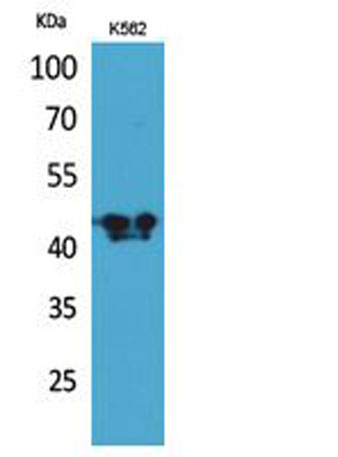
| Observed band (KD) | 43kD |
| Background | branched chain amino acid transaminase 1(BCAT1) Homo sapiens This gene encodes the cytosolic form of the enzyme branched-chain amino acid transaminase. This enzyme catalyzes the reversible transamination of branched-chain alpha-keto acids to branched-chain L-amino acids essential for cell growth. Two different clinical disorders have been attributed to a defect of branched-chain amino acid transamination: hypervalinemia and hyperleucine-isoleucinemia. As there is also a gene encoding a mitochondrial form of this enzyme, mutations in either gene may contribute to these disorders. Alternatively spliced transcript variants have been described. [provided by RefSeq, May 2010], |
| Function | catalytic activity:2-oxoglutaric acid + L-isoleucine = (S)-3-methyl-2-oxopentanoic acid + L-glutamic acid.,catalytic activity:2-oxoglutaric acid + L-valine = 3-methyl-2-oxobutanoic acid + L-glutamic acid.,catalytic activity:L-leucine + 2-oxoglutarate = 4-methyl-2-oxopentanoate + L-glutamate.,cofactor:Pyridoxal phosphate.,function:Catalyzes the first reaction in the catabolism of the essential branched chain amino acids leucine, isoleucine, and valine.,similarity:Belongs to the class-IV pyridoxal-phosphate-dependent aminotransferase family.,subunit:Homodimer.,tissue specificity:During embryogenesis, expressed in the brain and kidney. Overexpressed in C-myc induced tumors such as Burkitt's lymphoma., |
| Subcellular location | Cytoplasm. |
| Expression | During embryogenesis, expressed in the brain and kidney. Overexpressed in MYC-induced tumors such as Burkitt's lymphoma. |

Use collapsible tabs for more detailed information that will help customers make a purchasing decision.
Ex: Shipping and return policies, size guides, and other common questions.