 Français
 English

| ELK.No | ES4184 |
| Product name | MCM6 rabbit pAb |
| Reactivity | Human;Mouse;Rat |
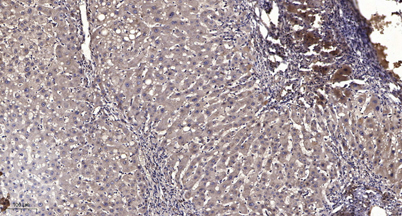
| Applications | WB;IHC |
| Other name | MCM6; DNA replication licensing factor MCM6; p105MCM |
| Size | 100μL |
| Unit price ($) | 248 |
| Human gene ID | 4175 |
| Human Swiss-Prot | Q14566 |
| Source | Rabbit |
| Isotype | IgG |
| Target | MCM6 |
| Fields | >>DNA replication;>>Cell cycle |
| Gene name | MCM6 |
| Protein name | DNA replication licensing factor MCM6 |
| Human gene link | View Human Gene |
| Human Swiss link | View Human Swiss-Prot |
| Mouse gene ID | 17219 |
| Mouse gene link | View Mouse Gene |
| Mouse Swiss-Prot | P97311 |
| Mouse Swiss link | View Mouse Swiss-Prot |
| Rat gene ID | |
| Rat gene link | |
| Rat Swiss-Prot | Q62724 |
| Rat Swiss link | View Rat Swiss-Prot |
| Immunogen | The antiserum was produced against synthesized peptide derived from the Internal region of human MCM6. AA range:331-380 |
| Specificity | MCM6 Polyclonal Antibody detects endogenous levels of MCM6 protein. |
| Formulation | Liquid in PBS containing 50% glycerol, 0.5% BSA and 0.02% sodium azide. |
| Clonality | Polyclonal |
| Dilution | WB 1:500-2000;IHC-p 1:50-300 |
| Purification | The antibody was affinity-purified from rabbit antiserum by affinity-chromatography using epitope-specific immunogen. |
| Concentration | 1 mg/ml |
| Storage stability | -20°C/1 year |
| Molecular Weight (Da) | |
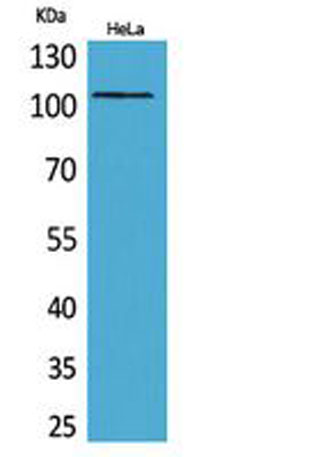
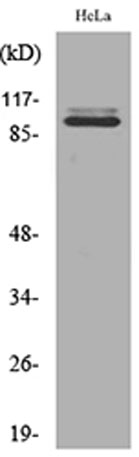
| Observed band (KD) | 90kD |
| Background | The protein encoded by this gene is one of the highly conserved mini-chromosome maintenance proteins (MCM) that are essential for the initiation of eukaryotic genome replication. The hexameric protein complex formed by the MCM proteins is a key component of the pre-replication complex (pre_RC) and may be involved in the formation of replication forks and in the recruitment of other DNA replication related proteins. The MCM complex consisting of this protein and MCM2, 4 and 7 proteins possesses DNA helicase activity, and may act as a DNA unwinding enzyme. The phosphorylation of the complex by CDC2 kinase reduces the helicase activity, suggesting a role in the regulation of DNA replication. Single nucleotide polymorphisms in the intron regions of this gene are associated with differential transcriptional activation of the promoter of the neighboring lactase gene and, thereby, i |
| Function | function:May be involved in the control of a single round of DNA replication during S phase. Binds to chromatin during G1 and detach from it during S phase as if it licenses the chromatin to replicate.,polymorphism:Intronic variations in MCM6 upstream from the LCT gene are associated with adult-type hypolactasia [MIM:223100] leading to lactose intolerance, or with lactase persistance. Lactose intolerance is a normal physiological phenomenon caused by developmental down-regulation of lactase activity during childhood or early adulthood. A non-coding variation in MCM6 affects the transcriptional regulation of the LCT gene resulting in down-regulation of lactase activity. However the majority of Northern Europeans and some African populations have the ability to maintain lactase activity and digest lactose throughout life (lactase persistence).,PTM:Phosphorylated upon DNA damage, probably b |
| Subcellular location | Nucleus . Chromosome . Binds to chromatin during G1 and detach from it during S phase. . |
| Expression | Cervix,Epithelium, |

Use collapsible tabs for more detailed information that will help customers make a purchasing decision.
Ex: Shipping and return policies, size guides, and other common questions.