 Français
 English
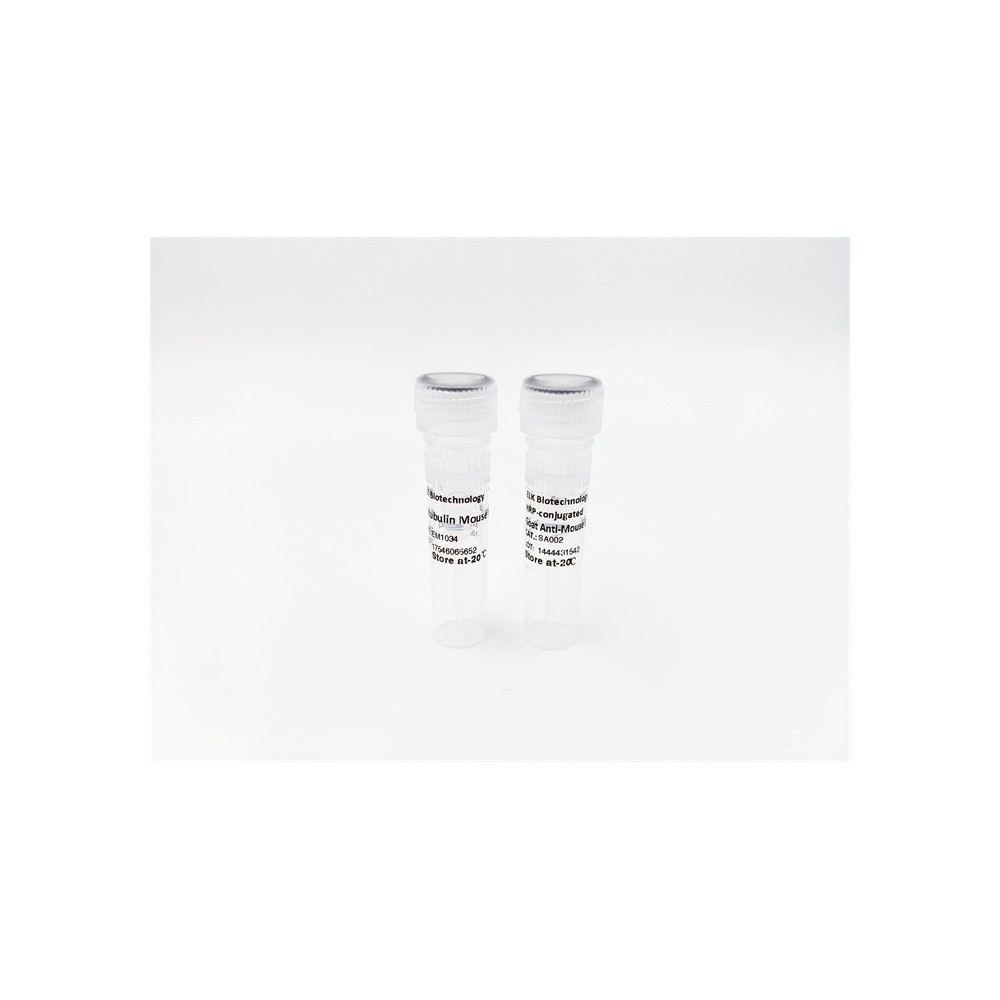

| ELK.No | ES4187 |
| Product name | SNRPN rabbit pAb |
| Reactivity | Human;Mouse;Rat |
| Applications | WB;IHC |
| Other name | SNRPN; HCERN3; SMN; Small nuclear ribonucleoprotein-associated protein N; snRNP-N; Sm protein D; Sm-D; Sm protein N; Sm-N; SmN; Tissue-specific-splicing protein |
| Size | 50μL |
| Unit price ($) | 148 |
| Human gene ID | 6638 |
| Human Swiss-Prot | P63162 |
| Source | Rabbit |
| Isotype | IgG |
| Target | SNRPN |
| Fields | |
| Gene name | SNRPN |
| Protein name | Small nuclear ribonucleoprotein-associated protein N |
| Human gene link | View Human Gene |
| Human Swiss link | View Human Swiss-Prot |
| Mouse gene ID | 20646 |
| Mouse gene link | View Mouse Gene |
| Mouse Swiss-Prot | P63163 |
| Mouse Swiss link | View Mouse Swiss-Prot |
| Rat gene ID | 81781 |
| Rat gene link | View Rat Gene |
| Rat Swiss-Prot | P63164 |
| Rat Swiss link | View Rat Swiss-Prot |
| Immunogen | The antiserum was produced against synthesized peptide derived from the Internal region of human SNRPN. AA range:21-70 |
| Specificity | SNRPN Polyclonal Antibody detects endogenous levels of SNRPN protein. |
| Formulation | Liquid in PBS containing 50% glycerol, 0.5% BSA and 0.02% sodium azide. |
| Clonality | Polyclonal |
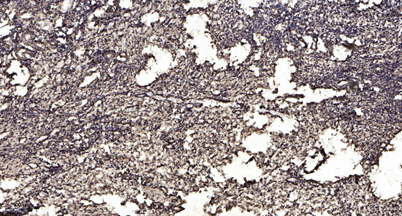
| Dilution | WB 1:500-2000;IHC-p 1:50-300 |
| Purification | The antibody was affinity-purified from rabbit antiserum by affinity-chromatography using epitope-specific immunogen. |
| Concentration | 1 mg/ml |
| Storage stability | -20°C/1 year |
| Molecular Weight (Da) | |
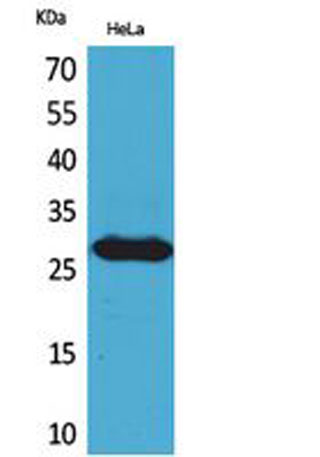
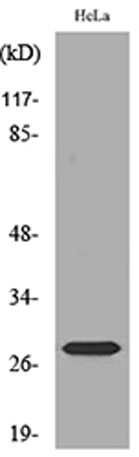
| Observed band (KD) | 26kD |
| Background | The protein encoded by this gene is one polypeptide of a small nuclear ribonucleoprotein complex and belongs to the snRNP SMB/SMN family. The protein plays a role in pre-mRNA processing, possibly tissue-specific alternative splicing events. Although individual snRNPs are believed to recognize specific nucleic acid sequences through RNA-RNA base pairing, the specific role of this family member is unknown. The protein arises from a bicistronic transcript that also encodes a protein identified as the SNRPN upstream reading frame (SNURF). Multiple transcription initiation sites have been identified and extensive alternative splicing occurs in the 5' untranslated region. Additional splice variants have been described but sequences for the complete transcripts have not been determined. The 5' UTR of this gene has been identified as an imprinting center. Alternative splici |
| Function | disease:Patients with the autoimmune disease systemic lupus erythematosus (SLE) have autoantibodies directed against some of the individual snRNP polypeptides. The most common autoantigen is called Sm. N bears Sm epitopes.,function:May be involved in tissue-specific alternative RNA processing events.,miscellaneous:Encoded on a bicistronic transcript that encode for two proteins, SNRPN and SNURF.,miscellaneous:Encoded on a bicistronic transcript that encode for two proteins, SNRPN and SNURF. In addition to the primary 1.6-kb bicistronic SNURF-SNRPN transcript, SNURF-only transcript is also detected.,similarity:Belongs to the snRNP SmB/SmN family.,similarity:Belongs to the SNURF family.,subunit:Interacts with TDRD3.,tissue specificity:Expressed in brain and lymphoblasts.,tissue specificity:Expressed in heart, skeletal muscle and lymphoblasts (at protein level). Expressed in brain, pancreas |
| Subcellular location | Nucleus. |
| Expression | Expressed in brain and lymphoblasts. |

Use collapsible tabs for more detailed information that will help customers make a purchasing decision.
Ex: Shipping and return policies, size guides, and other common questions.