 Français
 English
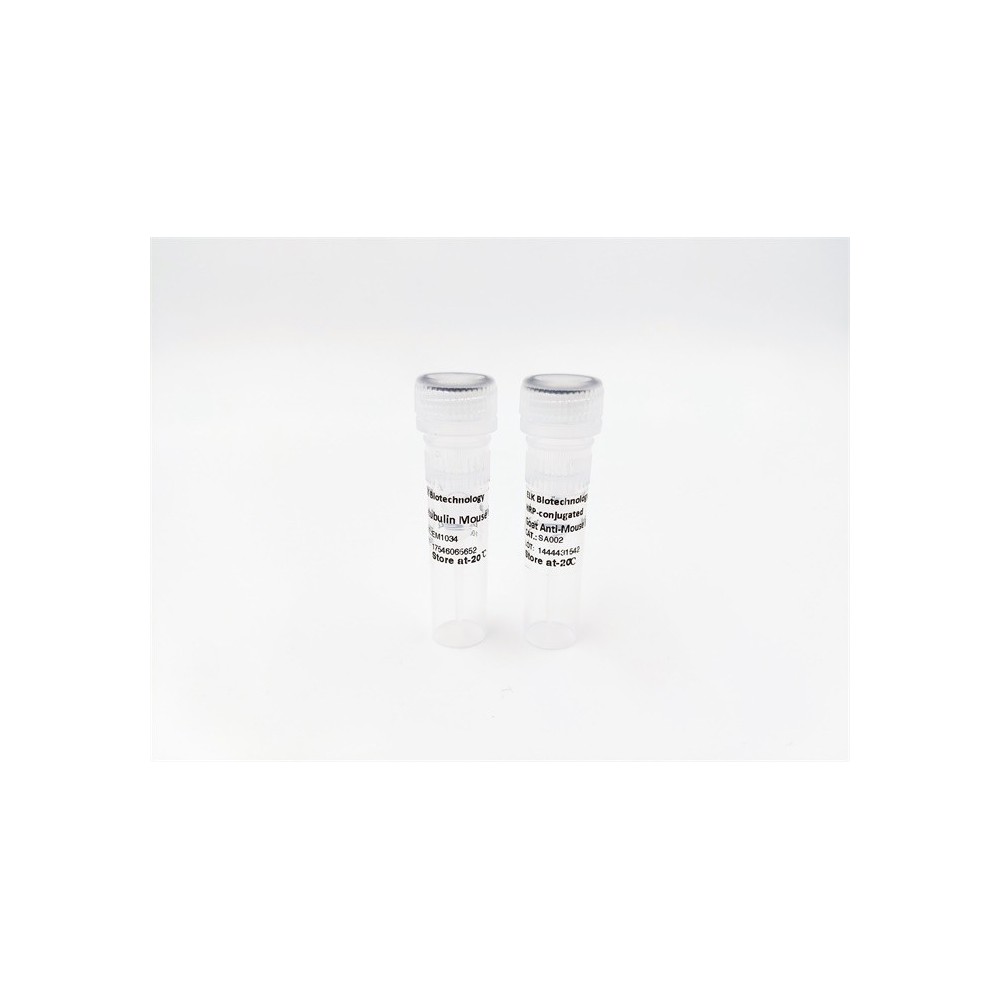

| ELK.No | ES4199 |
| Product name | CD110 rabbit pAb |
| Reactivity | Human;Mouse;Rat |
| Applications | WB;IHC;IF;ELISA |
| Other name | MPL; TPOR; Thrombopoietin receptor; TPO-R; Myeloproliferative leukemia protein; Proto-oncogene c-Mpl; CD110 |
| Size | 50μL |
| Unit price ($) | 148 |
| Human gene ID | 4352 |
| Human Swiss-Prot | P40238 |
| Source | Rabbit |
| Isotype | IgG |
| Target | CD110 |
| Fields | >>Cytokine-cytokine receptor interaction;>>JAK-STAT signaling pathway |
| Gene name | MPL |
| Protein name | Thrombopoietin receptor |
| Human gene link | View Human Gene |
| Human Swiss link | View Human Swiss-Prot |
| Mouse gene ID | 17480 |
| Mouse gene link | View Mouse Gene |
| Mouse Swiss-Prot | Q08351 |
| Mouse Swiss link | View Mouse Swiss-Prot |
| Rat gene ID | |
| Rat gene link | |
| Rat Swiss-Prot | |
| Rat Swiss link | |
| Immunogen | Synthesized peptide derived from Thrombopoietin receptor at AA range: 321-370 |
| Specificity | CD110 Polyclonal Antibody detects endogenous levels of CD110 protein. |
| Formulation | Liquid in PBS containing 50% glycerol, 0.5% BSA and 0.02% sodium azide. |
| Clonality | Polyclonal |
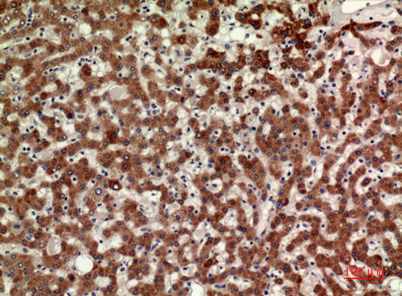
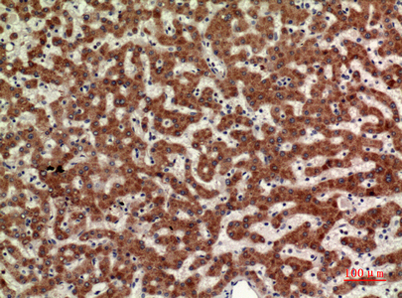
| Dilution | Western Blot: 1/500 - 1/2000. IHC-p: 1/100-1/300. ELISA: 1/20000. Not yet tested in other applications. |
| Purification | The antibody was affinity-purified from rabbit antiserum by affinity-chromatography using epitope-specific immunogen. |
| Concentration | 1 mg/ml |
| Storage stability | -20°C/1 year |
| Molecular Weight (Da) | |
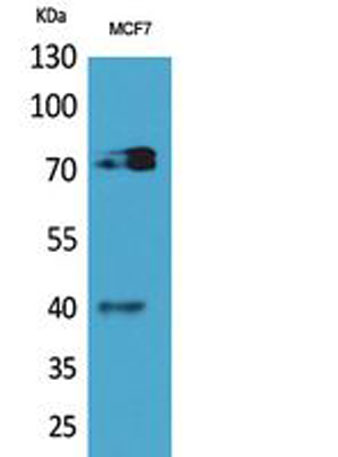
| Observed band (KD) | 69,40kD |
| Background | In 1990 an oncogene, v-mpl, was identified from the murine myeloproliferative leukemia virus that was capable of immortalizing bone marrow hematopoietic cells from different lineages. In 1992 the human homologue, named, c-mpl, was cloned. Sequence data revealed that c-mpl encoded a protein that was homologous with members of the hematopoietic receptor superfamily. Presence of anti-sense oligodeoxynucleotides of c-mpl inhibited megakaryocyte colony formation. The ligand for c-mpl, thrombopoietin, was cloned in 1994. Thrombopoietin was shown to be the major regulator of megakaryocytopoiesis and platelet formation. The protein encoded by the c-mpl gene, CD110, is a 635 amino acid transmembrane domain, with two extracellular cytokine receptor domains and two intracellular cytokine receptor box motifs . TPO-R deficient mice were severely thrombocytopenic, emphasizing the important |
| Function | caution:It is uncertain whether Met-1 or Met-8 is the initiator.,disease:Defects in MPL are a cause of congenital amegakaryocytic thrombocytopenia (CAMT) [MIM:604498]. CAMT is a disease characterized by isolated thrombocytopenia and megakaryocytopenia with no physical anomalies.,domain:The box 1 motif is required for JAK interaction and/or activation.,domain:The WSXWS motif appears to be necessary for proper protein folding and thereby efficient intracellular transport and cell-surface receptor binding.,function:Receptor for thrombopoietin. May represent a regulatory molecule specific for TPO-R-dependent immune responses.,similarity:Belongs to the type I cytokine receptor family. Type 1 subfamily.,similarity:Contains 2 fibronectin type-III domains.,subunit:Interacts with ATXN2L.,tissue specificity:Expressed at a low level in a large number of cells of hematopoietic origin. Isoform 1 and |
| Subcellular location | Cell membrane ; Single-pass type I membrane protein. Golgi apparatus . Cell surface . |
| Expression | Expressed at a low level in a large number of cells of hematopoietic origin. Isoform 1 and isoform 2 are always found to be coexpressed. |

Use collapsible tabs for more detailed information that will help customers make a purchasing decision.
Ex: Shipping and return policies, size guides, and other common questions.