 Français
 English
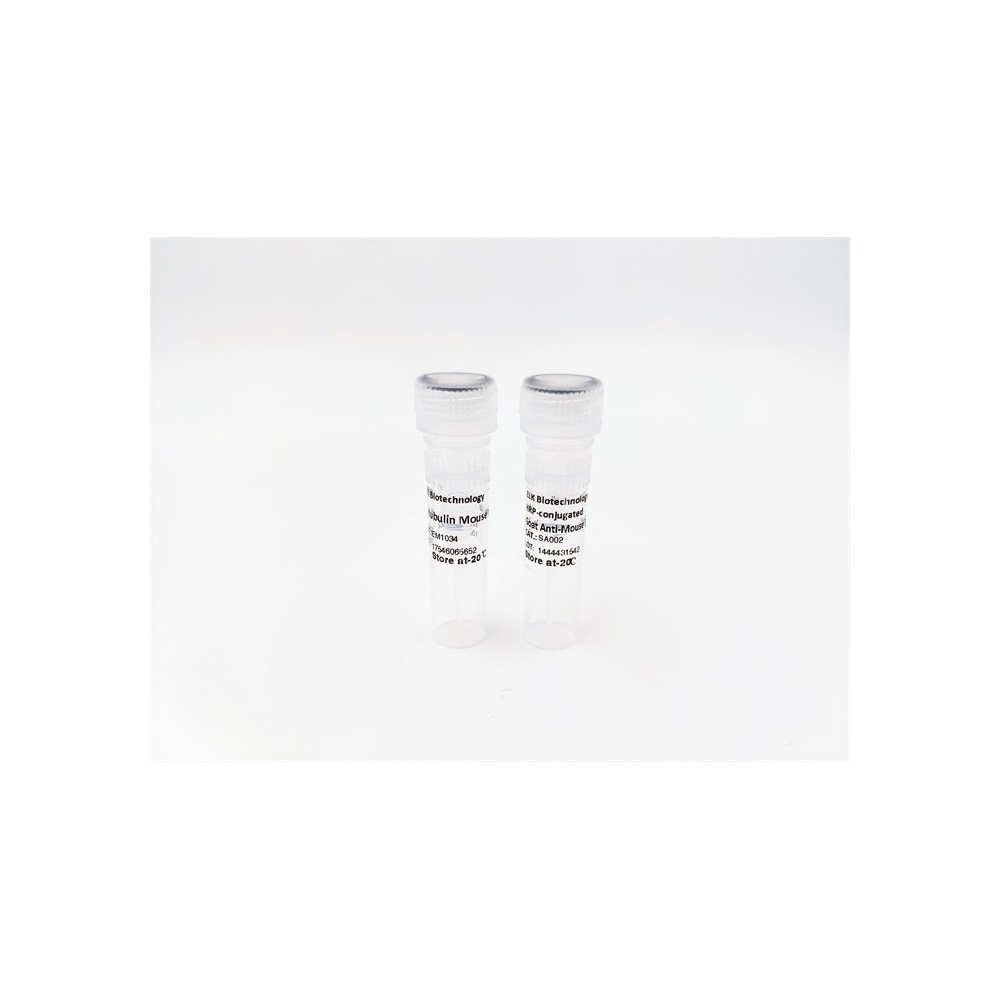

| ELK.No | ES4217 |
| Product name | IL-33 rabbit pAb |
| Reactivity | Human;Rat;Mouse; |
| Applications | WB;IHC;IF;ELISA |
| Other name | IL33; C9orf26; IL1F11; NFHEV; Interleukin-33; IL-33; Interleukin-1 family member 11; IL-1F11; Nuclear factor from high endothelial venules; NF-HEV |
| Size | 100μL |
| Unit price ($) | 248 |
| Human gene ID | 90865 |
| Human Swiss-Prot | O95760 |
| Source | Rabbit |
| Isotype | IgG |
| Target | IL-33 |
| Fields | >>Cytokine-cytokine receptor interaction;>>Necroptosis;>>Cytosolic DNA-sensing pathway;>>Influenza A |
| Gene name | IL33 |
| Protein name | Interleukin-33 |
| Human gene link | View Human Gene |
| Human Swiss link | View Human Swiss-Prot |
| Mouse gene ID | 77125 |
| Mouse gene link | View Mouse Gene |
| Mouse Swiss-Prot | Q8BVZ5 |
| Mouse Swiss link | View Mouse Swiss-Prot |
| Rat gene ID | 361749 |
| Rat gene link | View Rat Gene |
| Rat Swiss-Prot | Q66H70 |
| Rat Swiss link | View Rat Swiss-Prot |
| Immunogen | The antiserum was produced against synthesized peptide derived from the Internal region of human IL33. AA range:121-170 |
| Specificity | IL-33 Polyclonal Antibody detects endogenous levels of IL-33 protein. |
| Formulation | Liquid in PBS containing 50% glycerol, 0.5% BSA and 0.02% sodium azide. |
| Clonality | Polyclonal |
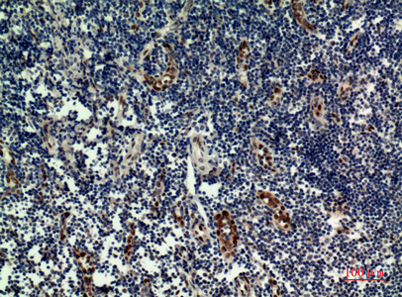
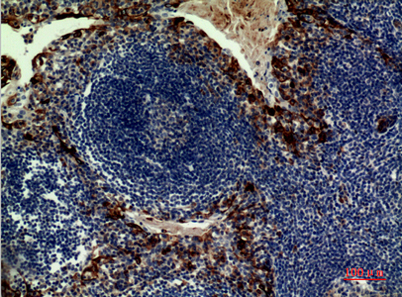
| Dilution | Western Blot: 1/500 - 1/2000. IHC-p: 1/100-1/300. ELISA: 1/20000. Not yet tested in other applications. |
| Purification | The antibody was affinity-purified from rabbit antiserum by affinity-chromatography using epitope-specific immunogen. |
| Concentration | 1 mg/ml |
| Storage stability | -20°C/1 year |
| Molecular Weight (Da) | |
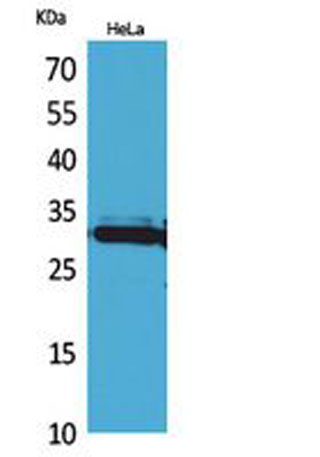
| Observed band (KD) | 31kD |
| Background | The protein encoded by this gene is a cytokine that binds to the IL1RL1/ST2 receptor. The encoded protein is involved in the maturation of Th2 cells and the activation of mast cells, basophils, eosinophils and natural killer cells. Several transcript variants encoding different isoforms have been found for this gene. [provided by RefSeq, Sep 2015], |
| Function | caution:Was originally (PubMed:12819012) thought to one of the key factors that controls the specialized post-capillary high endothelial venules (HEV) phenotype found in organized secondary lymphoid tissue and to be nuclear localized.,function:Cytokine that binds to and signals through IL1RL1/ST2 and its stimulation recruits MYD88, IRAK1, IRAK4, and TRAF6, followed by phosphorylation of MAPK3/ERK1 and/or MAPK1/ERK2, MAPK14, and MAPK8. Induces T helper type 2-associated cytokines.,PTM:Proteolytically converted to a mature form by CASP1.,similarity:Belongs to the IL-1 family. Highly divergent.,tissue specificity:Expressed at high level in high endothelial venules found in tonsils, Peyer patches and mesenteric lymph nodes. Almost undetectable in placenta., |
| Subcellular location | Nucleus . Chromosome . Cytoplasm . Cytoplasmic vesicle, secretory vesicle . Secreted . Associates with heterochromatin and mitotic chromosomes (PubMed:17185418). The secretion is dependent on protein unfolding and facilitated by the cargo receptor TMED10; it results in protein translocation from the cytoplasm into the ERGIC (endoplasmic reticulum-Golgi intermediate compartment) followed by vesicle entry and secretion (PubMed:32272059). . |
| Expression | Expressed at high level in high endothelial venules found in tonsils, Peyer patches and mesenteric lymph nodes. Almost undetectable in placenta. |

Use collapsible tabs for more detailed information that will help customers make a purchasing decision.
Ex: Shipping and return policies, size guides, and other common questions.