 Français
 English
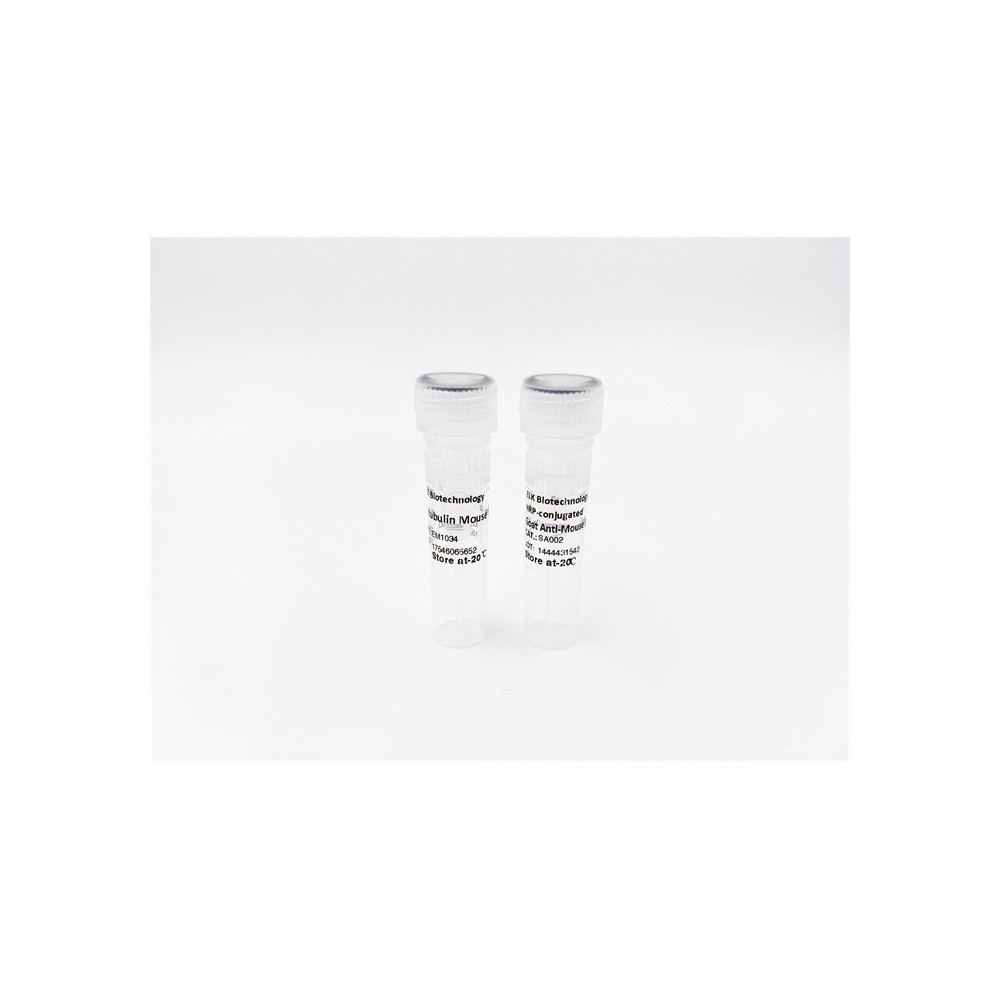

| ELK.No | ES4253 |
| Product name | Glut4 rabbit pAb |
| Reactivity | Human;Mouse;Rat |
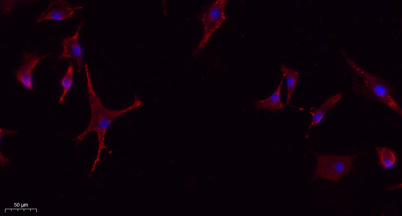
| Applications | WB;IHC;IF;ELISA |
| Other name | SLC2A4; GLUT4; Solute carrier family 2, facilitated glucose transporter member 4; Glucose transporter type 4, insulin-responsive; GLUT-4 |
| Size | 100μL |
| Unit price ($) | 248 |
| Human gene ID | 6517 |
| Human Swiss-Prot | P14672 |
| Source | Rabbit |
| Isotype | IgG |
| Target | Glut4 |
| Fields | >>FoxO signaling pathway;>>AMPK signaling pathway;>>Insulin signaling pathway;>>Adipocytokine signaling pathway;>>Type II diabetes mellitus;>>Insulin resistance;>>Diabetic cardiomyopathy |
| Gene name | SLC2A4 |
| Protein name | Solute carrier family 2 facilitated glucose transporter member 4 |
| Human gene link | View Human Gene |
| Human Swiss link | View Human Swiss-Prot |
| Mouse gene ID | 20528 |
| Mouse gene link | View Mouse Gene |
| Mouse Swiss-Prot | P14142 |
| Mouse Swiss link | View Mouse Swiss-Prot |
| Rat gene ID | 25139 |
| Rat gene link | View Rat Gene |
| Rat Swiss-Prot | P19357 |
| Rat Swiss link | View Rat Swiss-Prot |
| Immunogen | The antiserum was produced against synthesized peptide derived from the N-terminal region of human SLC2A4. AA range:21-70 |
| Specificity | Glut4 Polyclonal Antibody detects endogenous levels of Glut4 protein. |
| Formulation | Liquid in PBS containing 50% glycerol, 0.5% BSA and 0.02% sodium azide. |
| Clonality | Polyclonal |
| Dilution | Western Blot: 1/500 - 1/2000. IHC-p: 1:100-300 ELISA: 1/20000. IF 1:100-300 Not yet tested in other applications. |
| Purification | The antibody was affinity-purified from rabbit antiserum by affinity-chromatography using epitope-specific immunogen. |
| Concentration | 1 mg/ml |
| Storage stability | -20°C/1 year |
| Molecular Weight (Da) | |
| Observed band (KD) | 56kD |
| Background | This gene is a member of the solute carrier family 2 (facilitated glucose transporter) family and encodes a protein that functions as an insulin-regulated facilitative glucose transporter. In the absence of insulin, this integral membrane protein is sequestered within the cells of muscle and adipose tissue. Within minutes of insulin stimulation, the protein moves to the cell surface and begins to transport glucose across the cell membrane. Mutations in this gene have been associated with noninsulin-dependent diabetes mellitus (NIDDM). [provided by RefSeq, Jul 2008], |
| Function | disease:Defects in SLC2A4 may be a cause of noninsulin-dependent diabetes mellitus (NIDDM) [MIM:125853]. Defects in SLC2A4 may be a cause of certain post-receptor defects in NIDDM. The variant in position Ile-383 is found in a small number of NIDDM patients, but seems not to be found in nondiabetic subjects.,function:Insulin-regulated facilitative glucose transporter.,miscellaneous:Insulin-stimulated phosphorylation of TBC1D4 is required for GLUT4 translocation.,online information:GLUT4 entry,PTM:Sumoylated.,similarity:Belongs to the major facilitator superfamily. Sugar transporter (TC 2.A.1.1) family. Glucose transporter subfamily.,subcellular location:Localizes primarily to the perinuclear region, undergoing continued recycling to the plasma membrane where it is rapidly reinternalized. The dileucine internalization motif is critical for intracellular sequestration.,subunit:Binds to DAX |
| Subcellular location | Cell membrane ; Multi-pass membrane protein . Endomembrane system ; Multi-pass membrane protein . Cytoplasm, perinuclear region . Localizes primarily to the perinuclear region, undergoing continued recycling to the plasma membrane where it is rapidly reinternalized (PubMed:8300557). The dileucine internalization motif is critical for intracellular sequestration (PubMed:8300557). Insulin stimulation induces translocation to the cell membrane (By similarity). . |
| Expression | Skeletal and cardiac muscles; brown and white fat. |

Use collapsible tabs for more detailed information that will help customers make a purchasing decision.
Ex: Shipping and return policies, size guides, and other common questions.