 Français
 English
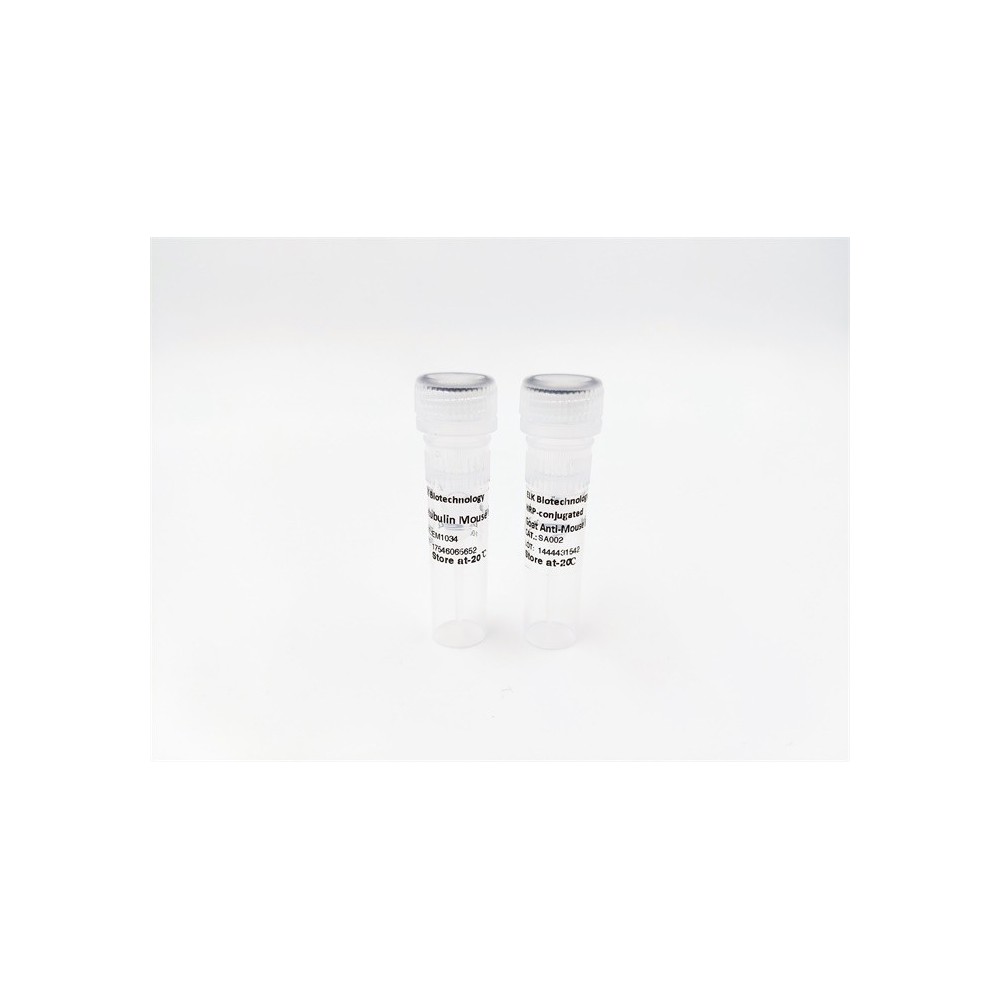

| ELK.No | ES4258 |
| Product name | CD292 rabbit pAb |
| Reactivity | Human;Rat;Mouse; |
| Applications | WB;ELISA |
| Other name | BMPR1A; ACVRLK3; ALK3; Bone morphogenetic protein receptor type-1A; BMP type-1A receptor; BMPR-1A; Activin receptor-like kinase 3; ALK-3; Serine/threonine-protein kinase receptor R5; SKR5; CD292 |
| Size | 50μL |
| Unit price ($) | 148 |
| Human gene ID | 657 |
| Human Swiss-Prot | P36894 |
| Source | Rabbit |
| Isotype | IgG |
| Target | CD292 |
| Fields | >>Cytokine-cytokine receptor interaction;>>TGF-beta signaling pathway;>>Hippo signaling pathway;>>Signaling pathways regulating pluripotency of stem cells;>>Fluid shear stress and atherosclerosis |
| Gene name | BMPR1A |
| Protein name | Bone morphogenetic protein receptor type-1A |
| Human gene link | View Human Gene |
| Human Swiss link | View Human Swiss-Prot |
| Mouse gene ID | 12166 |
| Mouse gene link | View Mouse Gene |
| Mouse Swiss-Prot | P36895 |
| Mouse Swiss link | View Mouse Swiss-Prot |
| Rat gene ID | 81507 |
| Rat gene link | View Rat Gene |
| Rat Swiss-Prot | Q78EA7 |
| Rat Swiss link | View Rat Swiss-Prot |
| Immunogen | The antiserum was produced against synthesized peptide derived from the N-terminal region of human BMPR1A. AA range:1-50 |
| Specificity | CD292 Polyclonal Antibody detects endogenous levels of CD292 protein. |
| Formulation | Liquid in PBS containing 50% glycerol, 0.5% BSA and 0.02% sodium azide. |
| Clonality | Polyclonal |
| Dilution | Western Blot: 1/500 - 1/2000. ELISA: 1/20000. Not yet tested in other applications. |
| Purification | The antibody was affinity-purified from rabbit antiserum by affinity-chromatography using epitope-specific immunogen. |
| Concentration | 1 mg/ml |
| Storage stability | -20°C/1 year |
| Molecular Weight (Da) | |
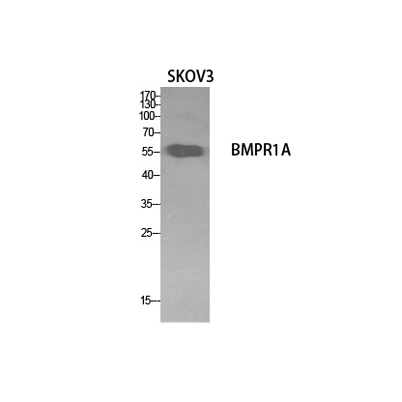
| Observed band (KD) | 60kD |
| Background | The bone morphogenetic protein (BMP) receptors are a family of transmembrane serine/threonine kinases that include the type I receptors BMPR1A and BMPR1B and the type II receptor BMPR2. These receptors are also closely related to the activin receptors, ACVR1 and ACVR2. The ligands of these receptors are members of the TGF-beta superfamily. TGF-betas and activins transduce their signals through the formation of heteromeric complexes with 2 different types of serine (threonine) kinase receptors: type I receptors of about 50-55 kD and type II receptors of about 70-80 kD. Type II receptors bind ligands in the absence of type I receptors, but they require their respective type I receptors for signaling, whereas type I receptors require their respective type II receptors for ligand binding. [provided by RefSeq, Jul 2008], |
| Function | catalytic activity:ATP + [receptor-protein] = ADP + [receptor-protein] phosphate.,cofactor:Magnesium or manganese.,disease:A microdeletion of chromosome 10q23 involving BMPR1A and PTEN is a cause of chromosome 10q23 deletion syndrome [MIM:612242]. This syndrome shows overlapping features of the following three disorders: Bannayan-Zonana syndrome, Cowden disease and juvenile polyposis syndrome. The 10q23 microdeletion is also found in patients manifesting juvenile polyposis of infancy without cognitive disability. Juvenile polyposis of infancy is characterized by the appearance of extensive gastrointestinal juvenile hamartomatous polyposis in the first months of life.,disease:Defects in BMPR1A are a cause of Cowden disease (CD) [MIM:158350]. CD is an autosomal dominant cancer syndrome characterized by multiple hamartomas and by a high risk for breast, thyroid and endometrial cancers.,dise |
| Subcellular location | Cell membrane ; Single-pass type I membrane protein . Cell surface . |
| Expression | Highly expressed in skeletal muscle. |

Use collapsible tabs for more detailed information that will help customers make a purchasing decision.
Ex: Shipping and return policies, size guides, and other common questions.