 Français
 English
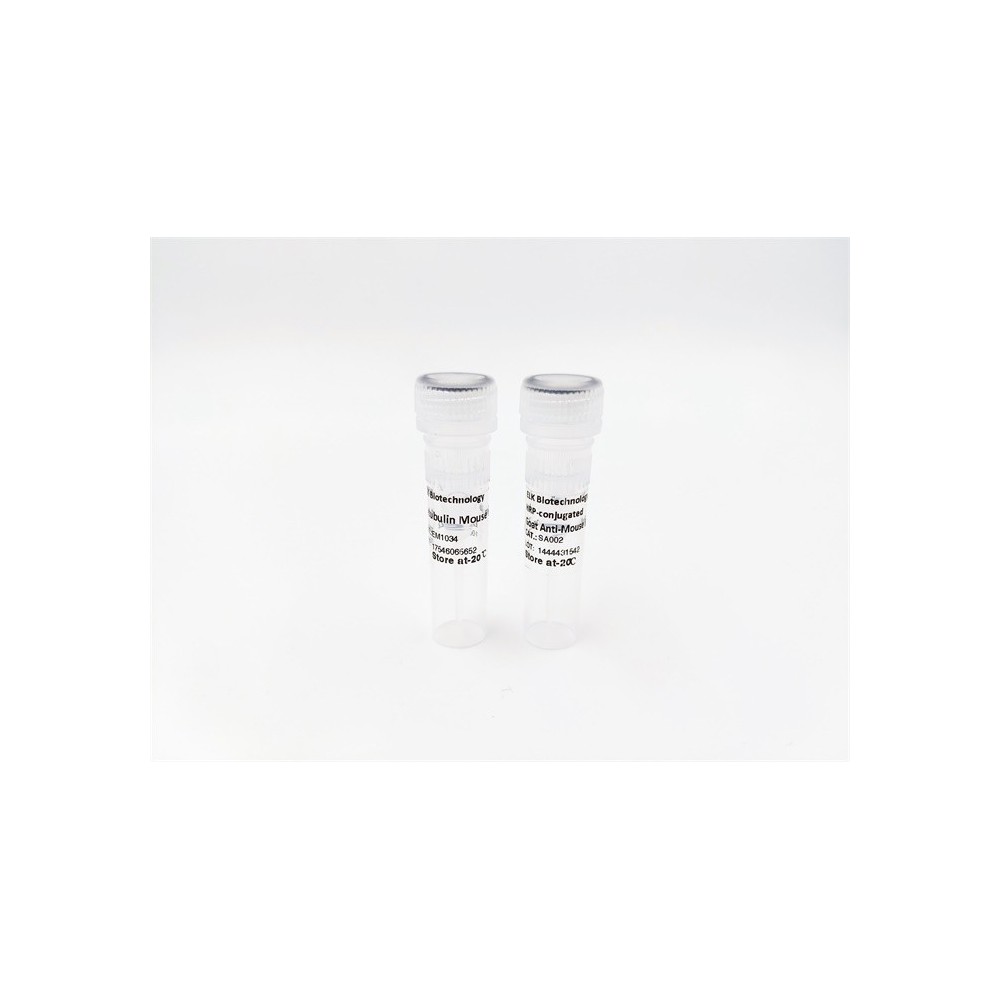

| ELK.No | ES4332 |
| Product name | Nectin 1 rabbit pAb |
| Reactivity | Human;Mouse;Rat |
| Applications | WB;ELISA |
| Other name | PVRL1; HVEC; PRR1; Poliovirus receptor-related protein 1; Herpes virus entry mediator C; Herpesvirus entry mediator C; HveC; Herpesvirus Ig-like receptor; HIgR; Nectin-1; CD111 |
| Size | 50μL |
| Unit price ($) | 148 |
| Human gene ID | 5818 |
| Human Swiss-Prot | Q15223 |
| Source | Rabbit |
| Isotype | IgG |
| Target | Nectin 1 |
| Fields | >>Cell adhesion molecules;>>Adherens junction;>>Herpes simplex virus 1 infection |
| Gene name | PVRL1 |
| Protein name | Poliovirus receptor-related protein 1 |
| Human gene link | View Human Gene |
| Human Swiss link | View Human Swiss-Prot |
| Mouse gene ID | 58235 |
| Mouse gene link | View Mouse Gene |
| Mouse Swiss-Prot | Q9JKF6 |
| Mouse Swiss link | View Mouse Swiss-Prot |
| Rat gene ID | |
| Rat gene link | |
| Rat Swiss-Prot | |
| Rat Swiss link | |
| Immunogen | The antiserum was produced against synthesized peptide derived from the Internal region of human PVRL1. AA range:81-130 |
| Specificity | Nectin 1 Polyclonal Antibody detects endogenous levels of Nectin 1 protein. |
| Formulation | Liquid in PBS containing 50% glycerol, 0.5% BSA and 0.02% sodium azide. |
| Clonality | Polyclonal |
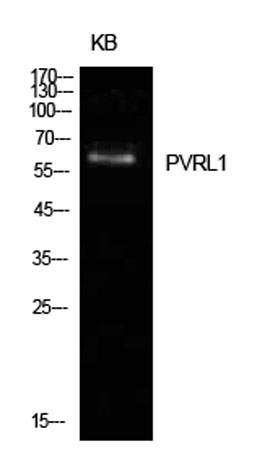
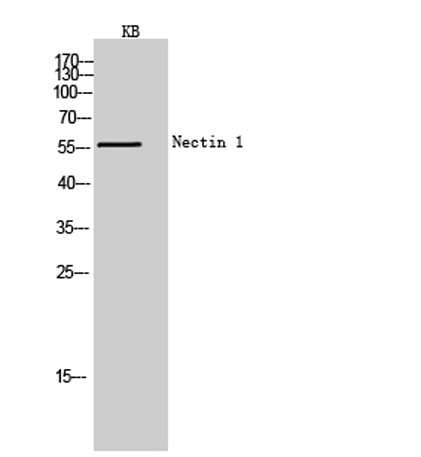
| Dilution | Western Blot: 1/500 - 1/2000. ELISA: 1/10000. Not yet tested in other applications. |
| Purification | The antibody was affinity-purified from rabbit antiserum by affinity-chromatography using epitope-specific immunogen. |
| Concentration | 1 mg/ml |
| Storage stability | -20°C/1 year |
| Molecular Weight (Da) | |
| Observed band (KD) | 57kD |
| Background | This gene encodes an adhesion protein that plays a role in the organization of adherens junctions and tight junctions in epithelial and endothelial cells. The protein is a calcium(2+)-independent cell-cell adhesion molecule that belongs to the immunoglobulin superfamily and has 3 extracellular immunoglobulin-like loops, a single transmembrane domain (in some isoforms), and a cytoplasmic region. This protein acts as a receptor for glycoprotein D (gD) of herpes simplex viruses 1 and 2 (HSV-1, HSV-2), and pseudorabies virus (PRV) and mediates viral entry into epithelial and neuronal cells. Mutations in this gene cause cleft lip and palate/ectodermal dysplasia 1 syndrome (CLPED1) as well as non-syndromic cleft lip with or without cleft palate (CL/P). Alternative splicing results in multiple transcript variants encoding proteins with distinct C-termini. [provided by RefSeq, Oct 2009], |
| Function | disease:Defects in PVRL1 are the cause of ectodermal dysplasia Margarita Island type (EDMI) [MIM:225060]; also known as Zlotogora-Ogur syndrome, cleft lip/palate-ectodermal dysplasia syndrome (CLPED1) or ectodermal dysplasia 4. Ectodermal dysplasia defines a heterogeneous group of disorders due to abnormal development of two or more ectodermal structures. EDMI is an autosomal recessive syndrome characterized by the association of cleft lip/palate, ectodermal dysplasia (sparse short and dry scalp hair, sparse eyebrows and eyelashes), and partial syndactyly of the fingers and/or toes. Two thirds of the patients do not manifest oral cleft but present with abnormal teeth and nails.,disease:Defects in PVRL1 are the cause of non-syndromic orofacial cleft type 7 (OFC7) [MIM:225060]. Non-syndromic orofacial cleft is a common birth defect consisting of cleft lips with or without cleft palate. Cle |
| Subcellular location | [Isoform Alpha]: Cell membrane; Single-pass type I membrane protein. Cell junction, synapse, presynaptic cell membrane .; [Isoform Delta]: Cell membrane; Single-pass type I membrane protein.; [Isoform Gamma]: Secreted. |
| Expression | Brain,Plasma, |

Use collapsible tabs for more detailed information that will help customers make a purchasing decision.
Ex: Shipping and return policies, size guides, and other common questions.