 Français
 English
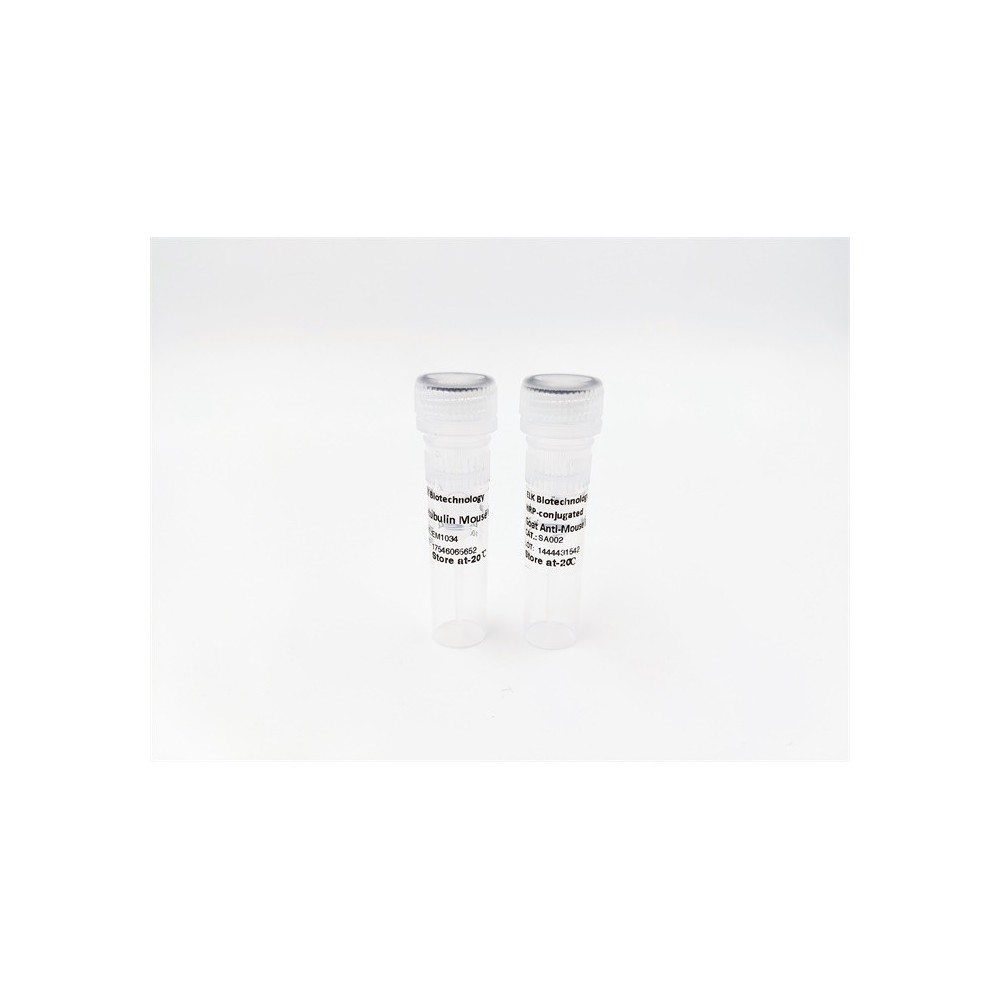

| ELK.No | ES4334 |
| Product name | LIFR rabbit pAb |
| Reactivity | Human;Rat;Mouse; |
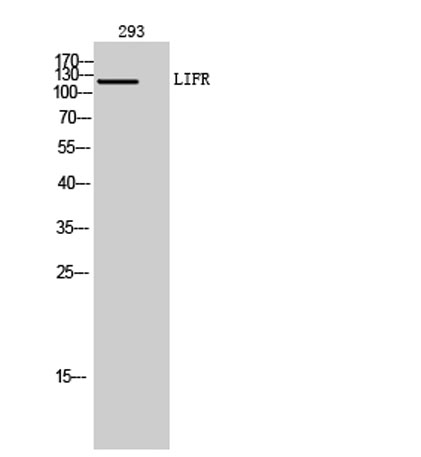
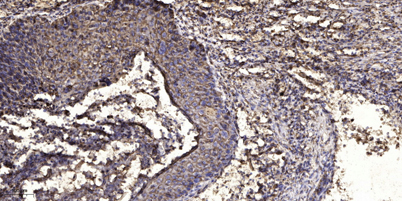
| Applications | WB;ELISA;IHC |
| Other name | LIFR; Leukemia inhibitory factor receptor; LIF receptor; LIF-R; CD118 |
| Size | 100μL |
| Unit price ($) | 248 |
| Human gene ID | 3977 |
| Human Swiss-Prot | P42702 |
| Source | Rabbit |
| Isotype | IgG |
| Target | LIFR |
| Fields | >>Cytokine-cytokine receptor interaction;>>Signaling pathways regulating pluripotency of stem cells;>>JAK-STAT signaling pathway |
| Gene name | LIFR |
| Protein name | Leukemia inhibitory factor receptor |
| Human gene link | View Human Gene |
| Human Swiss link | View Human Swiss-Prot |
| Mouse gene ID | |
| Mouse gene link | |
| Mouse Swiss-Prot | P42703 |
| Mouse Swiss link | View Mouse Swiss-Prot |
| Rat gene ID | |
| Rat gene link | |
| Rat Swiss-Prot | |
| Rat Swiss link | |
| Immunogen | The antiserum was produced against synthesized peptide derived from the Internal region of human LIFR. AA range:731-780 |
| Specificity | LIFR Polyclonal Antibody detects endogenous levels of LIFR protein. |
| Formulation | Liquid in PBS containing 50% glycerol, 0.5% BSA and 0.02% sodium azide. |
| Clonality | Polyclonal |
| Dilution | WB 1:500-2000;IHC-p 1:50-300; ELISA 2000-20000 |
| Purification | The antibody was affinity-purified from rabbit antiserum by affinity-chromatography using epitope-specific immunogen. |
| Concentration | 1 mg/ml |
| Storage stability | -20°C/1 year |
| Molecular Weight (Da) | |
| Observed band (KD) | 120kD |
| Background | leukemia inhibitory factor receptor alpha(LIFR) Homo sapiens This gene encodes a protein that belongs to the type I cytokine receptor family. This protein combines with a high-affinity converter subunit, gp130, to form a receptor complex that mediates the action of the leukemia inhibitory factor, a polyfunctional cytokine that is involved in cellular differentiation, proliferation and survival in the adult and the embryo. Mutations in this gene cause Schwartz-Jampel syndrome type 2, a disease belonging to the group of the bent-bone dysplasias. A translocation that involves the promoter of this gene, t(5;8)(p13;q12) with the pleiomorphic adenoma gene 1, is associated with salivary gland pleiomorphic adenoma, a common type of benign epithelial tumor of the salivary gland. Multiple splice variants encoding the same protein have been found for this gene. [provided by RefSeq, Jul 2008], |
| Function | disease:A chromosomal rearrangement involving LIFR may be a cause of salivary gland pleiomorphic adenomas (PA) [181030]. Pleiomorphic adenomas are the most common benign epithelial tumors of the salivary gland. Translocation t(5;8)(p13;q12) with PLAG1.,disease:Defects in LIFR are the cause of Stueve-Wiedemann syndrome (SWS) [MIM:601559]; also called Schwartz-Jampel syndrome type 2 or SJS2. SWS is a severe autosomal recessive condition and belongs to the group of the bent-bone dysplasias. SWS is characterized by bowing of the lower limbs, with internal cortical thickening, wide metaphyses with abnormal trabecular pattern, and camptodactyly. Additional features include feeding and swallowing difficulties, as well as respiratory distress and hyperthermic episodes, which cause death in the first months of life. The rare survivors develop progressive scoliosis, spontaneous fractures, bowing o |
| Subcellular location | [Isoform 1]: Cell membrane; Single-pass type I membrane protein.; [Isoform 2]: Secreted. |
| Expression | Hippocampus,Placenta, |

Use collapsible tabs for more detailed information that will help customers make a purchasing decision.
Ex: Shipping and return policies, size guides, and other common questions.