 Français
 English
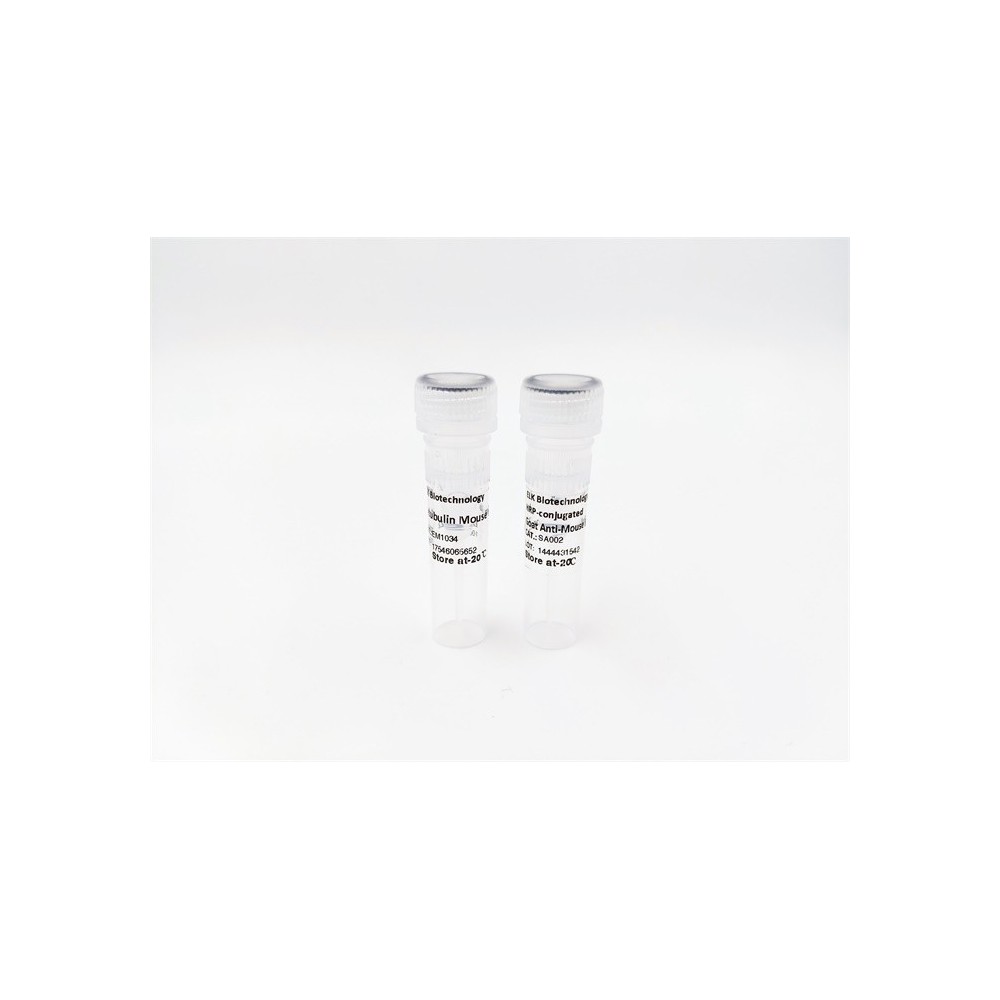

| ELK.No | ES4353 |
| Product name | CD298 rabbit pAb |
| Reactivity | Human;Rat;Mouse; |
| Applications | WB;ELISA |
| Other name | ATP1B3; Sodium/potassium-transporting ATPase subunit beta-3; Sodium/potassium-dependent ATPase subunit beta-3; ATPB-3; CD298 |
| Size | 100μL |
| Unit price ($) | 248 |
| Human gene ID | 483 |
| Human Swiss-Prot | P54709 |
| Source | Rabbit |
| Isotype | IgG |
| Target | CD298 |
| Fields | >>cGMP-PKG signaling pathway;>>cAMP signaling pathway;>>Cardiac muscle contraction;>>Adrenergic signaling in cardiomyocytes;>>Insulin secretion;>>Thyroid hormone synthesis;>>Thyroid hormone signaling pathway;>>Aldosterone synthesis and secretion;>>Aldosterone-regulated sodium reabsorption;>>Endocrine and other factor-regulated calcium reabsorption;>>Proximal tubule bicarbonate reclamation;>>Salivary secretion;>>Gastric acid secretion;>>Pancreatic secretion;>>Carbohydrate digestion and absorption;>>Protein digestion and absorption;>>Bile secretion;>>Mineral absorption |
| Gene name | ATP1B3 |
| Protein name | Sodium/potassium-transporting ATPase subunit beta-3 |
| Human gene link | View Human Gene |
| Human Swiss link | View Human Swiss-Prot |
| Mouse gene ID | 11933 |
| Mouse gene link | View Mouse Gene |
| Mouse Swiss-Prot | P97370 |
| Mouse Swiss link | View Mouse Swiss-Prot |
| Rat gene ID | 25390 |
| Rat gene link | View Rat Gene |
| Rat Swiss-Prot | Q63377 |
| Rat Swiss link | View Rat Swiss-Prot |
| Immunogen | The antiserum was produced against synthesized peptide derived from the C-terminal region of human ATP1B3. AA range:222-271 |
| Specificity | CD298 Polyclonal Antibody detects endogenous levels of CD298 protein. |
| Formulation | Liquid in PBS containing 50% glycerol, 0.5% BSA and 0.02% sodium azide. |
| Clonality | Polyclonal |
| Dilution | Western Blot: 1/500 - 1/2000. ELISA: 1/10000. Not yet tested in other applications. |
| Purification | The antibody was affinity-purified from rabbit antiserum by affinity-chromatography using epitope-specific immunogen. |
| Concentration | 1 mg/ml |
| Storage stability | -20°C/1 year |
| Molecular Weight (Da) | |
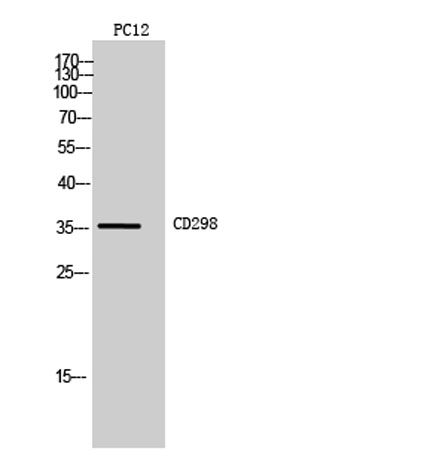
| Observed band (KD) | 36kD |
| Background | The protein encoded by this gene belongs to the family of Na+/K+ and H+/K+ ATPases beta chain proteins, and to the subfamily of Na+/K+ -ATPases. Na+/K+ -ATPase is an integral membrane protein responsible for establishing and maintaining the electrochemical gradients of Na and K ions across the plasma membrane. These gradients are essential for osmoregulation, for sodium-coupled transport of a variety of organic and inorganic molecules, and for electrical excitability of nerve and muscle. This enzyme is composed of two subunits, a large catalytic subunit (alpha) and a smaller glycoprotein subunit (beta). The beta subunit regulates, through assembly of alpha/beta heterodimers, the number of sodium pumps transported to the plasma membrane. The glycoprotein subunit of Na+/K+ -ATPase is encoded by multiple genes. This gene encodes a beta 3 subunit. This gene encodes a beta 3 subun |
| Function | function:This is the non-catalytic component of the active enzyme, which catalyzes the hydrolysis of ATP coupled with the exchange of Na(+) and K(+) ions across the plasma membrane. The exact function of the beta-3 subunit is not known.,similarity:Belongs to the X(+)/potassium ATPases subunit beta family.,subcellular location:Identified by mass spectrometry in melanosome fractions from stage I to stage IV.,subunit:Composed of three subunits: alpha (catalytic), beta and gamma., |
| Subcellular location | Apical cell membrane ; Single-pass type II membrane protein . Basolateral cell membrane ; Single-pass type II membrane protein . Melanosome . Identified by mass spectrometry in melanosome fractions from stage I to stage IV. |
| Expression | Lung,Placenta,Uterus, |

Use collapsible tabs for more detailed information that will help customers make a purchasing decision.
Ex: Shipping and return policies, size guides, and other common questions.