 Français
 English
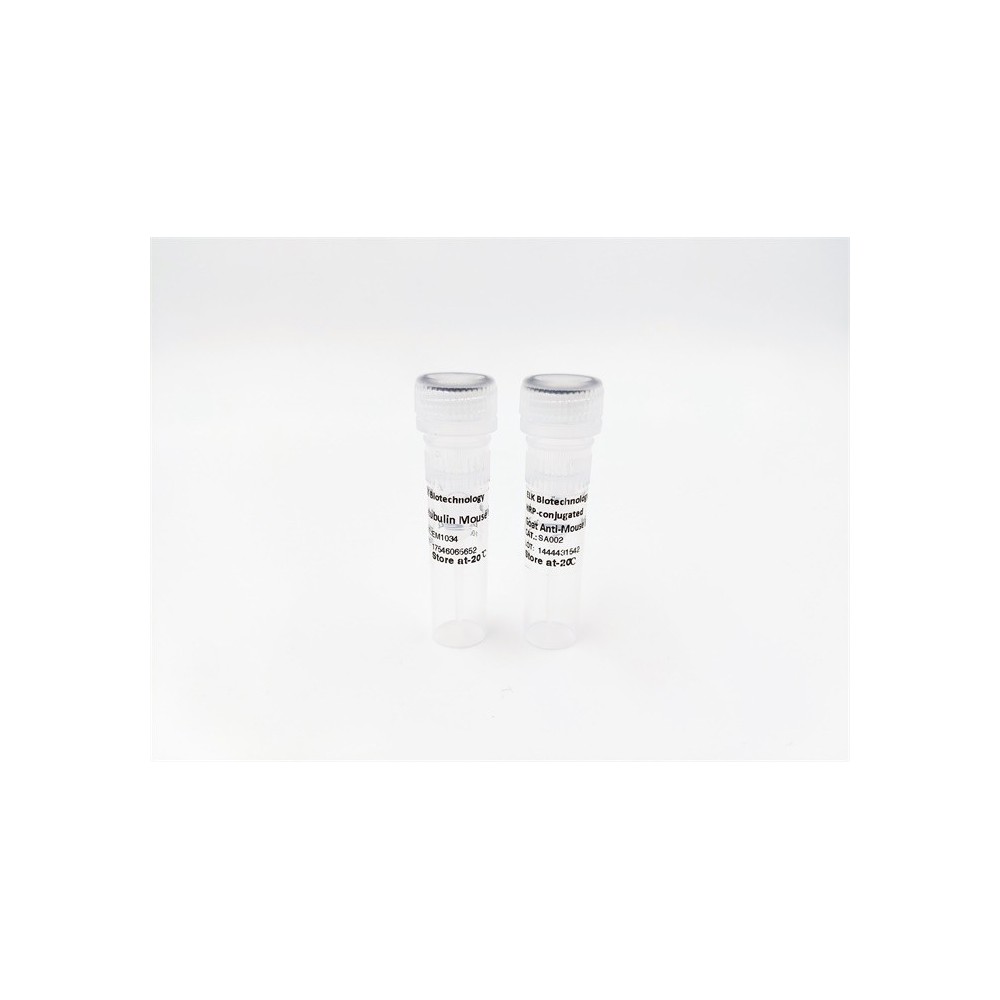

| ELK.No | ES4375 |
| Product name | NTN rabbit pAb |
| Reactivity | Human;Rat;Mouse; |
| Applications | WB;ELISA |
| Other name | NRTN; Neurturin |
| Size | 50μL |
| Unit price ($) | 148 |
| Human gene ID | 4902 |
| Human Swiss-Prot | Q99748 |
| Source | Rabbit |
| Isotype | IgG |
| Target | NTN |
| Fields | |
| Gene name | NRTN |
| Protein name | Neurturin |
| Human gene link | View Human Gene |
| Human Swiss link | View Human Swiss-Prot |
| Mouse gene ID | 18188 |
| Mouse gene link | View Mouse Gene |
| Mouse Swiss-Prot | P97463 |
| Mouse Swiss link | View Mouse Swiss-Prot |
| Rat gene ID | |
| Rat gene link | |
| Rat Swiss-Prot | |
| Rat Swiss link | |
| Immunogen | The antiserum was produced against synthesized peptide derived from the Internal region of human NRTN. AA range:111-160 |
| Specificity | NTN Polyclonal Antibody detects endogenous levels of NTN protein. |
| Formulation | Liquid in PBS containing 50% glycerol, 0.5% BSA and 0.02% sodium azide. |
| Clonality | Polyclonal |
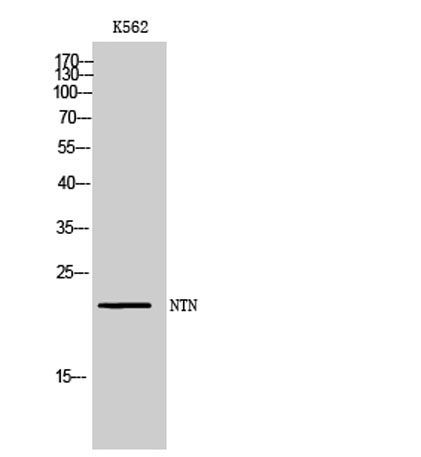
| Dilution | Western Blot: 1/500 - 1/2000. ELISA: 1/10000. Not yet tested in other applications. |
| Purification | The antibody was affinity-purified from rabbit antiserum by affinity-chromatography using epitope-specific immunogen. |
| Concentration | 1 mg/ml |
| Storage stability | -20°C/1 year |
| Molecular Weight (Da) | |
| Observed band (KD) | 22kD |
| Background | neurturin(NRTN) Homo sapiens This gene encodes a secreted ligand of the TGF-beta (transforming growth factor-beta) superfamily of proteins. The encoded preproprotein is proteolytically processed to generate the mature protein. This protein signals through the RET receptor tyrosine kinase and a GPI-linked coreceptor, and promotes survival of neuronal populations. A neurturin mutation has been described in a family with Hirschsprung Disease. [provided by RefSeq, Aug 2016], |
| Function | disease:Defects in NRTN are a cause of Hirschsprung disease (HSCR) [MIM:142623]. In association with mutations of RET gene, and possibly with other loci, defects in NRTN are involved in Hirschsprung disease. This genetic disorder of neural crest development is characterized by the absence of intramural ganglion cells in the hindgut, often resulting in intestinal obstruction.,function:Supports the survival of sympathetic neurons in culture. May regulate the development and maintenance of the CNS. Might control the size of non-neuronal cell population such as haemopoietic cells.,similarity:Belongs to the TGF-beta family. GDNF subfamily.,subunit:Homodimer; disulfide-linked., |
| Subcellular location | Secreted. |
| Expression | Melanoma,Peripheral blood lymphocyte, |


Use collapsible tabs for more detailed information that will help customers make a purchasing decision.
Ex: Shipping and return policies, size guides, and other common questions.