 Français
 English

| ELK.No | ES4402 |
| Product name | P-cadherin rabbit pAb |
| Reactivity | Human;Rat;Mouse; |
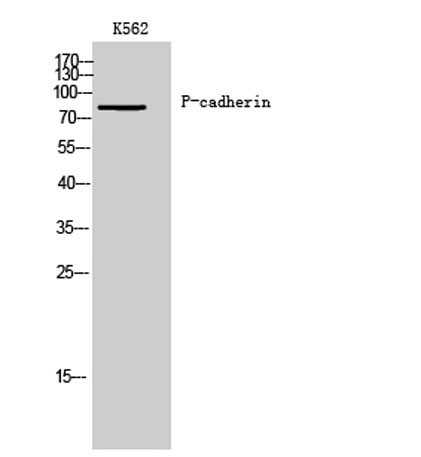
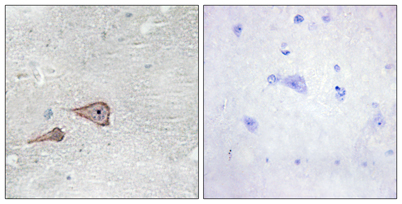
| Applications | WB;IHC;IF;ELISA |
| Other name | CDH3; CDHP; Cadherin-3; Placental cadherin; P-cadherin |
| Size | 100μL |
| Unit price ($) | 248 |
| Human gene ID | 1001 |
| Human Swiss-Prot | P22223 |
| Source | Rabbit |
| Isotype | IgG |
| Target | P-cadherin |
| Fields | >>Cell adhesion molecules |
| Gene name | CDH3 |
| Protein name | Cadherin-3 |
| Human gene link | View Human Gene |
| Human Swiss link | View Human Swiss-Prot |
| Mouse gene ID | |
| Mouse gene link | |
| Mouse Swiss-Prot | P10287 |
| Mouse Swiss link | View Mouse Swiss-Prot |
| Rat gene ID | |
| Rat gene link | |
| Rat Swiss-Prot | |
| Rat Swiss link | |
| Immunogen | The antiserum was produced against synthesized peptide derived from human CDH3. AA range:51-100 |
| Specificity | P-cadherin Polyclonal Antibody detects endogenous levels of P-cadherin protein. |
| Formulation | Liquid in PBS containing 50% glycerol, 0.5% BSA and 0.02% sodium azide. |
| Clonality | Polyclonal |
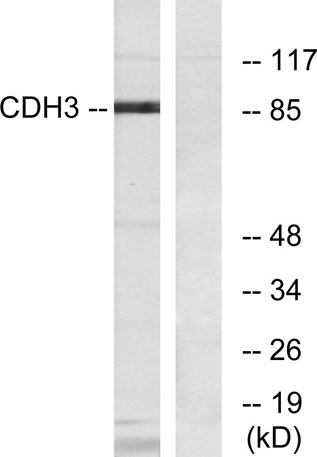
| Dilution | Western Blot: 1/500 - 1/2000. Immunohistochemistry: 1/100 - 1/300. ELISA: 1/10000. Not yet tested in other applications. |
| Purification | The antibody was affinity-purified from rabbit antiserum by affinity-chromatography using epitope-specific immunogen. |
| Concentration | 1 mg/ml |
| Storage stability | -20°C/1 year |
| Molecular Weight (Da) | |
| Observed band (KD) | 86kD |
| Background | This gene encodes a classical cadherin of the cadherin superfamily. Alternative splicing results in multiple transcript variants, at least one of which encodes a preproprotein that is proteolytically processed to generate the mature glycoprotein. This calcium-dependent cell-cell adhesion protein is comprised of five extracellular cadherin repeats, a transmembrane region and a highly conserved cytoplasmic tail. This gene is located in a gene cluster in a region on the long arm of chromosome 16 that is involved in loss of heterozygosity events in breast and prostate cancer. In addition, aberrant expression of this protein is observed in cervical adenocarcinomas. Mutations in this gene are associated with hypotrichosis with juvenile macular dystrophy and ectodermal dysplasia, ectrodactyly, and macular dystrophy syndrome (EEMS). [provided by RefSeq, Nov 2015], |
| Function | disease:Defects in CDH3 are the cause of ectodermal dysplasia with ectrodactyly and macular dystrophy (EEM) [MIM:225280]; also known as EEM syndrome, Albrectsen-Svendsen syndrome or Ohdo-Hirayama-Terawaki syndrome. Ectodermal dysplasia defines a heterogeneous group of disorders due to abnormal development of two or more ectodermal structures. EEM is an autosomal recessive condition characterized by features of ectodermal dysplasia such as sparse eyebrows and scalp hair, and selective tooth agenesis associated with macular dystrophy and ectrodactyly.,disease:Defects in CDH3 are the cause of hypotrichosis with juvenile macular dystrophy (HJMD) [MIM:601553]. HJMD is a rare autosomal recessive disorder characterized by early hair loss heralding severe degenerative changes of the retinal macula and culminating in blindness during the second to third decade of life.,function:Cadherins are calc |
| Subcellular location | Cell membrane; Single-pass type I membrane protein. |
| Expression | Expressed in some normal epithelial tissues and in some carcinoma cell lines. |

Use collapsible tabs for more detailed information that will help customers make a purchasing decision.
Ex: Shipping and return policies, size guides, and other common questions.