 Français
 English
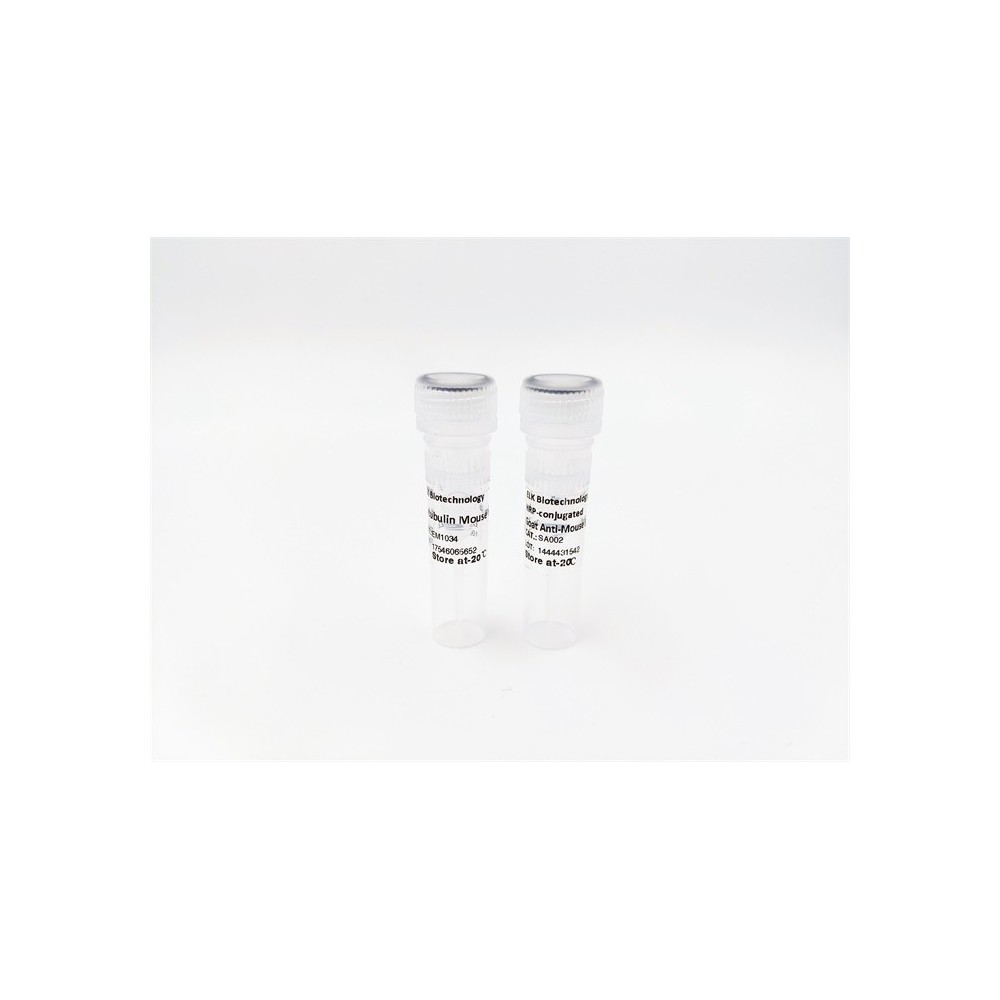

| ELK.No | ES4413 |
| Product name | PARP-2 rabbit pAb |
| Reactivity | Human;Mouse |
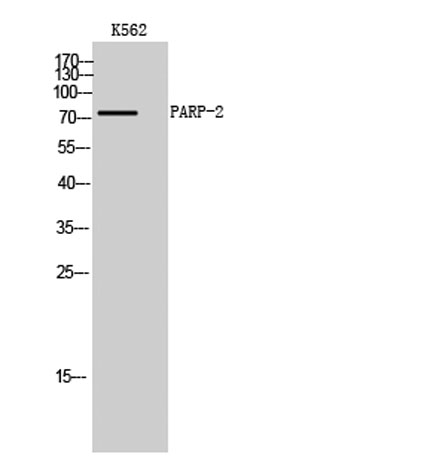
| Applications | WB;ELISA |
| Other name | PARP2; ADPRT2; ADPRTL2; Poly [ADP-ribose] polymerase 2; PARP-2; hPARP-2; ADP-ribosyltransferase diphtheria toxin-like 2; ARTD2; NAD(+) ADP-ribosyltransferase 2; ADPRT-2; Poly[ADP-ribose] synthase 2; pADPRT-2 |
| Size | 50μL |
| Unit price ($) | 148 |
| Human gene ID | 10038 |
| Human Swiss-Prot | Q9UGN5 |
| Source | Rabbit |
| Isotype | IgG |
| Target | PARP-2 |
| Fields | >>Base excision repair;>>Apoptosis |
| Gene name | PARP2 |
| Protein name | Poly [ADP-ribose] polymerase 2 |
| Human gene link | View Human Gene |
| Human Swiss link | View Human Swiss-Prot |
| Mouse gene ID | 11546 |
| Mouse gene link | View Mouse Gene |
| Mouse Swiss-Prot | O88554 |
| Mouse Swiss link | View Mouse Swiss-Prot |
| Rat gene ID | |
| Rat gene link | |
| Rat Swiss-Prot | |
| Rat Swiss link | |
| Immunogen | The antiserum was produced against synthesized peptide derived from human PARP2. AA range:151-200 |
| Specificity | PARP-2 Polyclonal Antibody detects endogenous levels of PARP-2 protein. |
| Formulation | Liquid in PBS containing 50% glycerol, 0.5% BSA and 0.02% sodium azide. |
| Clonality | Polyclonal |
| Dilution | Western Blot: 1/500 - 1/2000. ELISA: 1/40000. Not yet tested in other applications. |
| Purification | The antibody was affinity-purified from rabbit antiserum by affinity-chromatography using epitope-specific immunogen. |
| Concentration | 1 mg/ml |
| Storage stability | -20°C/1 year |
| Molecular Weight (Da) | |
| Observed band (KD) | 75kD |
| Background | This gene encodes poly(ADP-ribosyl)transferase-like 2 protein, which contains a catalytic domain and is capable of catalyzing a poly(ADP-ribosyl)ation reaction. This protein has a catalytic domain which is homologous to that of poly (ADP-ribosyl) transferase, but lacks an N-terminal DNA binding domain which activates the C-terminal catalytic domain of poly (ADP-ribosyl) transferase. The basic residues within the N-terminal region of this protein may bear potential DNA-binding properties, and may be involved in the nuclear and/or nucleolar targeting of the protein. Two alternatively spliced transcript variants encoding distinct isoforms have been found. [provided by RefSeq, Jul 2008], |
| Function | catalytic activity:NAD(+) + (ADP-D-ribosyl)(n)-acceptor = nicotinamide + (ADP-D-ribosyl)(n+1)-acceptor.,function:Involved in the base excision repair (BER) pathway, by catalyzing the poly(ADP-ribosyl)ation of a limited number of acceptor proteins involved in chromatin architecture and in DNA metabolism. This modification follows DNA damages and appears as an obligatory step in a detection/signaling pathway leading to the reparation of DNA strand breaks.,PTM:Poly-ADP-ribosylated by PARP1.,similarity:Contains 1 PARP alpha-helical domain.,similarity:Contains 1 PARP catalytic domain.,subunit:Component of a base excision repair (BER) complex, containing at least XRCC1, PARP1, POLB and LIG3. Homo- and heterodimer with PARP1.,tissue specificity:Widely expressed, mainly in actively dividing tissues. The highest levels are in the brain, heart, pancreas, skeletal muscle and testis; also detected i |
| Subcellular location | Nucleus . Chromosome . Recruited to DNA damage sites. . |
| Expression | Widely expressed, mainly in actively dividing tissues (PubMed:10364231). The highest levels are in the brain, heart, pancreas, skeletal muscle and testis; also detected in kidney, liver, lung, placenta, ovary and spleen; levels are low in leukocytes, colon, small intestine, prostate and thymus (PubMed:10364231). |

Use collapsible tabs for more detailed information that will help customers make a purchasing decision.
Ex: Shipping and return policies, size guides, and other common questions.