 Français
 English
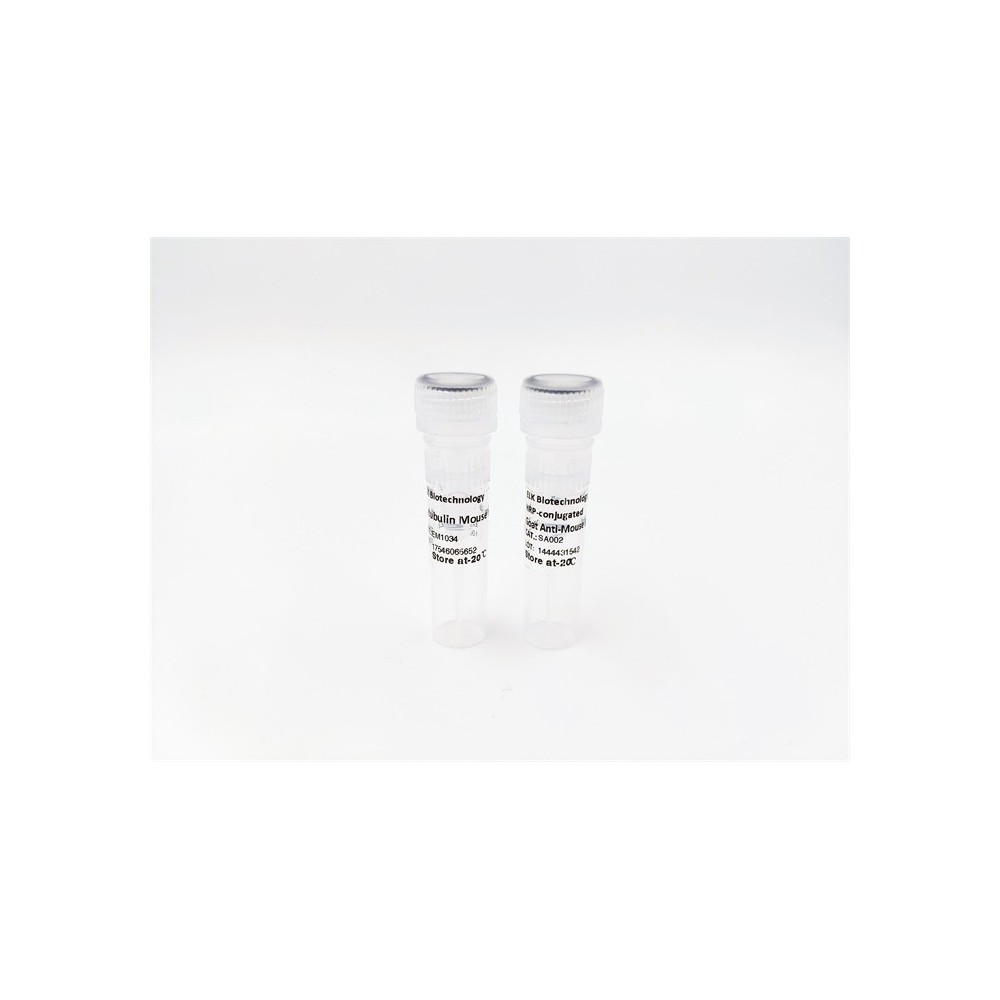

| ELK.No | ES4959 |
| Product name | DGK-η rabbit pAb |
| Reactivity | Human;Mouse |
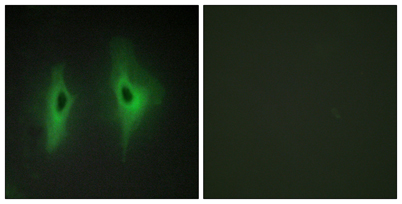
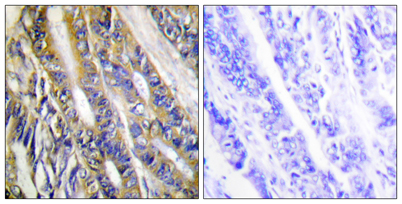
| Applications | IHC;IF;ELISA |
| Other name | DGKH; Diacylglycerol kinase eta; DAG kinase eta; Diglyceride kinase eta; DGK-eta |
| Size | 50μL |
| Unit price ($) | 148 |
| Human gene ID | 160851 |
| Human Swiss-Prot | Q86XP1 |
| Source | Rabbit |
| Isotype | IgG |
| Target | DGK-η |
| Fields | >>Glycerolipid metabolism;>>Glycerophospholipid metabolism;>>Metabolic pathways;>>Phosphatidylinositol signaling system;>>Phospholipase D signaling pathway;>>Choline metabolism in cancer |
| Gene name | DGKH |
| Protein name | Diacylglycerol kinase eta |
| Human gene link | View Human Gene |
| Human Swiss link | View Human Swiss-Prot |
| Mouse gene ID | |
| Mouse gene link | |
| Mouse Swiss-Prot | |
| Mouse Swiss link | |
| Rat gene ID | |
| Rat gene link | |
| Rat Swiss-Prot | |
| Rat Swiss link | |
| Immunogen | The antiserum was produced against synthesized peptide derived from human DGKH. AA range:771-820 |
| Specificity | DGK-η Polyclonal Antibody detects endogenous levels of DGK-η protein. |
| Formulation | Liquid in PBS containing 50% glycerol, 0.5% BSA and 0.02% sodium azide. |
| Clonality | Polyclonal |
| Dilution | Immunohistochemistry: 1/100 - 1/300. Immunofluorescence: 1/200 - 1/1000. ELISA: 1/20000. Not yet tested in other applications. |
| Purification | The antibody was affinity-purified from rabbit antiserum by affinity-chromatography using epitope-specific immunogen. |
| Concentration | 1 mg/ml |
| Storage stability | -20°C/1 year |
| Molecular Weight (Da) | 135kD |
| Observed band (KD) | |
| Background | diacylglycerol kinase eta(DGKH) Homo sapiens This gene encodes a member of the diacylglycerol kinase (DGK) enzyme family. Members of this family are involved in regulating intracellular concentrations of diacylglycerol and phosphatidic acid. Variation in this gene has been associated with bipolar disorder. Alternatively spliced transcript variants have been identified. [provided by RefSeq, Jul 2014], |
| Function | catalytic activity:ATP + 1,2-diacylglycerol = ADP + 1,2-diacyl-sn-glycerol 3-phosphate.,function:Phosphorylates diacylglycerol (DAG) to generate phosphatidic acid (PA).,PTM:Phosphorylated; does not inhibit catalytic activity.,similarity:Belongs to the eukaryotic diacylglycerol kinase family.,similarity:Contains 1 DAGKc domain.,similarity:Contains 1 PH domain.,similarity:Contains 1 SAM (sterile alpha motif) domain.,similarity:Contains 2 phorbol-ester/DAG-type zinc fingers.,subcellular location:Translocated from the cytoplasm to endosomes in response to stress stimuli. Isoform 2 is rapidly relocated back to the cytoplasm upon removal of stress stimuli, whereas isoform 1 exhibits sustained endosomal association.,subunit:Isoform 1 forms homooligomers through the SAM domain. Isoform 1 is also able to form heterooligomers with SAM domain-containing isoforms of DGKD. Oligomerization of isoform |
| Subcellular location | Cytoplasm . Cell membrane . Translocated from the cytoplasm to endosomes in response to stress stimuli (PubMed:12810723). Isoform 2 is rapidly relocated back to the cytoplasm upon removal of stress stimuli, whereas isoform 1 exhibits sustained endosomal association (PubMed:12810723). Translocates from the cytoplasm to the cell membrane in the presence of active GTP-bound form of HRAS (PubMed:19710016). |
| Expression | [Isoform 1]: Expressed only in testis, kidney and colon. ; [Isoform 2]: Ubiquitously expressed. |

Use collapsible tabs for more detailed information that will help customers make a purchasing decision.
Ex: Shipping and return policies, size guides, and other common questions.