 Français
 English
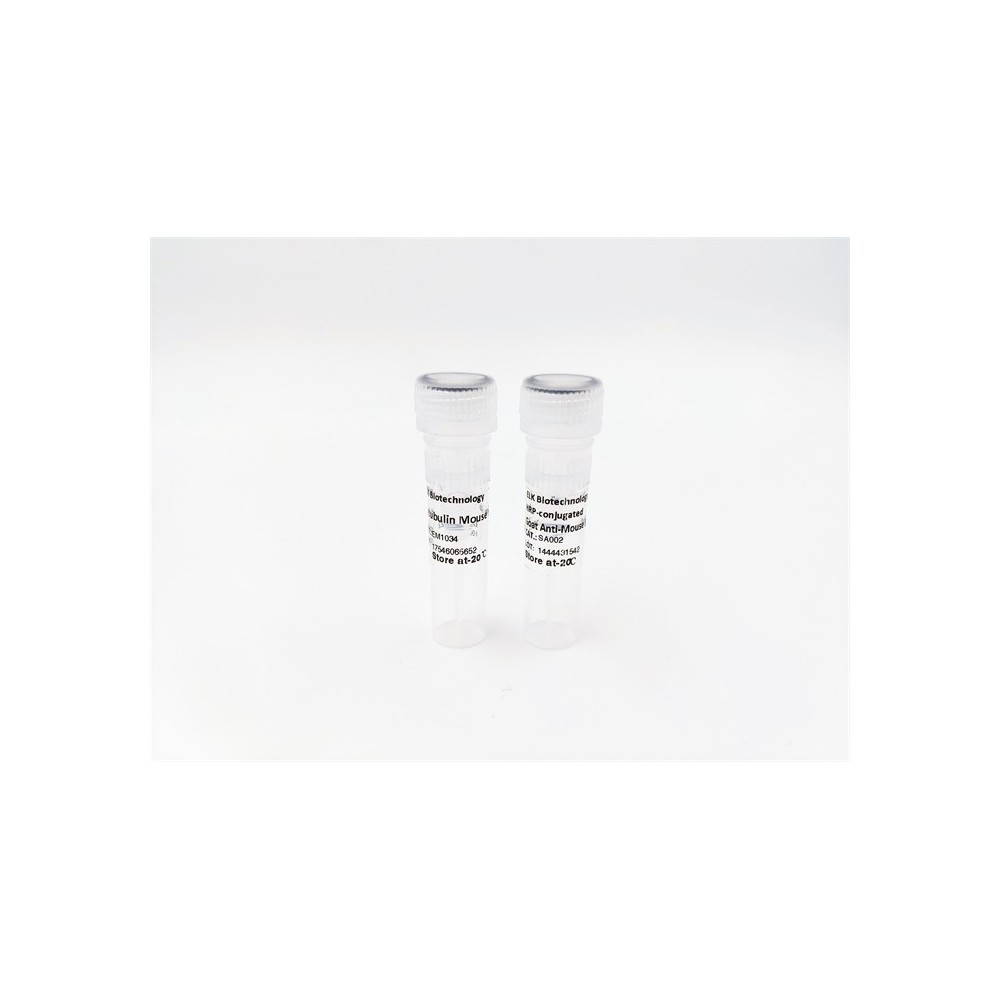

| ELK.No | ES5037 |
| Product name | APLNR rabbit pAb |
| Reactivity | Human;Rat;Mouse; |
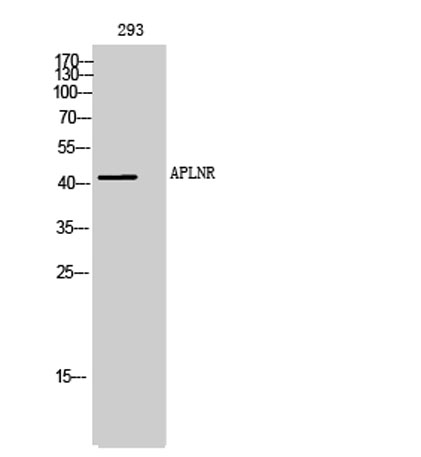
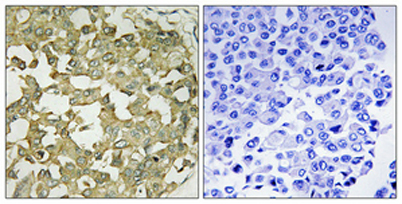
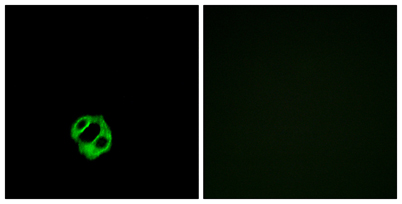
| Applications | WB;IHC;IF;ELISA |
| Other name | APLNR; AGTRL1; APJ; Apelin receptor; Angiotensin receptor-like 1; G-protein coupled receptor APJ; G-protein coupled receptor HG11 |
| Size | 100μL |
| Unit price ($) | 248 |
| Human gene ID | 187 |
| Human Swiss-Prot | P35414 |
| Source | Rabbit |
| Isotype | IgG |
| Target | APLNR |
| Fields | >>Neuroactive ligand-receptor interaction;>>Apelin signaling pathway |
| Gene name | APLNR |
| Protein name | Apelin receptor |
| Human gene link | View Human Gene |
| Human Swiss link | View Human Swiss-Prot |
| Mouse gene ID | |
| Mouse gene link | |
| Mouse Swiss-Prot | Q9WV08 |
| Mouse Swiss link | View Mouse Swiss-Prot |
| Rat gene ID | |
| Rat gene link | |
| Rat Swiss-Prot | |
| Rat Swiss link | |
| Immunogen | The antiserum was produced against synthesized peptide derived from human AGTRL1. AA range:141-190 |
| Specificity | APLNR Polyclonal Antibody detects endogenous levels of APLNR protein. |
| Formulation | Liquid in PBS containing 50% glycerol, 0.5% BSA and 0.02% sodium azide. |
| Clonality | Polyclonal |
| Dilution | Western Blot: 1/500 - 1/2000. Immunohistochemistry: 1/100 - 1/300. Immunofluorescence: 1/200 - 1/1000. ELISA: 1/10000. Not yet tested in other applications. |
| Purification | The antibody was affinity-purified from rabbit antiserum by affinity-chromatography using epitope-specific immunogen. |
| Concentration | 1 mg/ml |
| Storage stability | -20°C/1 year |
| Molecular Weight (Da) | |
| Observed band (KD) | 43kD |
| Background | This gene encodes a member of the G protein-coupled receptor gene family. The encoded protein is related to the angiotensin receptor, but is actually an apelin receptor that inhibits adenylate cyclase activity and plays a counter-regulatory role against the pressure action of angiotensin II by exerting hypertensive effect. It functions in the cardiovascular and central nervous systems, in glucose metabolism, in embryonic and tumor angiogenesis and as a human immunodeficiency virus (HIV-1) coreceptor. Two transcript variants resulting from alternative splicing have been identified. [provided by RefSeq, Jul 2009], |
| Function | function:Receptor for apelin coupled to G proteins that inhibit adenylate cyclase activity. Alternative coreceptor with CD4 for HIV-1 infection; may be involved in the development of AIDS dementia.,similarity:Belongs to the G-protein coupled receptor 1 family.,tissue specificity:Widely expressed in the brain, in glial cells, astrocytes and neuronal subpopulations, as well as in the spleen, thymus, ovary, small intestine and colon., |
| Subcellular location | Cell membrane . After exposure to apelin (APLN), internalized from the cell surface into an endosomal recycling compartment, from where it is recycled to the cell membrane (By similarity). After exposure to apelin receptor early endogenous ligand (APELA), internalized from the cell surface into an endosomal recycling compartment, from where it is recycled to the cell membrane (PubMed:25639753). . |
| Expression | Expressed in heart, brain, kidney, stomach, spleen, thymus, lung, ovary, small intestine and colon, adipose tissues and pancreas (PubMed:8294032, PubMed:25639753). Expressed in glial cells, astrocytes and neuronal subpopulations (PubMed:8294032). Expressed in embryonic (ESCs) and induced (iPSCs) pluripotent stem cells (PubMed:25639753). |

Use collapsible tabs for more detailed information that will help customers make a purchasing decision.
Ex: Shipping and return policies, size guides, and other common questions.